
Table of Contents >> Show >> Hide
- Quick ID: What the CH07 Shell Chair Actually Is
- The Backstory: A 1963 Design That Took Its Sweet Time
- Why It “Floats”: Anatomy of the Smiling Chair
- Comfort: Surprisingly Cozy for a Chair That Looks Like Modern Art
- Materials and Craft: Where the Magic Actually Happens
- Dimensions and Room Planning: Will It Fit (and Will You Love It)?
- How to Style the CH07 Without Turning Your Living Room Into a Catalog
- Buying Tips: Authentic CH07 vs. “Shell-ish” Look-Alikes
- Care and Longevity
- Why Designers Still Obsess Over the CH07
- Experiences: Living With (and Around) Hans Wegner’s Shell Chair
- Sources Consulted
Some chairs politely sit in a corner and mind their own business. The CH07 Shell Chair does not. It looks like it’s mid-laugh, mid-flight, and mid-“don’t touch thatoh wait, yes, please do.” Designed by Danish master Hans J. Wegner in 1963 and later brought back into the spotlight by Carl Hansen & Søn, the Shell Chair is one of those rare pieces that feels sculptural and genuinely livable.
Below is the story behind the “Smiling Chair,” what makes its three legs surprisingly stable, how it’s built, and how to actually live with it (without treating it like a fragile museum artifact).
Quick ID: What the CH07 Shell Chair Actually Is
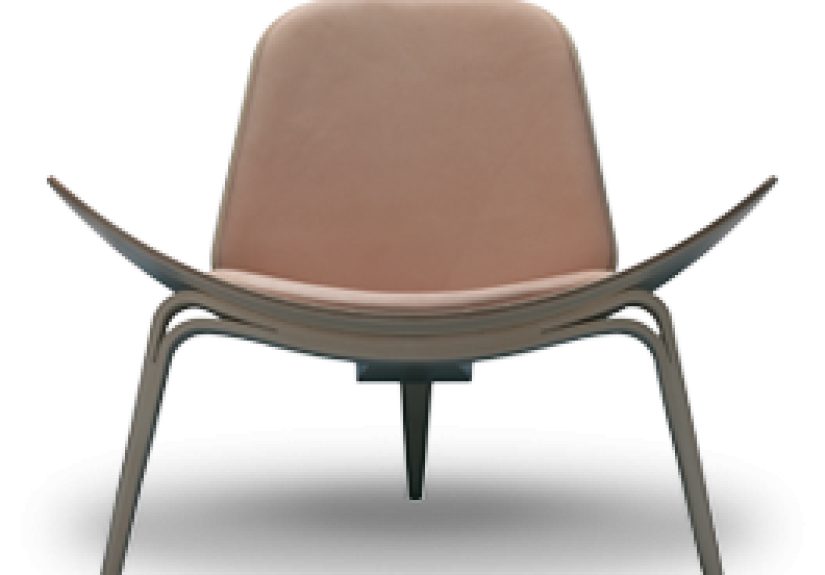
The CH07often nicknamed the Shell Chair or the “Smiling Chair”is a low lounge chair defined by a wing-like seat, a curved backrest, and a tripod base. It’s made from form-pressed veneer shells with upholstered cushions, supported by arched laminated legs. In other words: plywood doing a ballet.
Wegner is celebrated for sculpted solid-wood classics, so the Shell Chair stands out as a more experimental, technology-forward moment in his catalog. It’s unmistakably Wegnerwarm, balanced, and cabinetmaker-preciseyet it leans futuristic in silhouette.
The Backstory: A 1963 Design That Took Its Sweet Time
When the Shell Chair debuted in 1963, it was ahead of the mainstream. Design insiders could appreciate the boldness, but early production was limited and it didn’t become a big commercial success right away. Fast forward to the 1990s, when collectors and a new generation of modern-design fans started craving pieces that felt more distinctive than “safe.” Carl Hansen & Søn reintroduced the CH07 in the late 1990s, and the chair finally landed the wider acclaim it had been waiting for.
This delayed success is part of the chair’s charm: the CH07 wasn’t designed to blend in. It was designed to be rightergonomically, structurally, and visuallyeven if it took decades for the world to catch up.
Why It “Floats”: Anatomy of the Smiling Chair
The wing-like seat and shell back
The seat flares outward like wings, while the backrest curves to meet you rather than boss you around. The chair reads light and airborne because of its negative space and sweeping arcs, but that “floating” feel also shows up in how the form supports your body.
The three-legged base (yes, it’s stable)
Tripods are naturally stable when the geometry is right, and Wegner knew his geometry. The CH07’s arched legs splay outward to create a wide footprint. The two front legs are formed as a continuous laminated element, with the rear leg as a separate piecean elegant construction choice that’s both structural and sculptural.
Comfort: Surprisingly Cozy for a Chair That Looks Like Modern Art
The Shell Chair is low and lounge-ycloser to “reading nook” than “formal sitting room.” The upholstered seat and back cushions bring softness, while the curved shells handle support. You sit slightly reclined with your shoulders supported, and the flared seat edges give your arms a natural place to restalmost like subtle, non-committal armrests.
One practical note: because it’s a lower lounge chair, it feels best when paired with similarly low surfaces (coffee tables, ottomans, side tables). When the surrounding furniture is too tall, the CH07 can feel like it’s sitting in the “kids’ section,” even though it’s very much an adult chair with an adult price tag.
Materials and Craft: Where the Magic Actually Happens
The CH07 is built around form-pressed veneer: thin layers of wood laminated and pressed into compound curves. That process was still relatively uncommon in high-end furniture when Wegner designed the chair, which helped make the CH07 look radical in the early 1960s. The seat and backrest are formed shells topped with foam-filled cushions, typically upholstered in leather, fabric, or (in some versions) cowhide.
The legs are also laminatedmultiple veneer layers creating strength without bulk. Current production commonly includes oak or walnut finishes (often oiled or lacquered), and many retailers note FSC-certified wood options for the frame in oak and walnut.
Leather, fabric, or cowhide?
Smooth leather emphasizes the chair’s crisp lines and is usually easy to wipe down. Wool textiles warm it up in minimalist rooms. Cowhide adds bold patterning and makes each chair unique (because every hide is differentmatching “pairs” can be a fun challenge).
Dimensions and Room Planning: Will It Fit (and Will You Love It)?
The CH07 is generously sized for a lounge chair, but it doesn’t visually dominate because it’s low and open. Expect overall dimensions right around 36 inches wide, about 32–33 inches deep, and roughly 29 inches tall, with a seat height near 13.8–15 inches depending on upholstery. Many listings also put the chair at roughly 20 poundslight enough to reposition without calling in a moving crew.
Planning tip: give it breathing room. The Shell Chair’s drama is in its curves and negative space; if you cram it into a tight corner, you mute the whole point.
How to Style the CH07 Without Turning Your Living Room Into a Catalog
1) The modern reading corner
Place the Shell Chair next to a slim floor lamp and a small side table, then add a textured rug underneath. The chair becomes the focal point, but the textures keep it from feeling like a showroom display.
2) The Scandinavian “calm but not boring” living room
In a Scandinavian-inspired spacelight floors, neutral walls, natural woodthe CH07 looks at home, especially in oak. Add contrast with a darker leather or a saturated wool textile. Because the chair is sculptural, you can keep the rest of the furniture simpler and let the Shell do the talking.
3) The mid-century mix
The Shell Chair plays well with other mid-century classics, but it likes friends who don’t fight for attention. Pair it with clean-lined sofas, a simple credenza, and a round wood coffee table. Wegner’s own CH008 table is often mentioned as a natural companion, because the curves speak the same language.
Buying Tips: Authentic CH07 vs. “Shell-ish” Look-Alikes
Because the Shell Chair is famous, it’s also imitated. If you’re buying new, confirm it’s produced by Carl Hansen & Søn through an authorized retailer. If you’re buying secondhand, focus on precision: consistent veneer curvature, clean edges, and upholstery that feels integrated rather than “tacked on.” The legs are a giveawayon authentic versions, the laminated construction is crisp, and the two front legs are formed as one continuous element.
Also watch proportions. Many replicas get the chair slightly too bulky, too upright, or oddly narrow, which ruins the signature “floating” lightness. If you can, sit before you buythe real CH07 has a specific balance of recline and support that cheaper copies struggle to match.
Care and Longevity
Avoid prolonged direct sunlight, wipe dust with a soft cloth, and clean spills quickly. Leather generally benefits from gentle cleaning and occasional conditioning (per the upholstery maker’s guidance). Textiles do well with regular vacuuming using a soft brush attachment. With normal care, the CH07 is built to move with you for yearspossibly decades.
Why Designers Still Obsess Over the CH07
The Shell Chair is a reminder that “iconic” isn’t just about being photogenic. It solves a hard design puzzle: how to make a lounge chair feel light without being weak, expressive without being gimmicky, and comfortable without becoming a blob. It’s also a rare example of Wegner leaning into plywood technologyproof that even a master of solid wood knew when a new technique could unlock a new form.
Experiences: Living With (and Around) Hans Wegner’s Shell Chair
Let’s talk about the part that product photos can’t fully capture: what it feels like to actually use the Shell Chair. The first experience most people have is the double-take. From across a room, the CH07 reads like a sculpturesomething you’d expect to admire more than occupy. Then you sit down and realize it’s not precious; it’s a working lounge chair that just happens to have incredible posture.
Because the seat is low, you don’t “perch” on it the way you might on a higher accent chair. You settle into a calm, slightly reclined positiongreat for reading or slow conversations. The flared seat edges give your forearms a landing spot. Not full armrests, more like the chair quietly saying, “Your elbows can chill here.” It becomes obvious after a few minutes, especially if you’re the kind of person who fidgets until furniture earns your trust.
In real rooms, the Shell Chair behaves differently depending on what’s around it. In a minimalist space, it becomes the staralmost like art you can sit on. In a layered room (books, textiles, plants), it plays “sharp punctuation,” adding a crisp silhouette that keeps the space from turning into a soft blur. People often end up rotating it seasonally: near the window in winter for morning light, angled toward the sofa in summer for conversation, and (quietly) aimed at the TV when the living room turns into a stadium.
The CH07 also teaches you about space. It looks airy, but it needs a little room around it for the legs and curves to read clearly. Tuck it too tightly into a corner and the chair loses the floating effect. Give it breathing room and it suddenly looks intentionallike it’s there because you have taste, not because you were playing furniture Tetris.
Another very real experience: getting in and out of it. The CH07 sits low, so it rewards a “lounge” mindset, but it isn’t a trap. Most people find they can stand up by gripping the front edge and shifting forwardmore like rising from a deep sofa than climbing out of a beanbag. If you’re placing it for daily use, think about what’s next to it: a slim side table gives you a spot to set a phone, a cup, or reading glasses so you’re not doing the awkward “hold everything while standing up” routine.
And yes, it’s a chair that invites interaction. Kids tend to climb onto the wings like they’ve discovered a friendly spaceship. Pets claim the cushion like it’s a VIP seat. Guests who “don’t care about furniture” will still comment on itusually some variation of “What is that?” followed by an immediate sit test. That’s when the CH07 wins them over: it looks daring, but it feels intuitive. You don’t need a design degree to understand why it’s good; your back tells you.
Finally, there’s the long-haul experience: the way the chair ages. Quality veneer and good leather develop character over timethe finish warms, the upholstery softens, and the chair becomes less “perfect” and more “yours.” That’s the real reason icons stay: they don’t just survive; they keep feeling relevant. The CH07 still looks like it might smile back when you walk past, which is honestly more than most furniture can say.
Sources Consulted
- Design Within Reach (product overview and dimensions)
- Danish Design Store (product history and measurements)
- Lumens (context on initial reception and later re-release)
- 2Modern (retailer specs and positioning)
- Hive Modern (construction details)
- MoMA Design Store (materials, seat height, origin)
- Design Milk (Maharam Shell Chair Project)
- Maharam (design story and material experimentation)
- Dimensions.com (dimension drawings and measurements)
- 1stDibs (design background and materials discussion)
- Dwell (real-home placement imagery context)
- DKOR Interiors (historical overview)
- ScandinavianDesign.com (anniversary context)
- Batten Home (materials and seat height)
- Palette & Parlor (design intent and materials notes)