Table of Contents >> Show >> Hide
- What cholesterol is and why LDL gets all the bad press
- How oatmeal helps lower cholesterol
- Which oats are best for cholesterol?
- How to build a cholesterol-friendly bowl of oatmeal
- 5 oatmeal recipes to try for a heart-healthier breakfast
- How long does it take to see results?
- When oatmeal is not enough
- Experience-based examples: what people often notice when they add oatmeal for cholesterol support
- Conclusion
Let’s be honest: cholesterol advice can feel like a never-ending group chat where everyone talks at once. One person says “cut all fat,” another says “eat more fiber,” and a third is aggressively recommending chia seeds. The good news? Oatmeal is one of the easiest, most affordable foods that actually deserves the hype.
Oats are a whole grain, they’re flexible, and they contain a type of soluble fiber called beta-glucan that can help support healthier cholesterol levelsespecially LDL (the “bad” cholesterol). Better yet, you don’t need to become a full-time health guru to use them. A bowl in the morning, a jar of overnight oats, or a pan of baked oatmeal can fit into real life.
In this guide, we’ll break down how oatmeal helps with cholesterol, which oats are best, what toppings help (or sabotage) your goals, and several easy recipes to try. This article is educational and practical, but it is not a substitute for personalized medical careso if you have high cholesterol, heart disease, diabetes, or take medication, work with your clinician on a plan that fits your needs.
What cholesterol is and why LDL gets all the bad press
Cholesterol itself isn’t the villain. Your body needs it. The issue is too much LDL cholesterol, which can contribute to plaque buildup in the arteries over time. HDL cholesterol helps carry cholesterol back to the liver, which is why it’s often called the “good” cholesterol.
If you’re trying to improve your cholesterol numbers, food changes matterbut the overall pattern matters more than any single “superfood.” That’s where oatmeal shines: it’s simple, consistent, and easy to combine with other cholesterol-friendly foods like fruit, nuts, seeds, and soy or low-fat dairy.
How oatmeal helps lower cholesterol
1) The beta-glucan advantage
Oats contain beta-glucan, a soluble fiber that becomes gel-like during digestion. That gel-like action helps reduce how much cholesterol is absorbed in the digestive tract. In plain English: it helps your body escort some cholesterol out instead of recycling all of it.
This is why oatmeal shows up again and again in heart-health nutrition advice. It’s not magic, and it won’t replace medication when medication is needed, but it’s one of the most evidence-backed breakfast upgrades you can make.
2) There’s an actual amount that matters
Here’s where the science gets useful: U.S. food labeling regulations for beta-glucan and heart disease risk reference 3 grams or more per day of oat/barley beta-glucan soluble fiber. Research reviews also commonly use the same threshold (around 3 grams/day) when looking at LDL-lowering effects.
Translation: a sprinkle of oats on yogurt is nice, but a real serving of oats eaten regularly is what moves the conversation from “healthy-ish” to “potentially helpful for cholesterol.”
3) Oatmeal works best inside a bigger heart-healthy routine
Oatmeal helps, but it doesn’t get a free pass to sit next to a daily parade of ultra-processed foods. Cholesterol improvement usually works best when you combine oats with:
- Less saturated fat (fatty cuts of meat, some fried foods, many packaged pastries)
- More soluble fiber (beans, lentils, fruit, vegetables, oats)
- Healthier fats (nuts, seeds, olive oil, canola oil)
- A sustainable routine you can repeat without emotional drama
In other words, oatmeal is a great playerbut it needs a team.
Which oats are best for cholesterol?
The short answer: plain oats in almost any form can help. The longer answer: the best oats are the ones you’ll actually eat consistently without turning them into dessert soup.
Steel-cut vs rolled vs quick vs instant
Nutritionally, steel-cut and rolled oats are very similar overall. The biggest differences are texture, cooking time, and how fast they affect blood sugar for some people. Less processed oats (like steel-cut) usually digest more slowly and can be more filling for some eaters.
- Steel-cut oats: Chewier, nuttier, longer cooking time. Great for meal prep.
- Rolled (old-fashioned) oats: The all-purpose winner. Good for stovetop oatmeal, overnight oats, and baked oatmeal.
- Quick oats: Fine when you need speed. Slightly softer texture.
- Instant oats: Convenient, but many flavored packets contain more added sugar and sometimes less fiber.
If you use instant oats, choose plain packets and add your own fruit, cinnamon, or nuts. Your heart (and your taste buds) will survive without “Maple Brown Sugar Explosion” flavoring.
What about oat bran and oat milk?
Oat bran is another solid option because it’s rich in soluble fiber. It can be used as hot cereal or stirred into oatmeal to boost fiber.
Oat milk can fit into a healthy diet, but it’s not a direct substitute for eating oats when your goal is cholesterol support. Some oat milks include added sugar, oils, or salt, and the beta-glucan amount can be modest compared with a bowl of oatmeal.
How to build a cholesterol-friendly bowl of oatmeal
A good oatmeal bowl is like a good playlist: balance matters. Start with oats, then add fiber, healthy fats, and protein so you stay full and avoid the 10:30 a.m. “I need a muffin the size of a pillow” moment.
Smart add-ins that support heart health
- Fruit: Berries, banana, apple, pear, peaches (extra fiber and natural sweetness)
- Nuts: Walnuts, almonds, pecans (healthy fats + texture)
- Seeds: Chia or ground flax (fiber + omega-3s)
- Protein: Greek yogurt, soy milk, or a spoonful of nut butter
- Flavor boosters: Cinnamon, vanilla, unsweetened cocoa, pumpkin pie spice
Common oatmeal mistakes
- Buying flavored packets with a lot of added sugar
- Loading the bowl with syrup, sweetened dried fruit, and sugary granola all at once
- Using oatmeal as a “health halo” but ignoring the rest of the day’s food choices
- Eating tiny portions, getting hungry fast, then raiding the snack cabinet
A cholesterol-friendly oatmeal routine doesn’t need to be perfectjust consistent.
5 oatmeal recipes to try for a heart-healthier breakfast
These recipes are inspired by common heart-healthy patterns seen in dietitian-backed oat recipes: plain oats, fruit, nuts/seeds, and moderate sweetness. They’re simple, adaptable, and designed for normal humans with jobs, school, or a very loud alarm clock.
1) Everyday LDL-Friendly Stovetop Oatmeal
Serves: 1
Ingredients:
- 1/2 cup rolled oats
- 1 cup water or unsweetened soy milk
- 1/2 apple, diced (or 1/2 cup berries)
- 1 tablespoon ground flaxseed
- 1 tablespoon chopped walnuts
- 1/2 teaspoon cinnamon
- Pinch of salt (optional)
Directions:
- Bring liquid to a simmer in a small pot.
- Add oats, apple, cinnamon, and salt. Cook 5–7 minutes, stirring occasionally.
- Stir in flaxseed. Top with walnuts and extra fruit if desired.
Why it works: Oats bring beta-glucan, fruit adds fiber, and walnuts/flax add heart-friendly fats.
2) Banana Walnut Overnight Oats
Serves: 1
Ingredients:
- 1/2 cup rolled oats
- 1/2 to 2/3 cup low-fat milk or unsweetened fortified soy milk
- 1/4 cup plain Greek yogurt (optional for extra protein)
- 1/2 banana, sliced
- 1 tablespoon chopped walnuts
- 1 teaspoon chia seeds
- 1/4 teaspoon vanilla extract
- Dash of cinnamon
Directions:
- Combine oats, milk, yogurt, vanilla, and cinnamon in a jar.
- Stir in chia seeds and half the banana.
- Cover and refrigerate overnight (or at least 4 hours).
- Top with remaining banana and walnuts before eating.
Make it better: Add berries in the morning if you want more fiber and less need for sweetener.
3) Carrot Cake Overnight Oats
Serves: 1
Ingredients:
- 1/2 cup rolled oats
- 2/3 cup skim milk or unsweetened soy milk
- 1/3 cup plain nonfat Greek yogurt
- 1/4 cup finely grated carrot
- 1 1/2 teaspoons chia seeds
- 1/2 teaspoon cinnamon
- 1/2 teaspoon vanilla extract
- 1 tablespoon chopped pecans
- 1 teaspoon maple syrup (optional)
Directions:
- Mix oats, milk, yogurt, carrot, chia, cinnamon, and vanilla in a jar.
- Refrigerate overnight.
- Top with pecans and a light drizzle of maple syrup if needed.
Why people love it: It tastes like dessert, but the base is still mostly oats, yogurt, and carrots.
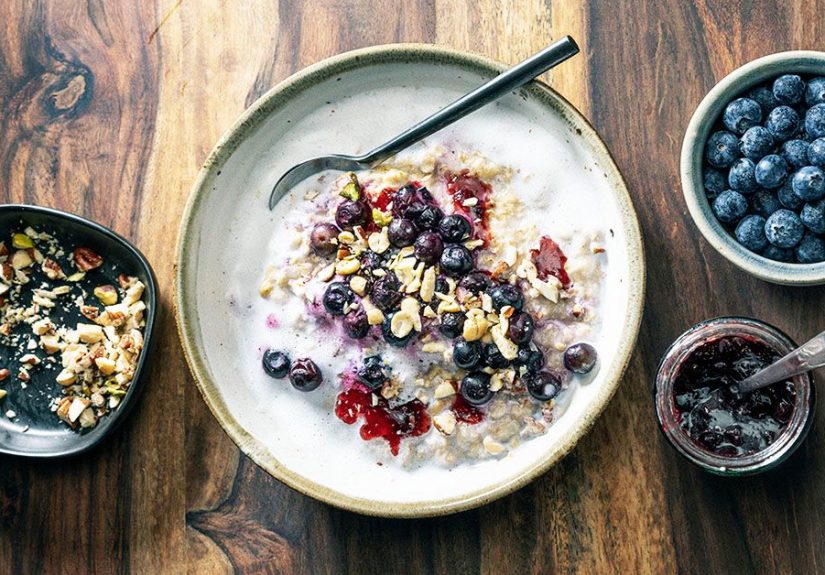
4) Blueberry Baked Oatmeal for Meal Prep
Serves: 6–8
Ingredients:
- 3 cups rolled oats
- 2 teaspoons baking powder
- 1 teaspoon cinnamon
- 1/2 cup unsweetened applesauce
- 2 eggs (or equivalent egg substitute)
- 1 1/2 cups skim milk or unsweetened soy milk
- 1 to 1 1/2 cups blueberries (fresh or frozen)
- 1 teaspoon vanilla extract
- 2 tablespoons chopped almonds (optional)
Directions:
- Preheat oven to 350°F (175°C).
- Mix wet ingredients in a bowl, then stir in oats, baking powder, and cinnamon.
- Fold in blueberries and pour into a lightly greased baking dish.
- Bake 30–35 minutes until set.
- Slice and store in the fridge for grab-and-go breakfasts.
Meal-prep tip: Reheat with a splash of milk and add extra berries on top.
5) Savory Oatmeal Bowl (Yes, really)
Serves: 1
Ingredients:
- 1/2 cup steel-cut or rolled oats
- 1 cup water or low-sodium broth
- 1/2 cup sautéed spinach or kale
- 1 tablespoon pumpkin seeds
- 1 tablespoon hummus or avocado
- Black pepper and garlic powder to taste
- Optional: soft-boiled egg or tofu cubes for protein
Directions:
- Cook oats in water or broth until tender.
- Transfer to a bowl and top with greens, seeds, and hummus or avocado.
- Add protein if using, then season to taste.
Why it’s cholesterol-friendly: It shifts your oatmeal away from sugar and toward fiber, healthy fats, and a more balanced meal.
How long does it take to see results?
Oatmeal is not a same-day miracle (despite what dramatic headlines might imply). Cholesterol changes usually show up over weeks to months, especially when oats are part of a broader routine that also improves saturated fat intake, activity levels, and meal consistency.
The best approach is to treat oatmeal like a habit, not a challenge. If you eat oats most days, build your bowl well, and keep the rest of your diet reasonably heart-friendly, you’re doing something meaningful.
When oatmeal is not enough
If you have very high LDL cholesterol, a strong family history of heart disease, diabetes, or other risk factors, oatmeal can still helpbut you may also need medication or a more structured medical nutrition plan. That’s not failure. That’s modern healthcare doing what it’s supposed to do.
Oatmeal is a tool, not a personality trait.
Experience-based examples: what people often notice when they add oatmeal for cholesterol support
One of the most common experiences people report is that oatmeal works best when it solves a practical problem, not just a cholesterol problem. For example, someone who used to skip breakfast might start with a simple overnight oats jar because mornings are chaotic. Within a few weeks, they notice they’re less likely to grab a pastry and sugary coffee mid-morning. The oatmeal itself helps, but the bigger win is that it quietly replaces a routine that wasn’t doing their heart any favors.
Another common pattern is the “healthy oatmeal trap.” A person starts eating oats, but the bowl becomes a dessert situation: flavored packets, brown sugar, sweetened dried cranberries, honey, and granola on top. It still looks healthy, but blood sugar spikes and calorie intake can creep up. Once they switch to plain oats and let fruit, cinnamon, and a small amount of nuts do the heavy lifting, the meal becomes more balanced and more satisfying. This is often when oatmeal starts feeling like a real habit instead of a short-lived wellness experiment.
Meal prep also makes a huge difference. People who cook steel-cut oats or bake a pan of oatmeal on Sunday tend to stick with it longer than people who rely on willpower every morning. When breakfast is already in the fridge, consistency gets much easier. A lot of people discover they don’t even need a brand-new recipe every daythey just rotate toppings. Monday might be blueberries and walnuts, Tuesday banana and chia, Wednesday apple-cinnamon, and so on. Same oat base, different flavor, less decision fatigue.
Some people are surprised by how full oatmeal can be when it includes protein and fat. A plain bowl made with water may leave them hungry fast, but oats made with milk or soy milk plus Greek yogurt, chia, or nut butter feel completely different. They stay full longer, snack less impulsively, and feel more stable through the morning. That matters for cholesterol goals because consistency is easier when you’re not constantly hungry.
There are also people who genuinely don’t love sweet breakfasts, and once they try savory oatmeal, everything clicks. A warm bowl with greens, seeds, black pepper, and a protein topping can feel more like a comfort-food lunch than a “health breakfast.” For these eaters, savory oats often become the version they keep long-term.
The big takeaway from these real-world patterns is simple: oatmeal helps most when it fits your life. The best cholesterol-friendly oatmeal routine is not the most complicated one. It’s the one you can repeat on busy mornings, stressful weeks, and normal Tuesdays when nobody is feeling especially motivated.
Conclusion
Oatmeal earns its reputation for cholesterol support because it combines convenience with real nutrition science. Thanks to beta-glucan soluble fiber, oats can help lower LDL cholesterol as part of a heart-healthy eating pattern. The most effective strategy is to choose minimally sweetened oats, build your bowl with fiber-rich toppings and healthy fats, and stay consistent over time.
Whether you prefer a classic hot bowl, overnight oats in a jar, or baked oatmeal for meal prep, there’s a version that can work for your routine. Keep it simple, keep it regular, and let your breakfast do more than just “hold you over.”