
Table of Contents >> Show >> Hide
- What the Navy video is actually about
- Why the footage hit so hard
- The key detail people miss: UFO is a description, not a conclusion
- What later reviews have said about the Navy videos
- How the government’s stance evolved
- Why the story remains compelling anyway
- The skeptical case is stronger than fans like to admit
- So, did the Navy really have a run-in with a UFO?
- Why this matters beyond the alien angle
- Experiences related to the Navy UFO video: what the encounter feels like from different angles
- Conclusion
Every few years, the internet rediscovers one of its favorite hobbies: staring at grainy footage and asking, with full dramatic flair, “So… aliens?” The famous U.S. Navy UFO video sits right at the center of that ritual. It has fighter pilots, radar contacts, a white “Tic Tac” object, a patch of disturbed water, and just enough official confirmation to make everyone sit up straighter in their chairs. In other words, it is catnip for news junkies, science nerds, skeptics, believers, and that one friend who turns every group chat into a mini episode of The X-Files.
But the real story is more interesting than the usual “it’s definitely aliens” versus “it’s obviously nothing” food fight. The video tied to the U.S. Navy’s most famous UFO encounter is part of a much bigger conversation about flight safety, military reporting, sensor limits, public trust, and how easily mystery expands when the data shrinks. The footage matters not because it proves extraterrestrials popped by for a sightseeing cruise, but because it shows how trained military personnel encountered something they could not immediately explainand the U.S. government eventually admitted the incident was worth taking seriously.
This is the difference between a tabloid headline and a useful article. The headline screams. The useful article asks better questions. So let’s do that.
What the Navy video is actually about
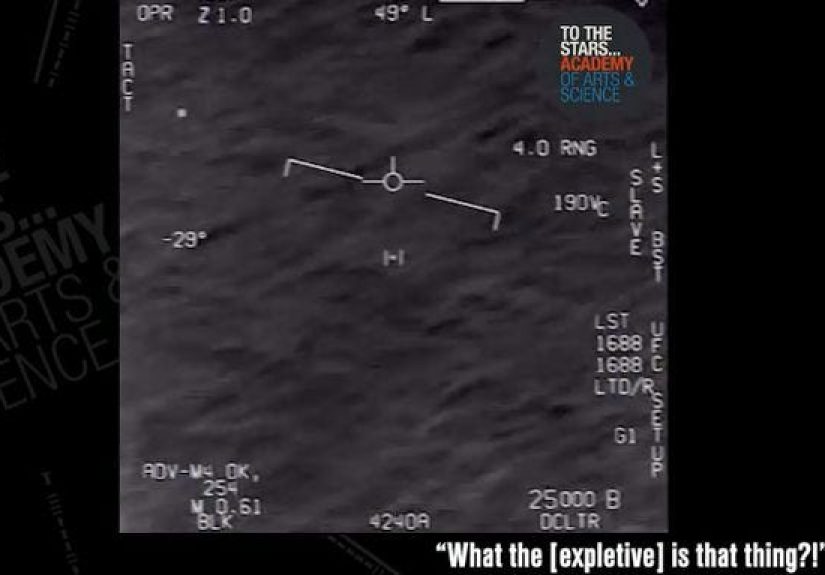
When people say “the U.S. Navy UFO video,” they are often talking about the 2004 USS Nimitz incident, the encounter that produced the famous “FLIR” clip and the legendary “Tic Tac” description. On November 14, 2004, Navy aviators connected to the Nimitz Carrier Strike Group were training off the coast of Southern California when they were redirected to investigate an unusual contact. Retired Navy Cmdr. David Fravor later described seeing a white, oblong object with no visible wings, no rotors, and no obvious exhaust. Lt. Cmdr. Alex Dietrich, who was also there, has similarly described something that moved in ways the crew did not understand.
The encounter became famous for good reason. It was not just one pilot squinting into the horizon after too much coffee. Multiple aviators were involved, and other personnel in the strike group had reportedly been tracking unusual contacts before the visual encounter happened. That detail matters. The story did not begin with a viral clip. It began with a military training environment, trained observers, and a chain of events that sounded strange even before the public ever saw video.
And yes, the object got nicknamed “Tic Tac,” which is somehow both goofy and iconic. Frankly, it is hard to sound melodramatic about an object named after a breath mint, and that may be one reason the story has stuck around. It feels weirdly human.
Why the footage hit so hard
The power of the Navy UFO video is not visual clarity. In fact, the footage is fuzzy enough to make a potato look high-definition. Its power comes from context. The public was not just watching an odd blob on a screen; it was watching an object that military personnel had already treated as unusual. Later, the Department of Defense formally released three historical Navy videos in 2020, saying it wanted to clear up misconceptions about whether the footage was real and whether more was hidden in the clips.
That release gave the story a second life. Once the Pentagon publicly acknowledged the videos, the conversation shifted. The debate was no longer about whether the footage existed. It did. The debate became what, exactly, the footage showed.
That distinction is everything. Authentic video is not the same as a solved case. Official release is not the same as an alien confession. “Unidentified” does not automatically mean “extraterrestrial.” It only means what it says on the label: the object was not identified at the time.
The key detail people miss: UFO is a description, not a conclusion
This is where public conversation often takes a running leap off a cliff. A UFOor, in current government language, a UAP, short for unidentified anomalous phenomenais not a verdict. It is a temporary category. It means something was observed and not immediately explained with confidence.
That matters because the U.S. government has repeatedly said two things at once. First, some encounters are genuinely unresolved. Second, officials have found no evidence that the unresolved cases prove extraterrestrial technology. Those two statements are not contradictory. They are what serious uncertainty sounds like.
In the 2021 preliminary assessment from the Office of the Director of National Intelligence, 144 reports were examined and only one had been identified with high confidence at that stage. The report also said UAP posed a safety-of-flight issue and could present a national security challenge. That is a very different tone from old-school jokes about little green men. The military concern is not really “Are aliens real?” It is “What is in restricted airspace, and can it hurt people or gather intelligence?”
What later reviews have said about the Navy videos
Here is where the story gets even more interestingand a little less cinematic.
The 2004 FLIR video
The 2004 “FLIR” clip tied to the Nimitz case remains the most debated. Officials and analysts have not landed on a single neat, bow-wrapped public explanation for what is seen in that footage. That unresolved status is a big reason the video still circulates. It remains a kind of floating question mark in military history.
That said, unresolved does not mean magical. It may reflect missing data, incomplete records, limitations of the sensor, or the fact that later investigators are trying to reconstruct an event from a partial trail. Mystery is not always evidence of something exotic. Sometimes it is just what happens when the filing cabinet shows up half-empty.
The GoFast and Gimbal videos
Two of the other famous videos have moved closer to ordinary explanations. ABC News reported that experts working with the government had plausible explanations for both. In the “GoFast” clip, what seemed like extreme speed may have been an optical illusion created by viewing angle and sensor geometry. In the “Gimbal” clip, the apparent rotation may have been caused by the aircraft’s camera system rather than the object itself physically spinning like a flying top.
That does not make the videos fake. It makes them a reminder that advanced sensors can still confuse human viewers. People often assume that if it came from military hardware, it must be crystal clear. Not so. High-tech systems still produce ambiguous images, and ambiguous images are basically a buffet table for internet speculation.
How the government’s stance evolved
One of the biggest changes in this entire story is not the footage. It is the tone. For years, UFO reporting carried a stigma. Pilots did not exactly want to become office legend for chasing “the weird sky mint.” Over time, that began to change.
The Navy moved to formalize reporting guidance after increased concern about unauthorized or unidentified aircraft sightings. Congress asked more questions. The Pentagon created structures to collect and analyze reports. The result was not a giant disclosure event with theme music and dramatic curtains. It was bureaucracy. Honest, slightly boring bureaucracy. Which, in this case, is actually reassuring.
By the 2022 annual report, the government said the catalog had grown to 510 UAP reports. More than half of the newly examined cases showed unremarkable characteristics, and many were linked to drones, balloon-like entities, or clutter. But 171 remained uncharacterized and unattributed at that stage. In plain English: some cases turned out to be ordinary things, some stayed open, and the government still wanted more data.
Then came the 2024 consolidated annual report, which included 757 cases reported to U.S. authorities from May 2023 to June 2024, including previously unreported incidents from earlier periods. Investigators found explanations for nearly 300 of them, often identifying balloons, birds, aircraft, drones, or satellites. Hundreds more remained unresolved, often because the information was too thin to support a firm conclusion. That is not the language of a secret alien handshake. It is the language of analysts staring at incomplete evidence and refusing to pretend otherwise.
Why the story remains compelling anyway
If so many cases eventually turn into balloons, glare, geometry, or misidentification, why does the Navy UFO video still command attention? Because the Nimitz case sits in a sweet spot of credibility and uncertainty.
On one side, you have trained military observers, radar discussions, and official acknowledgment that the footage is genuine. On the other, you have incomplete evidence, technical limitations, and no official finding of extraterrestrial origin. That creates a rare thing in public life: a mystery that is sturdy enough to survive ridicule but not sturdy enough to become proof.
Also, let’s be honest, the public is emotionally attached to the possibility that the universe might occasionally peek through the blinds. People want wonder. They also want confirmation. The Navy video offers the first one but not the second, which is why it keeps getting replayed. It is mystery with government stationery.
The skeptical case is stronger than fans like to admit
There is a temptation to treat skepticism like the villain in this story, but that is lazy. Skeptical analysis has done important work here. It has shown how easily heat signatures, viewing angles, glare, parallax, and camera mechanics can create the illusion of impossible movement. In some cases, the “physics-defying craft” may be less “interstellar visitor” and more “complicated sensor picture that absolutely wrecked our intuition.”
That does not mean every witness was wrong or that every strange encounter is solved. It means caution is a feature, not a bug. The best investigators are not trying to kill the mystery. They are trying to keep excitement from outrunning evidence.
Frankly, that is the healthiest possible posture for this topic. If a case is extraordinary, it should survive ordinary scrutiny. If it collapses under basic technical review, then it was never a strong case to begin with.
So, did the Navy really have a run-in with a UFO?
Yesif we use the term correctly. Navy personnel encountered something they could not identify in the moment, and at least some related footage remains officially unresolved. In that literal sense, it was a run-in with a UFO.
Noif by UFO we mean confirmed alien spacecraft. Official reviews have repeatedly said there is no evidence of extraterrestrial origin. That remains the sober, evidence-based answer, even if it is less exciting than Hollywood would prefer.
The most defensible reading is this: the Navy encountered an aerial phenomenon that was significant enough to report, strange enough to remember, and ambiguous enough to resist easy resolution. That alone makes it important.
Why this matters beyond the alien angle
The real takeaway from the Navy UFO video is not cosmic. It is practical. Unknown objects in military airspace matter whether they are drones, clutter, classified programs, foreign systems, sensor artifacts, or genuinely unresolved anomalies. A pilot does not need an alien to have a bad day. They just need something in the wrong place at the wrong time.
That is why official reports keep emphasizing flight safety and national security. Even unspectacular explanations can still be serious. A balloon near a training area is still a problem. A drone shadowing aircraft is still a problem. A misidentified object that forces a pilot to react in real time is still a problem. The stakes do not begin only when a spaceship lands on the White House lawn.
Experiences related to the Navy UFO video: what the encounter feels like from different angles
The most fascinating part of the “Video Shows U.S. Navy Run-in With UFO” story is not just the footage itself. It is the human experience wrapped around it. For the pilots, this was not a campfire story. It was an interruption inside a real military training day, where attention, judgment, and time matter. Imagine being in a cockpit, following routine procedures, and then being told to check a contact that does not behave the way aircraft are supposed to behave. There is no dramatic movie soundtrack. There is only training, adrenaline, and the mental scramble of trying to match what you are seeing with everything you know about speed, distance, motion, and threat.
For aviators like Fravor and Dietrich, the experience seems to have carried a strange mix of professionalism and disbelief. That combination is part of why their recollections continue to resonate. They were not performing for a camera in the moment. They were working. In accounts that later reached the public, the emotional tone was less “we met aliens” and more “we saw something odd enough that it broke the normal flow of the mission.” That distinction gives the story weight. These were not random observers pointing phones at the sky from a parking lot. These were trained military personnel noticing that the usual categories were not doing their job.
Then there is the experience of the people not in the cockpit but still inside the event: radar operators, intelligence staff, supervisors, and later analysts. Their experience is different. They do not get the visual drama of a white object over disturbed water. They get screens, tracks, technical uncertainty, and the challenge of deciding whether a weird return is clutter, hardware limitation, operator error, or something truly unusual. In a way, theirs may be the most frustrating role of all. Pilots can at least say, “I saw something.” Analysts often have to say, “I have a fragment of something, and it is not enough.”
And then comes the public experience, which is its own circus. For viewers on the ground, the Navy UFO video lands somewhere between credible military mystery and modern folklore. People bring their beliefs to it. Believers see validation. Skeptics see camera effects. Casual viewers see a murky clip and wonder why the entire internet is yelling at a gray blob. Yet the video keeps pulling people in because it feels like a rare overlap between official institutions and unresolved wonder. It is not just a rumor. It is a rumor with paperwork.
There is also the experience of disappointment, which sounds negative but is actually healthy. Many people come to the Navy UFO video hoping for a final answer and leave with a more complicated reality: some incidents are explainable, some remain unresolved, and “unresolved” is not the same thing as “extraterrestrial.” That can feel unsatisfying, but it is also how real investigations work. Real life is not obligated to deliver a tidy ending.
In that sense, the enduring experience of this story is not fear. It is tension. Tension between witness and instrument. Between certainty and ambiguity. Between what a pilot remembers, what a camera records, and what investigators can prove years later. That tension is exactly why the Navy UFO video still matters. It captures a modern experience many people recognize far beyond this topic: having just enough information to know something happened, and not nearly enough to say exactly what.
Conclusion
The U.S. Navy UFO video endures because it lives in the narrow lane between official confirmation and unresolved mystery. The footage is real in the sense that it is authentic military material. The event behind it was serious enough to be investigated. Some related videos now have plausible ordinary explanations, while the 2004 Nimitz case still resists a fully satisfying public answer. That does not make it proof of aliens. It makes it proof that ambiguity, once captured on video and stamped with government credibility, is incredibly hard to shake.
And maybe that is why this story still works so well. It gives everyone something. Skeptics get a lesson in optics and data limits. Believers get a mystery that still has some air in its lungs. Reporters get a durable headline. The military gets a reminder that strange things in restricted airspace are worth reporting even when nobody can explain them on day one.
So yes, the video shows a U.S. Navy run-in with a UFOif we keep the term honest. It shows an unidentified object, not a proven alien craft. That may sound less flashy, but it is more interesting. Because once you strip away the hype, what remains is a very modern kind of mystery: documented, debated, partially explained, and still just unresolved enough to keep us looking up.