Table of Contents >> Show >> Hide
- First, a quick “does it work?” answer
- Eczema 101: why it’s so stubborn
- Why turmeric is even in the eczema conversation
- What the research says about turmeric (curcumin) for eczema
- How to try turmeric for eczema (without making things worse)
- Safety: who should be careful (or skip turmeric supplements)
- Don’t let turmeric distract you from what works for eczema
- Bottom line: should you try turmeric for eczema?
- Real-World Experiences: What People Commonly Report (About )
Turmeric is having a moment. It’s in lattes, gummies, skincare, and probably someone’s group chat titled “Anti-Inflammatory Era ✨.” So it’s fair to ask: can turmeric actually help eczema… or is it just turning your countertop (and your fingers) a fashionable shade of mustard?
Here’s the honest, science-based take: turmeric (specifically curcumin, its main active compound) looks promising for inflammation, and early research suggests it might ease certain eczema symptoms for some people. But the evidence isn’t strong enough to call it a reliable, stand-alone treatmentyet. The best approach is to treat turmeric like a “maybe helpful sidekick,” not the superhero of your eczema routine.
First, a quick “does it work?” answer
Turmeric may help eczema indirectly by supporting the body’s inflammatory balance and antioxidant defenses. A few small studies and reviews suggest curcumin (taken orally or applied topically in formulated products) can reduce symptoms such as itching, redness, and thickened patches in some cases. But:
- Studies are limited (often small, short, and using different formulations/doses).
- Not all turmeric is created equal (bioavailability and quality vary wildly).
- It can irritate skin or trigger allergic contact dermatitis in some peopleespecially DIY turmeric paste experiments.
- Supplements can interact with medications and, rarely, have been linked to liver injuryespecially high-dose products and enhanced-absorption formulas.
So yes, turmeric might helpparticularly as part of a bigger plan. But if you’re currently in a flare and your skin feels like it’s auditioning for a role as “Volcano #2,” turmeric is not your emergency extinguisher.
Eczema 101: why it’s so stubborn
Eczema (most commonly atopic dermatitis) is more than “dry skin.” It’s a chronic condition involving:
- Skin barrier disruption (moisture escapes, irritants get in).
- Immune overactivity (inflammation ramps up when it shouldn’t).
- Itch-scratch cycle (scratching damages skin, which increases inflammation, which increases itching… rude).
- Triggers like soaps, sweat, stress, allergens, weather changes, infections, and sometimes fabrics or fragrances.
Because eczema is driven by both barrier problems and immune signaling, the most effective treatment plans usually combine: consistent moisturization + trigger management + targeted anti-inflammatory treatment. Turmeric, if it helps, would be working mostly on the inflammation sidenot rebuilding your barrier by itself.
Why turmeric is even in the eczema conversation
Turmeric is a spice from the root of Curcuma longa. The star ingredient is curcumin, which researchers have studied for: anti-inflammatory, antioxidant, and immune-modulating effects.
In lab and early clinical research, curcumin appears to influence multiple inflammatory pathways involved in skin irritationthink of it like a “volume knob” that may turn down some of the chemical signals that contribute to redness and itching. That said, what happens in a lab dish doesn’t always translate perfectly to real-life eczema on real-life humans who also have real-life stress and real-life laundry detergent decisions.
What the research says about turmeric (curcumin) for eczema
1) Oral turmeric/curcumin: intriguing, but not definitive
Oral turmeric (food) and curcumin supplements (capsules/tablets) are popular because they’re easy to try. Some clinical research and dermatology reviews suggest oral curcumin may improve inflammatory skin conditions, and eczema is included in the “worth studying” category.
The main challenges:
- Absorption is a problem. Curcumin on its own is poorly absorbed. Many supplements add absorption enhancers (like piperine/black pepper extract) or use special delivery systems. That may boost absorptionbut can also increase the chance of side effects and interactions.
- Doses and products vary. One person’s “turmeric supplement” may be mostly turmeric powder; another’s may be concentrated curcuminoids with bioavailability tech that changes how the body processes it.
- Eczema outcomes aren’t standardized. Studies may measure different symptoms (itch, redness, dryness, thickness), and results can’t always be compared easily.
Practical takeaway: oral turmeric/curcumin is not a guaranteed eczema fix, but some people may notice modest improvementespecially with itching or general inflammation. If you try it, it should be part of a broader eczema plan, not a replacement for treatments with stronger evidence.
2) Topical turmeric/curcumin: formulation matters (and so does your white T-shirt)
Topical curcumin is interesting because it targets the skin directly. Some studies and reviews describe improvements in eczema-like symptoms using formulated topical products. However, “formulated” is doing a lot of work in that sentence.
Important details:
- Curcumin is tricky to deliver through skin. Many studies use gels, microemulsions, or ointments designed to improve penetration and stability.
- DIY turmeric paste is a gamble. Turmeric can stain, irritate, and trigger allergic contact dermatitis in some people.
- “Natural” doesn’t mean “non-reactive.” Plant compounds can still cause skin reactionsespecially on eczema-prone skin, which is already reactive.
Practical takeaway: if you want to try topical turmeric, you’ll usually do better with a well-formulated product than kitchen-counter turmeric mixed with coconut oil and optimism. (Optimism is great. It’s just not a preservative.)
3) Turmeric in food vs supplements: which is better for eczema?
For many people, the safest and simplest starting point is food. Using turmeric in cooking is typically lower-dose and less likely to cause side effects than supplements. It’s also easier to stop if it doesn’t agree with you.
Supplements may deliver higher doses and enhanced absorption, which could theoretically increase benefitbut also increases the importance of: quality, dosing caution, and medical compatibility.
How to try turmeric for eczema (without making things worse)
Step 1: Keep your “eczema essentials” steady
If you change five things at once, you’ll never know what helped (or what started the flare). Keep the basics stable:
- Daily fragrance-free moisturizer (especially after bathing)
- Gentle cleanser (or cleanser only where needed)
- Known prescription/OTC eczema treatments as directed
- Trigger reduction where possible (heat/sweat, harsh detergents, fragranced products)
Step 2: Try “food-first” turmeric
Easy ways to add turmeric without going full supplement mode:
- Golden milk (warm milk or fortified non-dairy + turmeric + cinnamon; go easy on sugar)
- Scrambled eggs or tofu with a pinch of turmeric
- Roasted veggies with olive oil, turmeric, and black pepper
- Soups, lentils, rice, or chicken dishes that already like spices
If your eczema is sensitive to certain foods, keep it simple and introduce turmeric gradually. Food triggers are individualthere’s no universal “eczema diet” that works for everyone.
Step 3: If considering supplements, use a “smart and slow” rule
If you’re thinking about curcumin supplements, especially if you’re a teen or you take any medications, it’s a good idea to check in with a clinician first. If you do proceed, a safer approach is:
- Start low (don’t jump to mega-dose “high potency” right away).
- Avoid stacking (don’t take multiple turmeric products at the same time).
- Choose reputable quality (look for third-party testing seals such as USP, NSF, or ConsumerLab-style verification).
- Give it a fair trial (often 4–8 weeks), unless side effects show up.
Also: supplements are not regulated like prescription drugs. Labels can be confusing, and more “bioavailable” isn’t automatically better if it increases side effects for you.
Step 4: If trying topical turmeric, patch test like you mean it
If you try a turmeric-containing cream:
- Test a tiny amount on a small area (like inner forearm) once daily for 3–5 days.
- Watch for burning, worsening redness, bumps, or itching that feels “new” or different.
- If there’s irritation, stop. Eczema skin is already on edge; don’t give it extra drama.
Avoid applying raw turmeric powder directly to eczema patches. Besides staining, it can be irritating, and curcumin is a known potential contact allergen.
Step 5: Track results like a scientist (a slightly itchy scientist)
A simple tracking method:
- Take photos weekly in similar lighting
- Rate itch daily (0–10)
- Note sleep disruptions
- Record flares and obvious triggers (sweat day, new soap, stress week, etc.)
If you see improvement, great. If you don’t, you can stop without feeling like you “failed.” Your skin isn’t grading your effortit’s reacting to biology.
Safety: who should be careful (or skip turmeric supplements)
If you take blood thinners or clot-affecting meds
Turmeric/curcumin can affect blood clotting. If you take anticoagulants (like warfarin) or antiplatelet meds, turmeric supplements may increase bleeding risk. This is one of the most common “please don’t freestyle this” situations.
If you have gallbladder issues, kidney stone risk, iron concerns, or diabetes meds
High-dose turmeric supplements may not be a great fit for some people with gallbladder disease. There’s also evidence turmeric can interfere with iron absorption, and curcumin may affect blood sugarmeaning it could complicate diabetes management for those on glucose-lowering medications.
Watch for stomach upset and skin reactions
Oral turmeric/curcumin can cause GI side effects like nausea, reflux, diarrhea, or stomach upsetespecially at higher doses. Topical curcumin can cause itching or hives in some people.
Rare but serious: possible liver injury with high-dose supplements
Most people tolerate turmeric in food well. However, there have been reports of liver injury linked to turmeric/curcumin supplements, particularly at higher doses and sometimes with absorption enhancers. If you ever notice signs like unusual fatigue, dark urine, yellowing of the skin/eyes, or significant abdominal pain after starting a supplement, stop and seek medical care.
Don’t let turmeric distract you from what works for eczema
Turmeric may be helpful for some people, but the backbone of eczema care still tends to be:
- Moisturizers (daily, generous, fragrance-free)
- Anti-inflammatory topicals when needed (like topical corticosteroids, calcineurin inhibitors, and other dermatologist-recommended options)
- Trigger management (detergents, sweat, stress, fabrics, fragrances)
- Escalation for moderate/severe eczema (phototherapy, systemic meds, biologicsguided by a clinician)
The goal isn’t to choose between turmeric and medical care. The goal is to build a plan that keeps your skin calm and your life normal-ish. (Or at least normal enough that you can wear black without fear.)
Bottom line: should you try turmeric for eczema?
Turmeric is not a cure for eczema. But it may be worth trying as a supportive strategyespecially in food formif you approach it safely and keep expectations realistic.
If your eczema is mild and stable, experimenting carefully might be reasonable. If your eczema is severe, infected, rapidly worsening, or affecting sleep and daily life, it’s time to bring in a dermatologist. Turmeric can be a side note in your routinenot the whole chapter.
Real-World Experiences: What People Commonly Report (About )
When it comes to turmeric and eczema, real-world experiences tend to fall into a few familiar storylines. Not “medical proof,” but patterns you’ll hear again and again from people trying to calm their skin while still living a normal life (which includes sweat, stress, and occasionally eating something that definitely contains mystery ingredients).
Experience #1: The “food-first, slow and steady” tester.
This person starts adding turmeric to mealsnothing extreme, just a pinch in eggs, soups, or roasted vegetables. After a few weeks, they report that their skin feels “a little less angry.” Not magically healed, but maybe fewer flare days or slightly less itching at night. What’s interesting is that these folks usually keep the rest of their routine consistent: moisturize daily, avoid fragrance, use prescribed creams when needed. In other words, turmeric becomes part of an overall anti-inflammatory lifestylenot a solo act. The improvement, if it happens, tends to be modest and gradual.
Experience #2: The “supplement honeymoon… then stomach rebellion” situation.
Some people try curcumin capsules and feel hopeful early onespecially if their eczema is linked with other inflammatory issues like joint soreness or seasonal flare patterns. But then a common plot twist arrives: heartburn, nausea, or GI upset. They either lower the dose, switch brands, take it with food, or stop entirely. A frequent lesson here is that “high potency” doesn’t always mean “highly tolerable,” and absorption boosters (like black pepper extract) can be a double-edged sword: more absorption can mean more side effects for certain bodies.
Experience #3: The DIY turmeric paste experiment (also known as “Why is my towel yellow?”).
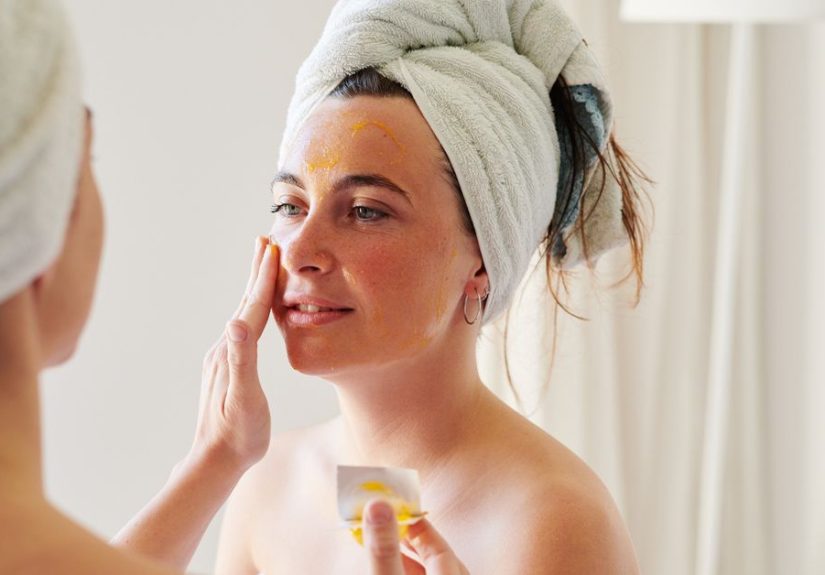
This is the most dramatic storyline. Someone mixes turmeric with water, honey, yogurt, coconut oilwhatever the internet served that dayand applies it directly to eczema patches. Sometimes they feel temporary soothing (likely from the occlusive nature of the mixture or the cooling effect), but a lot of people report staining, irritation, or a “hot,” prickly sensation. For sensitive skin, raw turmeric can be too muchespecially during an active flare when the barrier is already damaged. The best-case outcome is “no improvement, but my bathroom looks like a spice market.” The worst-case outcome is a clear rash reaction that looks different from usual eczema, suggesting irritation or contact allergy.
Experience #4: The “nothing happened, but I learned something useful” report.
Many people try turmeric and see no meaningful change in eczemano better, no worse. But they come away with useful information: their skin responds more to sleep quality, stress levels, detergent changes, and consistent moisturization than to trendy ingredients. That’s not a failure. It’s data.
Overall, the most positive experiences usually share the same traits: food-first or carefully chosen products, slow changes, consistent eczema basics, and realistic expectations. Turmeric might help some peoplebut it behaves more like a “supporting character” than the main hero of the story.