Table of Contents >> Show >> Hide
- 1. Liechtenstein Is TinyBut Not the Smallest
- 2. It’s One of Only Two Double-Landlocked Countries
- 3. It’s a Constitutional Monarchy with a Very Powerful Prince
- 4. There’s No Standing Army
- 5. Switzerland Once “Accidentally” Invaded
- 6. You Can Hike Across the Whole Country on the Liechtenstein Trail
- 7. Vaduz Castle Is a Real Royal Residence
- 8. It Has More Companies Than Citizens
- 9. You Could (Briefly) Rent the Entire Country
- 10. It’s Tiny but Multicultural and Surprisingly Busy
- What It’s Like to Experience These Liechtenstein Facts in Real Life
- Conclusion
Liechtenstein sounds like the made-up country in a spy movie, but it’s very real,
very tiny, and surprisingly fascinating. Tucked between Switzerland and Austria,
this Alpine principality is smaller than Washington, D.C., yet it packs in royal
castles, world-class hiking, a powerful monarchy, and more financial clout than
you’d ever guess from a place with fewer than 50,000 people.
If you love weird geography, obscure European history, and “wait, that can’t be
true” trivia, these Liechtenstein facts will be your new party trick material.
Let’s dive into ten of the most fascinating facts about Liechtensteinand then
we’ll talk about what it’s actually like to experience them in person.
1. Liechtenstein Is TinyBut Not the Smallest
A country you could cross in a day
Liechtenstein covers about 160 square kilometers (roughly 62 square miles), making
it the sixth-smallest country in the world by land area. Only Vatican City, Monaco,
Nauru, Tuvalu, and San Marino are smaller. For comparison, it’s a bit smaller than
Washington, D.C., and much smaller than most major U.S. cities.
The population is just over 40,000 people, which is less than many American college
towns. Yet despite its size, Liechtenstein manages to maintain its own government,
legal system, postal service, and national identity. The country is divided into
only 11 municipalities, so “crossing the border” from town to town happens quickly.
A small nation with a big standard of living
Don’t let the small footprint fool you. Liechtenstein consistently ranks among the
countries with the highest GDP per capita and a very high standard of living. Many
residents commute across borders for work, and foreign workers pour in daily from
Switzerland and Austria to work in its industries and financial sector. The tiny
country punches way above its weight economically.
2. It’s One of Only Two Double-Landlocked Countries
Landlocked on all sidestwice
Being landlocked means you have no coastline. Being double-landlocked means
not only do you have no coastline, but every country you border also has no coastline.
Liechtenstein is one of only two countries in the world with this status; the other
is Uzbekistan.
Liechtenstein borders only Switzerland and Austria. Both are landlocked, which means
that to get to the ocean from Liechtenstein, you must travel through at least two
countries. For a nation that once relied heavily on trade and transit, this has shaped
everything from its early economy to its close relationships with its neighbors.
3. It’s a Constitutional Monarchy with a Very Powerful Prince
Royal power that actually matters
Liechtenstein is a constitutional hereditary monarchy. In many European monarchies,
kings and queens are mostly symbolic. In Liechtenstein, the Prince still wields real
political power. The reigning prince has the authority to veto laws, dismiss the
government, and call referendums.
At the same time, modern democratic elements are strong. Liechtensteiners can initiate
referendums and constitutional amendments, and they’ve used that power to vote on
everything from women’s suffrage in the 1980s to the prince’s powers in the 2000s.
First female prime minister
Despite being deeply traditional, the country is still evolving. After becoming the
last country in Europe to grant women the right to vote in 1984, Liechtenstein has
gradually seen more women in leadership. Most recently, the principality has moved
toward appointing its first female prime minister, a milestone that reflects slow but
meaningful political change in a very small, conservative state.
4. There’s No Standing Army
A country that outsourced its defense
Liechtenstein has no standing military. None. It abolished its army in the 19th
century and never brought it back. For defense, it relies on close cooperation with
Switzerland and on its own policy of strict neutrality.
Residents can volunteer in the Swiss military, but you won’t see bases or tanks
scattered around the countryside. This lack of an army frees up public funds for
other priorities like infrastructure, education, and social services. It also fits
with Liechtenstein’s reputation as a low-drama, high-stability country.
5. Switzerland Once “Accidentally” Invaded
A very polite invasion
In 2007, about 170 Swiss soldiers on a nighttime training exercise got lost in the
rain and wandered more than a mile across the unmarked border into Liechtenstein
before realizing their mistake. They quietly turned around and headed home.
When Switzerland informed Liechtenstein of the accidental “invasion,” the reaction
was peak Liechtenstein: calm and dryly amused. Officials shrugged it off, pointing
out that there was no damage and that the incident had happened before. No tanks,
no planes, just a group of embarrassed soldiers and a very forgiving neighbor.
6. You Can Hike Across the Whole Country on the Liechtenstein Trail
One country, one trail
If you’ve ever wanted to walk across an entire country, Liechtenstein makes that
surprisingly doable. The 75-kilometer (about 47-mile) Liechtenstein Trail connects
all 11 municipalities, winding through castles, vineyards, villages, and mountain
views. It’s designed so you can tackle it in sections or over a long weekend.
The trail is well-marked and relatively accessible for most reasonably fit hikers.
Along the way you’ll pass historic fortifications, riverside paths, and panoramic
viewpoints over the Rhine Valley and the Alps. It turns the whole country into one
long outdoor museum and nature walk.
Short distances, dense experiences
Because the country is so compact, you’re never far from a bus stop, a café, or a
hoteleven while you feel like you’re deep in Alpine scenery. That “high density of
experiences” is exactly what the country’s tourism board likes to promote: you can
enjoy hiking, museums, castle views, and fine dining without ever traveling far.
7. Vaduz Castle Is a Real Royal Residence
The postcard-perfect symbol of Liechtenstein
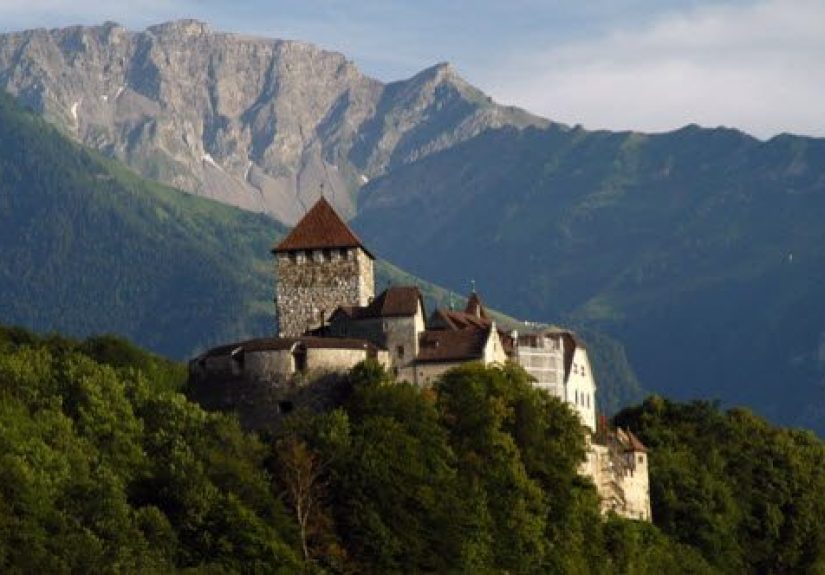
Perched on a hill above the capital, Vaduz Castle looks like something straight out
of a fantasy film. Unlike many European castles that are museums or hotels, Vaduz
Castle is still the official residence of the princely family.
That means the interior isn’t generally open to the public, but you can hike up to
viewpoints around the castle for great photos of the stone walls, towers, and the
Rhine Valley below. On the country’s national holiday in August, the prince invites
residents and guests onto the castle grounds for speeches, music, and fireworks
arguably one of the most intimate national celebrations in Europe.
An art-loving royal house
The princely family is known for its extensive art collection, which includes
Old Masters once housed in the castle. At one point, pieces of this collection were
sold to stabilize finances, illustrating how closely the fortunes of the royal
family and the country have been intertwined.
8. It Has More Companies Than Citizens
A microstate with macro finances
For years, one of the most surprising facts about Liechtenstein has been that the
country hosts more registered companies than citizens. Thanks to its business-friendly
regulations, low corporate tax rates, and strong legal protections, the principality
became a popular place to base holding companies, foundations, and financial firms.
Today, manufacturing is also important: Liechtenstein is home to globally active
industrial brands in tools, dental products, and precision engineering. That mix of
finance and high-value manufacturing helps explain the country’s high incomes and
low unemployment. It’s a textbook example of how a tiny state can specialize and
thrive in the global economy.
9. You Could (Briefly) Rent the Entire Country
The Airbnb listing to end all Airbnb listings
For a time in the early 2010s, a Liechtenstein-based events company ran a program
where you could “rent” the entire country for around $70,000 per night. The idea
was aimed at corporate retreats and VIP events rather than regular tourists, but
the package included custom branding around the capital, themed street signs, and
access to venues throughout the country.
The stunt attracted massive global media attention and cemented Liechtenstein’s
image as a quirky, creative microstate. While you can’t casually book Liechtenstein
on your favorite travel app anymore, the story lives on as one of the most
delightfully odd facts about the principality.
10. It’s Tiny but Multicultural and Surprisingly Busy
A global mix in a small Alpine valley
Despite its size, Liechtenstein is home to people from more than 100 different
nationalities. A large share of workers commute in from neighboring countries, and
many residents were born abroad. German is the official language, but you’ll hear
a local Alemannic dialect as well as plenty of Swiss German, Austrian German, and
other European languages.
Tourism also keeps the country active. Hundreds of thousands of visitors come each
year to hike, ski nearby, check Liechtenstein off their “every country” list, or
collect a passport stamp from one of Europe’s most obscure states. For a place so
small, there’s always something going onfestivals, cultural events, art exhibitions,
and sports.
What It’s Like to Experience These Liechtenstein Facts in Real Life
First impressions: arriving in a pocket-sized country
Visiting Liechtenstein feels a bit like stepping into a zoomed-in map. You cross
the Rhine from Switzerland or pass over from Austria, and almost immediately you’re
in the capital, Vaduz. There’s no dramatic “border moment”just a sign and, very
often, no border control at all thanks to Liechtenstein’s close integration with
Switzerland and the Schengen Area.
Your first clue that this isn’t just another Alpine village is how clean and
carefully organized everything is. Government buildings, banks, museums, and cafes
line the pedestrian street in Vaduz. Turn around, and there’s Vaduz Castle perched
above you, reminding you that yes, the royal family actually lives here.
Walking the Liechtenstein Trail
If you want to experience Liechtenstein’s scale in the most literal way, lace up
your hiking boots and hit the Liechtenstein Trail. Over a few days you can walk
the length of the country, from the southern border near Balzers to the northern
end around Ruggell. The trail signs, maps, and optional app make navigation easy
even if you’re not a hardcore hiker.
One moment you’re strolling through a village with tidy houses and flower boxes;
the next, you’re looking out over vineyards sloping down to the Rhine or climbing
into forested hills with cowbells echoing in the distance. Because the distances
are short, you can stop for coffee or lunch whenever you see a caféno need to
haul three days’ worth of snacks on your back.
Seeing the “fascinating facts” up close
Many of the famous Liechtenstein facts become real, tangible details when you’re
there:
- The double-landlocked status hits you when you realize the Rhine
is the major waterway, and the nearest sea is multiple borders away. You’re in
the middle of Europe, yet the ocean feels very far. - The lack of an army is noticeable mostly by what you don’t see:
no military bases, no soldiers in uniform, no jets overhead. It feels peaceful
in a very literal sense. - The monarchy’s presence is visible every time you look up at
Vaduz Castle. On national holiday events, when residents are invited up to the
castle grounds, that relationship between prince and people feels unusually
personal for a modern European state. - The microstate economy appears in the form of sleek office
buildings, carefully maintained industrial sites, and the fact that rush hour
in such a tiny country still feels busy because of all the cross-border workers.
Travel tips for exploring Liechtenstein
For most travelers, Liechtenstein works best as a focused two- or three-day stop:
- Use Switzerland (often Zurich or St. Gallen) as your arrival point, then take a
train and bus into Liechtenstein. - Base yourself in Vaduz or nearby Schaan for easy access to buses that crisscross
the country. - Spend one day exploring Vaduz, the museums, and castle viewpoints, and another
walking a section of the Liechtenstein Trail. - If you’re into geography, bring a good map so you can appreciate how quickly you
move from Switzerland to Liechtenstein to Austria and back again.
More than anything, be ready for the mental reset that comes from visiting a
country this small and this organized. It’s an ideal reminder that you don’t need
a huge territory or millions of people to create a distinctive culture, a strong
economy, and some very cool trivia.
Conclusion
Liechtenstein may look like a tiny patch of green on the map, but it’s packed with
fascinating details: a powerful prince, a double-landlocked location, a trail
that lets you walk the entire country, and a financial sector that keeps its
economy humming. Add in the accidental Swiss invasion, the brief “rent-a-country”
moment, and the mix of modern democracy with old-world monarchy, and you’ve got
one of the most intriguing microstates on Earth.
Whether you’re a geography nerd, a trivia collector, or a traveler hunting for
unique destinations, the fascinating facts about Liechtenstein are a reminder
that some of the most interesting stories come from the smallest places.