Table of Contents >> Show >> Hide
- Indoor Succulent Care That Actually Works
- 1) Snake Plant (Dracaena trifasciata)
- 2) Jade Plant (Crassula ovata)
- 3) Aloe Vera (Aloe barbadensis)
- 4) Zebra Haworthia (Haworthiopsis attenuata / Haworthia types)
- 5) Gasteria (“Ox Tongue”)
- 6) Burro’s Tail (Sedum morganianum)
- 7) Panda Plant (Kalanchoe tomentosa)
- 8) Christmas Cactus (Schlumbergera)
- 9) Ponytail Palm (Beaucarnea recurvata)
- 10) African Milk Tree (Euphorbia trigona)
- How to Choose the Right “Easy” Succulent for Your Home
- Common Indoor Succulent Mistakes (and How to Fix Them)
- Real-World Experiences: What It’s Like Living With Indoor Succulents (500-ish Words)
- Conclusion
If you want houseplants that don’t throw tantrums when you miss a watering, succulents are basically the
“low-maintenance roommate” of the plant world. Their superpower is storage: thick leaves, stems, or trunks
that hold water so they can coast through dry spells. Indoorswhere humidity is usually low and life is busy
that’s a very convenient personality trait.
But here’s the twist: most succulents don’t die from neglect… they die from “love.” Specifically, the kind of love
that looks like frequent watering, heavy soil, and pots without drainage. If you can master three simple rules,
you can keep these plants thriving for years.
Indoor Succulent Care That Actually Works
1) Light: bright is right (usually), but “scorch” is not a vibe
Indoors, aim for bright light near a window. Many succulents prefer bright, indirect light, while a few (like jade,
aloe, and African milk tree) can handle more direct sun if acclimated. If your plant starts stretching and leaning
like it’s trying to read a street sign from across the room, it’s asking for more light.
2) Water: soak, then ignore
The most reliable method is “soak and dry.” Water thoroughly until it runs out of the drainage hole, then don’t
water again until the potting mix is dry. Not “kind of dry.” Dry-dry. That gap might be a week or three depending
on season, pot size, light, and your home’s humidity.
3) Soil + pot: drainage isn’t optional
Succulents like fast-draining, airy mixes (think cactus/succulent potting mix amended with gritty material such as
perlite or pumice). Pair that with a pot that has a drainage hole. If the pot can’t drain, the roots can’t breathe,
and rot can move in like an unwanted houseguest.
A quick “is it easy?” checklist
- Forgives missed waterings (drought-tolerant)
- Handles indoor light (not full outdoor sun-only)
- Grows slowly (less constant repotting drama)
- Signals problems clearly (wrinkles, mush, stretcheasy to diagnose)
With that, let’s meet the easiest indoor succulentsthe ones that make beginners feel like botanical geniuses.
1) Snake Plant (Dracaena trifasciata)
If indoor succulents had an “employee of the month,” the snake plant would win while barely showing up.
It tolerates low light, doesn’t need much water, and still looks architectural and stylishlike it belongs in a
magazine spread titled People Who Have Their Life Together.
- Light: Low to bright indirect; brighter = faster growth.
- Water: Let soil dry completely; reduce in winter. If you’re unsure, wait a few more days.
- Best beginner tip: Overwatering is the fastest way to lose this plant. When in doubt: don’t.
2) Jade Plant (Crassula ovata)
Jade is the classic “mini money tree” succulent (not the same as the braided money tree, but equally iconic).
It grows into a chunky little indoor shrub/tree with thick leaves and a sturdy vibe. Give it enough light and it will
reward you with compact growth and a shape that’s easy to prune and train.
- Light: Bright light; a few hours of direct sun near a window is often ideal.
- Water: Water when the soil is nearly dry; don’t keep it constantly moist.
- Best beginner tip: Rotate the pot every week or two for even growth (jades lean).
3) Aloe Vera (Aloe barbadensis)
Aloe is the practical friend of your plant shelf: attractive, tough, and famously associated with soothing gel.
Indoors, aloe mainly asks for bright light and patience between waterings. When it’s happy, leaves look firm and plump;
when it’s thirsty, it can look slightly thinner and less springy.
- Light: Bright light; some direct sun can be great if it’s acclimated.
- Water: Infrequent, deep watering after the mix dries out.
- Best beginner tip: Use a gritty mix and avoid letting water sit in the crown (center).
4) Zebra Haworthia (Haworthiopsis attenuata / Haworthia types)
Zebra haworthia is tiny, striped, and basically built for indoor life. It’s one of the best “desk succulents”
because it can tolerate more moderate indoor light than many sun-hungry rosette succulents. Also: it’s cute enough
that people will ask about it, and you’ll suddenly become “the plant person.”
- Light: Bright indirect to moderate light; avoid harsh, all-day direct sun.
- Water: Let soil dry; then water thoroughly and drain.
- Best beginner tip: If it turns pale or stretches, bump it closer to a window.
5) Gasteria (“Ox Tongue”)
Gasteria is the underrated MVP of low-fuss indoor succulents. It’s aloe-like, slow-growing, and generally tolerant of
lower light than many succulents. If you want something hardy that doesn’t demand a sunroom, this is your plant.
- Light: Bright indirect is best, but it can cope with lightly shaded indoor spots.
- Water: Allow soil to dry out between waterings.
- Best beginner tip: Slow growth means fewer repotsand fewer chances to accidentally break things.
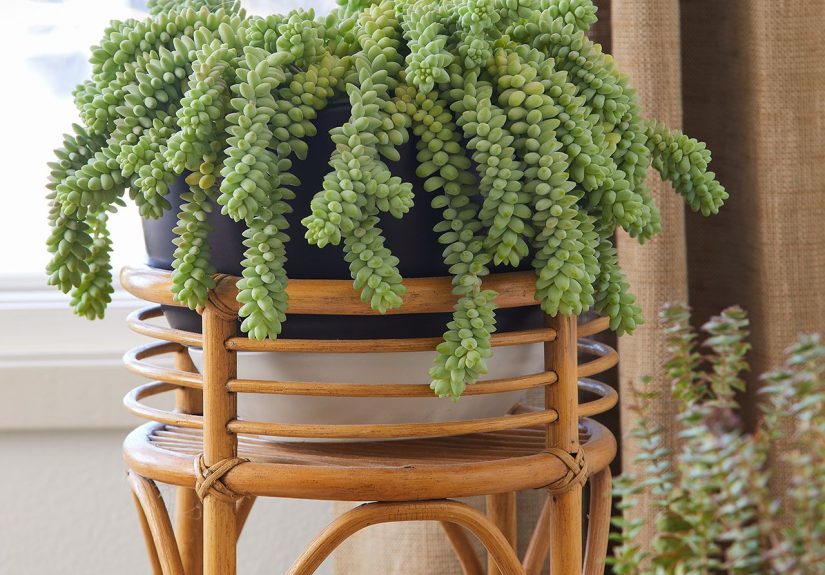
6) Burro’s Tail (Sedum morganianum)
Burro’s tail is the trailing succulent that looks like it was designed for hanging baskets and dramatic entrances.
It’s easy… with one condition: don’t touch it too much. Those plump little leaves drop if handled roughly, like the
plant is saying, “Please admire with your eyes only.”
- Light: Bright light; some gentle direct sun can work, but avoid scorching hot exposure.
- Water: Dry out well between waterings; many indoor setups need water surprisingly rarely.
- Best beginner tip: Place it where it won’t get bumped. Gravity already does enough.
7) Panda Plant (Kalanchoe tomentosa)
Panda plant has fuzzy leaves with darker edgeslike a succulent wearing a tiny velvet jacket. It’s slow-growing,
drought-tolerant, and happy indoors as long as it gets decent light and isn’t overwatered. It’s also a great “gateway”
plant for people who think succulents are all spiky or waxy.
- Light: Bright, indirect light; some morning sun is often fine.
- Water: Let soil dry between waterings; avoid water sitting on fuzzy leaves.
- Best beginner tip: If it stretches, it’s not being “artistic”it’s asking for more light.
8) Christmas Cactus (Schlumbergera)
Surprise: Christmas cactus is a cactus, but not the desert kind. It’s a tropical, forest-dwelling type that prefers
a little more consistent moisture than most succulents. That makes it perfect for people who want a succulent-like
plant but can’t resist watering occasionally. Bonus: it blooms when you’re craving color mostlate fall into winter.
- Light: Bright, indirect/diffused light.
- Water: Water when the top portion of the mix has dried (not necessarily bone-dry throughout).
- Best beginner tip: For blooms, it usually needs longer nights (darkness) and cooler temps for several weeks.
9) Ponytail Palm (Beaucarnea recurvata)
Not a true palm and not technically a classic succulent, but it behaves like one where it counts: it stores water in its
bulbous trunk and tolerates missed waterings like a champion. It’s an excellent “I travel / I forget / I’m busy” plantand
it adds instant personality with its fountain of curly leaves.
- Light: Bright light; some direct sun is often helpful.
- Water: During active growth, water and then let dry; cut way back in winter.
- Best beginner tip: A ponytail palm would rather be too dry than too wet. Soggy soil is the enemy.
10) African Milk Tree (Euphorbia trigona)
If you like tall, sculptural plants that look like cacti but prefer to identify as succulents, the African milk tree is your
new best friend. It’s fast-growing (for a succulent), visually dramatic, and pretty forgivingbut it has toxic, irritating
sap. So it’s “easy” with a safety note. Think: low-maintenance, high-boundaries.
- Light: Bright light; often happiest near a sunny window.
- Water: Sparingly; let soil dry down well between waterings.
- Best beginner tip: Wear gloves if pruning; keep away from kids/pets that nibble plants.
How to Choose the Right “Easy” Succulent for Your Home
If your space is lower light
Start with snake plant, gasteria, and zebra haworthia. They’re among the most forgiving “apartment light” options.
If you have a bright window that gets real sun
Jade, aloe, ponytail palm, and African milk tree will gladly take that upgrade. Just acclimate slowly if moving a plant
into stronger light so it doesn’t sunburn.
If you want something that looks dramatic in a hanging pot
Burro’s tail is the classic. Hang it where it won’t get brushed, bumped, or emotionally overwhelmed by constant attention.
If you want flowers indoors
Christmas cactus is the easiest entry point to indoor blooms without needing a complicated greenhouse setup.
Common Indoor Succulent Mistakes (and How to Fix Them)
Mushy leaves or a soft base
Usually overwatering or slow-draining soil. Pause watering, improve drainage, and consider repotting into a drier, grittier mix.
If rot has spread, you may need to take healthy cuttings and restart.
Wrinkled leaves that don’t plump up after watering
Could be underwatering, but it can also be root issues (roots damaged from previous overwatering). Check roots and soil condition.
Stretching (etiolation)
Your succulent is trying to reach the light. Move it closer to a brighter window or add a grow light. Rotate weekly for even growth.
Little bugs that look like cotton (mealybugs)
Isolate the plant, wipe with a cotton swab dipped in rubbing alcohol, and monitor. Good airflow and not overwatering helps prevent repeat visits.
Real-World Experiences: What It’s Like Living With Indoor Succulents (500-ish Words)
People usually start their indoor succulent era with pure optimism and one tiny potsomething cute and compact that looks like it belongs next to a laptop.
Then the first “experience” happens: you forget to water it for longer than you want to admit, and it’s still fine. That’s the moment succulents earn your trust.
You realize they’re not judging you for having a life. In fact, they seem to prefer it.
The second experience is the lighting learning curve. At first, you put your succulent where it looks best. Then it starts leaning like it’s
trying to eavesdrop on the window. Snake plants and gasterias may tolerate your interior-design decisions, but even they have limits.
Once you move a plant closer to brighter light and see the growth tighten upmore compact leaves, better coloryou start to “read” your plants.
It feels like decoding a very slow, very polite text message.
Next comes the watering confidence shift. Beginners often water on a schedule because it feels responsible. Over time, most succulent owners
learn a calmer rhythm: check the soil, lift the pot, observe the leaves, and only water when needed. It’s weirdly satisfying to water thoroughly
and then… do nothing. The plants teach you patience and restraint, which is not what anyone expected from a hobby involving cute pots shaped like animals.
Then there’s the “one bump” tragedy, usually starring burro’s tail. Someone brushes past it, leaves fall like confetti, and you learn why people
place trailing succulents up high. The silver lining is that dropped leaves can become propagation experimentslittle science projects that make you
feel like a wizard when they root. Not every leaf becomes a plant, but enough do to keep your hopes irresponsibly high.
Seasonal changes are another real-life lesson. In brighter months, your succulents may drink a bit more and grow faster. In winter, growth slows,
soil stays wet longer, and overwatering becomes easier. Many people experience their first “I over-loved it” moment during a darker season. After that,
you start treating winter like a succulent’s nap time: less water, more light, and fewer disruptions.
Finally, the best experience is the way succulents sneak into your routine. A jade plant gets pinched and turns into a fuller little tree. A Christmas cactus
blooms and suddenly your living room looks festive without you doing anything extra. A snake plant sits there quietly improving your space like a minimalist sculpture.
And before you know it, you’re the person giving friends cuttings in tiny pots, saying things like, “Just ignore it most of the time,” which is somehow both
plant advice and a life philosophy.
Conclusion
The easiest indoor succulents aren’t just “hard to kill”they’re plants that match how real people live. Choose types that fit your light, use a fast-draining mix,
water only after the soil dries, and give them a pot with drainage. Do that, and you’ll have a collection that looks great year-round with minimal stress and maximum
bragging rights.