Table of Contents >> Show >> Hide
- Why This Pressure Cooker Beef Tips with Noodles Recipe Works
- Best Beef for Pressure Cooker Beef Tips
- Ingredients
- How to Make Pressure Cooker Beef Tips with Noodles
- Tips for the Best Beef Tips and Noodles
- Easy Variations
- What to Serve with Pressure Cooker Beef Tips with Noodles
- Common Mistakes to Avoid
- Conclusion
- Kitchen Experiences and Real-Life Notes from Making This Recipe
Some dinners are polite. This one is not. Pressure Cooker Beef Tips with Noodles barges onto the table wearing a velvet robe of rich gravy, dragging a pile of buttery noodles behind it, and expecting applause. Honestly, it deserves it.
If you love cozy comfort food but do not love waiting half a day for beef to become tender, this recipe is your weeknight miracle. The pressure cooker does the heavy lifting, turning bite-size pieces of beef into spoon-tender little flavor bombs while onions, mushrooms, garlic, and broth team up to create a glossy, deeply savory sauce. Then come the egg noodles, which show up like they own the place. They kind of do.
This version is designed for real home cooks who want a meal that feels hearty and homemade without turning the kitchen into a disaster zone. It borrows the best ideas from classic beef tips, beef stroganoff, and old-school beef-and-noodles suppers, then simplifies them into a pressure cooker recipe that is practical, flexible, and absolutely worthy of seconds.
Why This Pressure Cooker Beef Tips with Noodles Recipe Works
The beauty of this dish is contrast. You get the big, slow-cooked flavor of a Sunday supper in a fraction of the time, but it still tastes like somebody’s grandmother has been lovingly watching the pot since lunchtime. The pressure cooker builds tenderness fast, while a quick stovetop finish lets you control the final texture of the sauce.
Here is what makes it especially good:
1. The beef stays tender instead of sad and chewy
A pressure cooker is perfect for beef tips because it helps break down tougher cuts quickly. When you use chuck roast or stew meat, the connective tissue softens into that luscious, comforting texture people usually associate with long braises. If you prefer a leaner bite, sirloin can work too, but chuck brings the richer, more classic “cozy dinner” payoff.
2. Browning adds serious flavor
Before pressure cooking, the beef gets a quick sear. This is not an optional dramatic flourish. Browning gives the meat a deeper, roastier flavor and leaves behind golden bits in the pot that dissolve into the sauce. Translation: your gravy tastes like it had ambition.
3. The sauce is rich without being fussy
Beef broth, Worcestershire sauce, garlic, onion, and mushrooms form the backbone of the gravy. A little tomato paste and Dijon mustard round out the flavor without turning the dish into tomato soup wearing a fake mustache. The finish is savory, balanced, and just thick enough to cling to every noodle.
4. Egg noodles make the whole thing feel like a hug
Wide egg noodles are ideal here because they catch the sauce beautifully and stay pleasantly tender. You can cook them separately for better control, then stir them into the finished beef tips or pile the gravy over the top. That keeps the noodles from soaking up every drop of liquid and becoming one giant carb sponge. A delicious carb sponge, but still.
Best Beef for Pressure Cooker Beef Tips
If you have ever stood in front of the meat case pretending you understand all the labels, welcome. For this recipe, you want a cut that can handle pressure cooking and reward you with tenderness.
- Chuck roast: The best all-around option. It has enough marbling to become tender and flavorful under pressure.
- Stew meat: Convenient and easy, though the pieces can vary in size. Trim any oversized chunks for even cooking.
- Top sirloin: A slightly leaner, more upscale choice. It cooks well in a pressure cooker, but the final texture is usually a bit firmer and less silky than chuck.
If you want that classic, cozy, “this tastes like somebody really cared” result, go with chuck. Cut it into evenly sized 1-inch pieces so the beef cooks consistently and looks nicer in the finished dish. Tiny cubes can dry out. Huge chunks can take forever. This is not the time for chaos.
Ingredients
- 2 pounds chuck roast or stew beef, cut into 1-inch pieces
- 1 teaspoon kosher salt, plus more to taste
- 1 teaspoon black pepper
- 3 tablespoons all-purpose flour
- 2 tablespoons olive oil
- 1 medium yellow onion, diced
- 8 ounces mushrooms, sliced
- 3 cloves garlic, minced
- 1 tablespoon tomato paste
- 1 tablespoon Worcestershire sauce
- 1 teaspoon Dijon mustard
- 3 cups low-sodium beef broth
- 1 teaspoon soy sauce, optional but excellent
- 12 ounces wide egg noodles
- 2 tablespoons cornstarch
- 2 tablespoons cold water
- 2 tablespoons butter
- 2 tablespoons chopped parsley
Optional finish: 1/4 cup sour cream for a stroganoff-style twist.
How to Make Pressure Cooker Beef Tips with Noodles
Step 1: Season and coat the beef
Pat the beef dry, then season it with salt and pepper. Toss it with the flour until lightly coated. The flour helps the beef brown and gives the final sauce a little body. Not a lot. Just enough to act like it has its life together.
Step 2: Brown in batches
Set the pressure cooker to sauté. Add the oil, then brown the beef in batches so the pieces actually sear instead of steam. Transfer the browned beef to a plate. Do not crowd the pot unless your dream dinner involves gray meat and regret.
Step 3: Build the flavor base
Add the onion and mushrooms to the pot. Cook for 4 to 5 minutes until softened and lightly golden. Stir in the garlic and tomato paste and cook for about 30 seconds, just until fragrant. Add Worcestershire, Dijon, and soy sauce if using.
Step 4: Deglaze and pressure cook
Pour in the beef broth and scrape up every browned bit from the bottom of the pot. Return the beef and any juices to the cooker. Lock the lid and cook on high pressure for 22 minutes. Let the pressure release naturally for 10 minutes, then quick-release the rest.
At this point, the beef should be tender enough to cut with the side of a spoon. If it is still a little firm, do not panic or write an emotional farewell letter. Seal the pot and cook for another 3 to 5 minutes on high pressure.
Step 5: Cook the noodles
While the beef finishes, boil the egg noodles in salted water until just tender. Drain and toss them with butter. This keeps them from sticking and gives them that glossy, comforting, diner-style finish.
Step 6: Thicken the sauce
Turn the pressure cooker back to sauté. Stir together the cornstarch and cold water, then add the slurry to the sauce. Simmer for 2 to 3 minutes until the gravy thickens. Taste and adjust seasoning. Stir in sour cream now if you want a slightly creamier, stroganoff-inspired vibe.
Step 7: Serve like you mean it
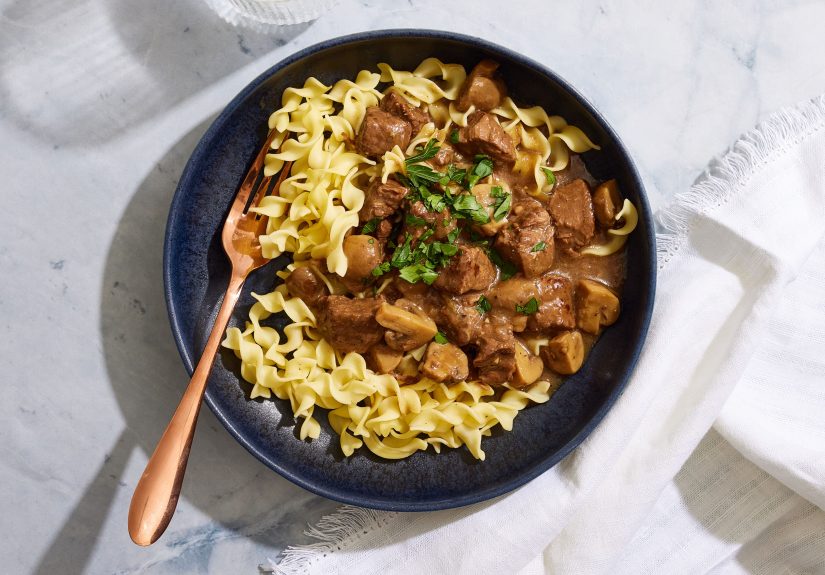
Spoon the beef tips and gravy over the buttered noodles. Scatter parsley over the top and serve hot. Ideally with a vegetable on the side, but nobody is judging if you go straight for bread.
Tips for the Best Beef Tips and Noodles
Use enough liquid, but not too much
Pressure cookers need liquid to come to pressure, but too much broth can leave you with a thin sauce that tastes like beef-flavored weather. Three cups is a sweet spot here: enough to cook the meat properly and enough to reduce into a silky gravy.
Do not skip the mushrooms unless you truly must
Even mushroom skeptics often like them in this dish because they melt into the sauce and add deep umami flavor. If you absolutely refuse, add an extra splash of Worcestershire or a little more onion to compensate.
Keep the noodles separate for leftovers
If you expect leftovers, store the noodles and beef tips separately. Otherwise, the noodles keep drinking the sauce overnight like they are being paid for it. The flavor is still great, but the texture gets softer by the day.
Choose your finish
For a classic homestyle version, keep the gravy glossy and beefy. For a more stroganoff-like finish, stir in sour cream at the end. For extra richness, a tablespoon of butter whisked into the sauce is never a bad idea.
Easy Variations
1. Creamy Beef Tips with Noodles
Add sour cream or a splash of heavy cream after pressure cooking for a sauce that leans more toward beef stroganoff.
2. Oniony Comfort-Food Version
Stir in a packet of onion soup mix if you want a nostalgic, casserole-adjacent flavor. It is salty, savory, and very “Midwestern aunt at a potluck,” in the best possible way.
3. Garlic Lovers’ Upgrade
Double the garlic and finish with a little roasted garlic butter on the noodles. This is not subtle, but subtlety is overrated at dinner.
4. Vegetable-Boosted Version
Add peas at the end or stir in cooked carrots for a slightly more balanced plate. Your future self may appreciate the effort.
What to Serve with Pressure Cooker Beef Tips with Noodles
This dish is hearty enough to stand on its own, but a few simple sides round it out beautifully:
- Steamed green beans with black pepper
- Roasted broccoli
- A crisp green salad with sharp vinaigrette
- Buttery dinner rolls
- Garlic bread, if you are fully committing to comfort food
If you want a little contrast, serve something bright and acidic alongside the rich gravy. A salad with lemon or vinegar helps keep the meal from feeling too heavy. If you want pure coziness, bring bread and call it a night.
Common Mistakes to Avoid
Overcrowding the pot while browning
If the beef is packed in too tightly, it steams instead of browns. That means less flavor and less texture. Brown in batches and accept your noble responsibility.
Adding the noodles too early
Noodles cooked under full pressure can become too soft fast. Cooking them separately gives you better texture and makes the dish easier to reheat.
Forgetting to deglaze
Those browned bits at the bottom of the pot are delicious, but they can also trigger the dreaded burn warning if not scraped up properly. Add broth and scrape thoroughly.
Serving immediately without tasting
The final sauce may need a pinch more salt, pepper, or Worcestershire. Taste before serving. This is the difference between “pretty good” and “who made this?”
Conclusion
Pressure Cooker Beef Tips with Noodles is the kind of recipe that earns a permanent place in the dinner rotation. It is rich, practical, deeply comforting, and flexible enough for weeknights, weekends, and cold evenings when nobody wants a salad pretending to be dinner. The pressure cooker cuts the cooking time dramatically, but the flavor still feels slow-built and satisfying.
Make it once with chuck roast and buttery egg noodles, and you will understand why variations of beef tips and noodles have stuck around for generations. It is not trendy. It is not delicate. It is not trying to impress anybody on social media. It is just really, really good. And sometimes that is exactly what dinner should be.
Kitchen Experiences and Real-Life Notes from Making This Recipe
The first time I made pressure cooker beef tips with noodles, I was aiming for “warm and comforting” and accidentally landed on “why is everyone suddenly standing in the kitchen with a fork?” That is the thing about this recipe: it smells like home before it even reaches the table. The sautéed onions and mushrooms start it off, the beef broth carries the aroma through the house, and once the lid comes off the pressure cooker, the whole kitchen suddenly feels like a small-town diner on a rainy day.
One of the biggest lessons I learned was that the beef cut really matters. I tried sirloin once because it looked neat and civilized in the package. The result was good, but chuck roast was better by a mile. Chuck turned silkier, richer, and more luxurious in the sauce. Sirloin said, “I am a respectable dinner.” Chuck said, “Cancel your plans and get bread.” For this particular dish, I always come back to chuck.
I also learned that people are weirdly passionate about noodles. Some want them fully mixed into the gravy. Others insist the noodles should stay separate until the last second so every bowl can be customized. After making this recipe several times, I now side with the “keep them separate” crowd, especially if leftovers are involved. It makes reheating easier, keeps the noodles from going overly soft, and lets the beef tips stay the star of the show instead of disappearing into a starchy fog.
Another real-life detail: browning the beef feels annoying when you are hungry, but it pays off every single time. I have rushed it before, and the difference in flavor was obvious. When the beef gets properly seared, the finished gravy tastes deeper and more developed, almost like it cooked for hours longer than it really did. It is one of those steps that seems small in the moment but changes the whole mood of the dish.
This recipe is also surprisingly forgiving. I have made it with extra mushrooms, with no mushrooms, with sour cream, without sour cream, with more garlic than any reasonable person would recommend, and even with a splash of red wine when I was feeling slightly fancy. It always comes back to the same comforting core: tender beef, savory gravy, soft noodles, and the kind of richness that makes people go quiet for the first three bites.
In my experience, this is one of the best dinners to make when you want leftovers that still feel exciting the next day. The beef becomes even more flavorful after sitting overnight, and the sauce thickens into something almost spoon-coatingly luxurious. Reheat it gently, boil fresh noodles, and it tastes like you planned your life beautifully, even if the truth is you just got lucky on a Tuesday.
Most of all, this recipe reminds me that comfort food does not have to be complicated to feel special. You do not need twenty ingredients, a full afternoon, or a dramatic backstory. You just need a good piece of beef, a pressure cooker, a handful of pantry staples, and the good sense not to skimp on the noodles. That is a dinner philosophy I can get behind.