Table of Contents >> Show >> Hide
- Why People Confuse Monolids, Double Lids, and Hooded Eyes
- Monolid vs Double Lid vs Hooded Eyes at a Glance
- What Is a Monolid?
- What Is a Double Lid?
- What Are Hooded Eyes?
- Can You Have More Than One of These Traits?
- How to Identify Your Eye Type at Home
- Makeup Tips for Monolids, Double Lids, and Hooded Eyes
- When Eye Shape Becomes a Medical Question
- So, Which Eye Shape Is Better?
- Experience-Based Reflections: What This Looks Like in Real Life
- Conclusion
If the internet has ever convinced you that every eyelid is either “monolid” or “hooded,” welcome to the club. Eye-shape talk gets confusing fast. One video says your crease is hiding. Another says you do not have a crease at all. A third person shows up with eyeliner and absolute confidence. Chaos. Pure chaos.
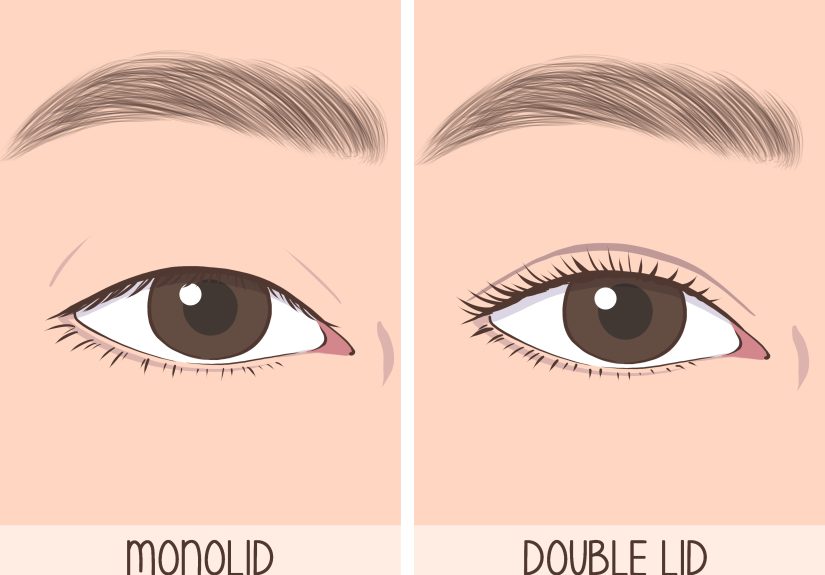
Here is the simple truth: monolid, double lid, and hooded eyes are not interchangeable terms. They describe different eyelid features. A monolid is about the absence of a visible upper-lid crease. A double lid is about the presence of a visible crease. Hooded eyes are about skin folding over part of the mobile lid or crease. That means you can have double lids that are hooded, and in some cases you can have features that make your monolid look slightly hooded too.
This guide breaks down each eye shape in plain English, explains why people mix them up, and gives you practical advice for identifying your own eyelid type without needing a ring light, a magnifying mirror, and a degree in oculoplastics.
Why People Confuse Monolids, Double Lids, and Hooded Eyes
The confusion usually happens because all three categories involve the upper eyelid, but they describe different things. Think of it like this: one term describes whether a crease is visible, while another describes how much skin drapes over the lid.
- Monolid: no obvious upper-lid crease is visible.
- Double lid: a visible crease separates the upper lid into two sections.
- Hooded eyes: extra skin or a fold hangs over the crease or mobile lid.
That overlap is where people get tripped up. Someone with hooded double lids may look like they have “less lid space,” which some people mistake for a monolid. Meanwhile, a person with a monolid may have very little visible mobile lid, so others assume the lid is hooded. The details matter.
Monolid vs Double Lid vs Hooded Eyes at a Glance
| Feature | Monolid | Double Lid | Hooded Eyes |
|---|---|---|---|
| Visible upper-lid crease | No obvious visible crease | Yes, visible crease | May or may not be visible when eyes are open |
| Main defining trait | Smooth upper lid appearance | Crease divides the upper lid | Skin folds over the lid or crease |
| Can overlap with others? | Can overlap with some hooding features | Very commonly overlaps with hooding | Can exist with double lids or monolid-like lids |
| Common misconception | People assume it means “small eyes” | People assume it is the default “normal” lid | People confuse it with droopy lids or ptosis |
| Makeup challenge | Less obvious crease placement | Crease may be easier to define | Products may transfer or disappear into the fold |
What Is a Monolid?
A monolid is an eyelid shape where there is no clearly visible crease across the upper lid. Instead of seeing a fold that separates the upper lid into two distinct areas, the lid often appears smoother from the lash line upward. In everyday beauty language, this is sometimes called a “single eyelid.”
Monolids are common in many people of East Asian descent, though they are not exclusive to any one group. Eye anatomy is wonderfully varied, and monolids can appear across different populations. Some monolids also come with an epicanthic fold near the inner corner of the eye, which can further change the overall look of the eye area.
What monolids do not mean is that the eyes are less attractive, less expressive, or somehow missing something. They are simply a natural eyelid variation. In fact, many people love the clean, sleek look of monolids because they create a smooth canvas that works beautifully with liner, lashes, and gradient shadow.
How to tell if you have monolid eyes
Look straight into a mirror with your eyes relaxed and open. If you do not see a clear upper-lid crease and your lid looks smooth rather than folded, you likely have a monolid. If you only see a crease when you close your eyes or lift your brow, you may have a very subtle crease or a hooded lid rather than a true monolid.
Common myths about monolids
Myth 1: Monolids are the same as hooded eyes.
Not exactly. A monolid is defined by the lack of a visible crease. Hooded eyes are defined by skin draping over the lid or crease.
Myth 2: Monolids mean small eyes.
Not at all. Eye size and eyelid shape are related visually, but they are not the same thing.
Myth 3: Monolids need to be “fixed.”
Absolutely not. They are a natural eye shape, not a flaw in need of a dramatic rescue mission.
What Is a Double Lid?
A double lid means the upper eyelid has a visible crease. This crease creates the look of two sections on the upper lid: the area from the lash line to the crease, and the area from the crease to the brow bone. That is why it is called a “double eyelid.”
Double lids are very common across many ethnic backgrounds. Some are deep and obvious. Others are soft, low-set, or only mildly visible. A double lid does not always mean lots of exposed lid space. Some people have a clear crease but still have limited visible lid because of hooding or brow structure.
In makeup tutorials, double lids are often treated like the “standard” eye shape. That is not because they are better. It is simply because many eye-makeup techniques were originally demonstrated on eyes with visible crease space, making tutorials easier to follow on camera.
How to tell if you have double lids
Stand in front of a mirror and look straight ahead. If you can clearly see a crease above your upper lash line, you likely have double lids. The crease may be high, low, parallel, tapered, subtle, or pronounced. It still counts.
Double lids are not all the same
Here is where things get interesting. A visible crease can look different depending on:
- how high the crease sits,
- how much upper-lid skin is present,
- whether the brow sits low or high,
- and whether the crease stays visible when the eyes are open.
That is why one person’s double lid may look wide and open, while another person’s double lid may look soft, folded, or partially hidden.
What Are Hooded Eyes?
Hooded eyes happen when the skin from the brow bone area folds downward over part of the eyelid, covering some or all of the mobile lid and sometimes hiding the crease when the eyes are open. In short: the lid is there, but the overhang steals the spotlight.
Some hooded eyes are genetic. Others become more pronounced with age as skin loses elasticity and the upper-lid area starts to sag. This is where hooded eyes can start to overlap with terms like dermatochalasis or age-related eyelid skin laxity. In casual beauty talk, people may use “hooded” for both natural hooded anatomy and more noticeable age-related skin overhang.
And here is the key distinction: hooded eyes are not automatically the same thing as ptosis. Ptosis is true eyelid drooping involving the lid itself and can affect vision. Hooding is more about the skin fold and may be purely cosmetic. If one eyelid suddenly droops, if your lids are very uneven, or if your upper lid starts blocking vision, that is a medical conversation, not just a makeup one.
How to tell if you have hooded eyes
Look straight ahead with your face relaxed. If your upper lid seems tucked beneath an overhanging fold of skin, and your crease disappears or becomes partly hidden when your eyes are open, you probably have hooded eyes.
Signs you may have hooded double lids
- You can see a crease when your eyes are closed.
- You can sometimes see the crease when open, but not fully.
- Shadow or liner tends to transfer because skin folds over the mobile lid.
- Classic crease tutorials somehow vanish the second you blink.
Can You Have More Than One of These Traits?
Yes, and this is the part that makes online quizzes wildly overconfident.
You can absolutely have double lids and hooded eyes at the same time. In fact, this is very common. A visible crease exists, but the upper skin drapes over it enough that the crease is partly hidden when the eyes are open.
You can also have a lid that reads as monolid or near-monolid with some hooding characteristics, especially if the upper skin and brow area create very little visible lid space. This is why labeling your eyes in a rigid way is not always useful. Human faces are not cookie cutters. They are more like custom architecture with occasional eyeliner drama.
How to Identify Your Eye Type at Home
If you want a practical mirror test, try this:
Step 1: Relax your forehead
Do not raise your brows. Brows can fake extra lid space and confuse the results.
Step 2: Look straight ahead
Not down. Not up. Not in your “I am filming a tutorial” angle. Straight ahead.
Step 3: Check for a visible crease
If you see one, you likely have double lids. If you do not, you may have monolids.
Step 4: Check for overhang
If skin folds over your lid or hides your crease when your eyes are open, you may have hooded eyes.
Step 5: Compare both eyes
They may not match perfectly. Mild eyelid asymmetry is common. Faces love a little improvisation.
Makeup Tips for Monolids, Double Lids, and Hooded Eyes
Makeup should work with your eye shape, not bully it. You do not need to force every tutorial onto every eyelid. That way lies frustration and a suspicious amount of cotton swabs.
Best makeup ideas for monolid eyes
Monolids often look great with techniques that create visible dimension without relying on a natural crease. Gradient or vertical shadow placement can be especially flattering. Tightlining, softly smoked liner, curled lashes, and a focus on lash definition can also help open the eyes beautifully. If you want the look of a crease, you can place shadow slightly above where a crease would naturally sit.
Best makeup ideas for double lids
Double lids usually have more flexibility with crease-based looks because the fold is visible. Soft horizontal gradients, classic outer-corner deepening, and winged liner often show up clearly. But if your double lids are hooded, you may need to adjust placement so your hard work does not disappear into the fold.
Best makeup ideas for hooded eyes
With hooded eyes, visibility is the game. Apply shadow where you can actually see it when looking straight ahead. Lift the color slightly above the hidden fold if needed. Use long-wear or waterproof formulas to reduce transfer. Keep liner placement strategic rather than automatically thick, because too much product across limited lid space can make the eye look smaller instead of more defined.
When Eye Shape Becomes a Medical Question
Most discussions about monolids, double lids, and hooded eyes are cosmetic or descriptive. But there are times when eyelid changes deserve real medical attention.
Talk to an eye care professional if:
- one eyelid suddenly droops,
- your upper lid starts blocking vision,
- your lids become much heavier over time,
- you are compensating by lifting your brows constantly,
- or you have irritation because lashes or lid skin are rubbing in the wrong place.
Procedures like blepharoplasty or ptosis repair are not the same as simply “making a crease.” Some surgeries are cosmetic, while others are done because excess skin or lid drooping affects function and vision. That distinction matters a lot.
So, Which Eye Shape Is Better?
None of them. That is the entire answer. No drumroll needed.
Monolids, double lids, and hooded eyes are all normal variations in eyelid anatomy. Beauty standards change constantly, but your features do not become more valid because a trend decided to catch up. The smarter goal is not trying to rank eye shapes. It is learning what your features are, understanding how they work, and styling them in a way that feels like you.
In other words, the best eyelid type is the one attached to your face. Convenient, really.
Experience-Based Reflections: What This Looks Like in Real Life
The following reflections are illustrative, experience-based examples written to make the topic more relatable. They are not medical case reports, just realistic scenarios many readers may recognize.
The first experience is common among people with monolids: years of watching makeup tutorials and wondering why nothing lands in the same place. A person follows a “crease tutorial” exactly, then opens their eyes and discovers the color has vanished like it caught the last flight out of town. Over time, they learn that their face is not the problem. The technique is simply designed for someone else’s lid space. Once they switch to vertical blending, thinner liner near the lashes, and stronger lash curl, everything clicks. The breakthrough is not changing the eye shape. It is understanding it.
A second experience happens to people with hooded double lids. They grow up assuming they just have regular double lids, then reach adulthood and notice their eyeliner transfers more, their crease looks less visible in photos, and one eye seems “sleepier” than the other by the end of the day. At first, they think they are applying products wrong. Later, they realize the issue is hooding. The crease exists, but the upper fold covers more of it than expected. That small realization can be weirdly freeing. Suddenly, makeup placement makes more sense, and so do old frustrations.
Another familiar story involves cultural beauty standards. Someone with a monolid may hear all kinds of unnecessary commentary growing up: that their eyes would look “bigger” with a crease, that one lid shape is more photogenic, or that beauty comes in one very specific package. Then adulthood arrives, along with better representation, better artists, and a healthier filter for nonsense. They start seeing monolids styled beautifully in editorials, on runways, and in everyday life. The same feature once treated like a problem becomes something distinctive, polished, and powerful.
There is also the experience of aging into hooding. A person may have had very visible double lids in their twenties, only to notice more upper-lid heaviness in their forties or fifties. Their eye makeup begins to smudge. Their brows feel like they are doing unpaid overtime just holding everything up. Photos show less lid space than before. In that situation, the conversation shifts from “What is my eye shape?” to “What changed?” Sometimes the answer is simply normal aging. Sometimes it is worth a professional evaluation, especially if vision feels affected.
And then there is the simplest experience of all: finally naming your features correctly. That may sound small, but it matters. When you understand whether you have monolids, double lids, hooded eyes, or some overlap, you stop chasing bad advice meant for a different face. You shop smarter. You apply makeup faster. You describe concerns more clearly. Most importantly, you stop assuming that confusion means something is wrong. Usually, it just means the language around eye shapes has been messy. Once the terms are clear, the mirror gets a lot less dramatic.
Conclusion
When comparing monolid vs double lid vs hooded eyes, the biggest difference is simple: monolids usually do not show a visible crease, double lids do, and hooded eyes involve skin folding over part of the lid or crease. From there, everything gets more personal. Your exact anatomy, brow position, age, and natural asymmetry all influence how your eyes look in real life.
The good news is that you do not need to force your features into one “ideal” category. You only need to understand what you are working with. Once you do, makeup becomes easier, comparisons become less stressful, and your eye shape starts making a whole lot more sense.