Table of Contents >> Show >> Hide
- The Voyage That Never Returned
- The Race Against Time
- Discovery of the Debris Field
- What We Now Know About the Implosion
- The Human Toll Behind the Headlines
- Why the World Couldn’t Look Away
- What Changes After Titan?
- Experiences and Lessons from the Titan Tragedy
- Conclusion: Remembering the Five, Rethinking the Depths
In June 2023, the world paused its scroll and collectively stared into the deep.
A small experimental submersible called Titan, run by the U.S. company
OceanGate, vanished on a dive to the Titanic shipwreck in the North Atlantic.
What started as a daring adventure for five passengers quickly turned into
a global vigil, a frantic search, and, ultimately, a heartbreaking conclusion:
the sub had suffered a catastrophic implosion, and all five people on board were
believedand later confirmedto be dead.
This wasn’t just another breaking-news push alert. The Titan story combined
everything: the ghost of the Titanic, extreme wealth and extreme tourism,
cutting-edge tech, and worst-case-scenario engineering. Let’s walk through
what happened, who was lost, what investigators discovered, and what the rest
of us should take away from a tragedy that unfolded nearly 2.4 miles beneath
the surface of the sea.
The Voyage That Never Returned
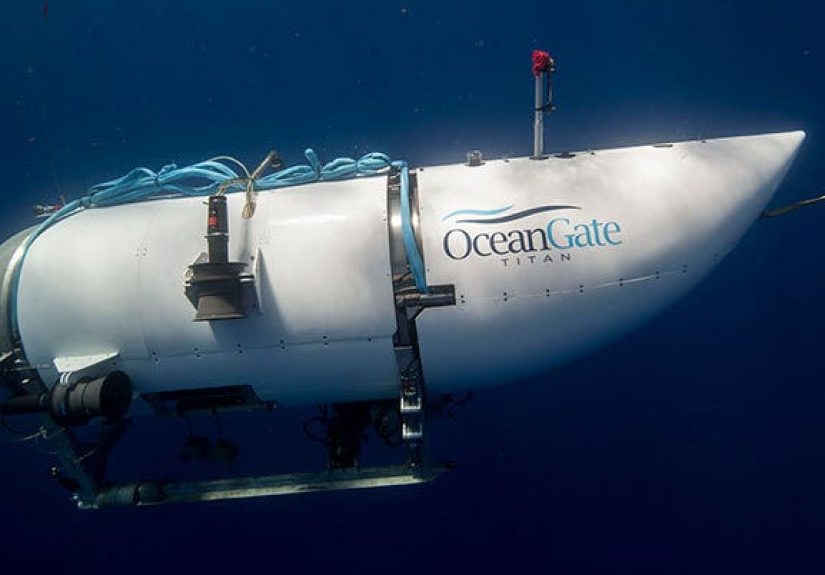
Titan was a 21-foot submersible built with a carbon fiber cylindrical hull
capped with titanium end domesan unusual design in deep-sea exploration,
where metal spheres are the gold standard for withstanding crushing pressure.
Operated by OceanGate, a Washington-based company, the vessel was marketed as
a way for paying “mission specialists” to visit the Titanic wreck site and
participate in pseudo-scientific expeditions.
On the morning of June 18, 2023, Titan launched from its support
ship, the Polar Prince, about 370 nautical miles southeast of
St. John’s, Newfoundland. Around 8 a.m. ET, the sub dove toward the Titanic,
which rests roughly 12,500 feet (about 3,800 meters) below the surface.
About 1 hour and 45 minutes into the descent, Titan lost contact with its
mothership. It was supposed to resurface at about 3 p.m., but it never did.
Who Was on Board?
There were five people aboard Titan:
- Stockton Rush, the American CEO and co-founder of OceanGate,
who was piloting the sub. - Hamish Harding, a British aviation entrepreneur and
adventurer known for record-setting flights. - Shahzada Dawood, a British-Pakistani businessman and
philanthropist. - Suleman Dawood, Shahzada’s 19-year-old son, a university
student who reportedly joined the dive in part to bond with his father. - Paul-Henri Nargeolet, a French navy veteran and one of the
world’s leading Titanic experts, who had made dozens of dives to the wreck.
These weren’t anonymous passengers; they were people with families,
achievements, and complicated stories. Their deaths left a trail of grief
stretching from corporate boardrooms to classrooms and research labs.
The Race Against Time
Once Titan was reported overdue, authorities launched a massive
international search and rescue effort. The U.S. Coast Guard, U.S. Navy,
Canadian Coast Guard, Royal Canadian Air Force, Air National Guard,
and several commercial and research vessels all joined the hunt.
Titan was believed to have about 96 hours of breathable air
when it submerged. That ticking-clock detail dominated headlines and TV
graphics for days. The world watched as aircraft dropped sonar buoys,
ships scanned the depths, and remotely operated vehicles (ROVs) prepared
to plunge into the darkness around the Titanic.
There were even reports of “banging noises” detected by sonar, which briefly
raised hopes that the crew might be alive and signaling for help. But experts
were cautious from the beginning, and the realityknown to some behind the
sceneswas darker: U.S. Navy sensors had picked up an acoustic signature
consistent with an implosion near the time Titan lost contact.
Discovery of the Debris Field
On June 22, 2023, four days after Titan vanished, an ROV
deployed from the Canadian vessel Horizon Arctic finally located
wreckage on the seafloor. The debris field was found about 1,600 feet
(roughly 500 meters) from the bow of the Titanic.
The pieces included the tail cone and portions of the forward and aft
end bellsparts of the pressure vessel that should have kept the occupants
safe from the immense pressure of the deep. The U.S. Coast Guard announced
that the debris was “consistent with a catastrophic loss of the pressure
chamber,” essentially confirming that Titan had imploded. All five aboard
were presumed dead; there was no realistic possibility of survival at that
depth.
In other words, the tragic countdown we followed on the surfaceoxygen
estimates, search grids, speculationwas likely moot. The implosion would
have happened in milliseconds, long before the world even knew Titan was
missing.
What We Now Know About the Implosion
In the months and years after the disaster, U.S. and international
investigators combed through data, debris, and corporate records. A U.S.
Coast Guard Marine Board of Investigation and the National Transportation
Safety Board (NTSB) ultimately concluded that the tragedy was
preventable.
Their reports pointed to a central theme: Titan’s design and operation
simply did not meet accepted safety standards for the depths it attempted
to reach. The pressure hull, made from carbon fiber reinforced with
titanium, experienced repeated stress cycles and exhibited anomalies
before the fatal dive. Sensors designed to monitor hull integrity flagged
issues that were never fully resolved. Yet the vessel kept going back down.
A Risky Design, Fast-Tracked
Traditional deep-diving submersibles are built around metal spheres, which
distribute external pressure evenly. Titan’s cylindrical carbon-fiber hull,
by contrast, introduced complex stress patterns and fatigue risks.
Investigators found that the hull was not certified by any independent
classification society, and the viewport itself was not rated for the
extreme pressure at Titanic depth.
Internal documents and whistleblower accounts indicated that engineers and
contractors raised red flags about the hull’s durability and the lack of
robust testing. Those concerns did not lead to the kind of comprehensive
changes that might have prevented disaster. Instead, OceanGate framed itself
as an innovator intentionally operating “outside” traditional certification
frameworksa decision that, in hindsight, looks less like bold disruption
and more like reckless shortcutting.
Culture and Regulation: A Toxic Mix
Investigators also highlighted a “toxic workplace culture” within OceanGate.
Employees reportedly feared retaliation for raising safety concerns, and
at least one former employee said he was fired after sounding alarms about
the hull. The Coast Guard report criticized the company’s internal safety
management, its poor documentation, and its inadequate inspection and
maintenance processes.
On the regulatory side, the Titan incident exposed a large gray area. Because
the dives took place in international waters on a non-flag state vessel,
existing maritime rules did not clearly cover this kind of experimental,
tourist-carrying submersible. Investigators called for stronger oversight
and clearer standards for novel deep-sea vehicles so that “innovation”
does not become an excuse for skipping essential safety steps.
The Human Toll Behind the Headlines
Beyond the technical failures, Titan was a human disaster. Families received
updates in real time as the world speculated about their loved ones. They
later had to process not just sudden loss, but the knowledge that the deaths
were likely instantaneousand possibly preventable.
Each passenger had a different reason for boarding Titan. For some, it was
a lifelong fascination with exploration and records; for others, a chance
to make history or to share an unforgettable experience with a child or a
close friend. Those motivations are part of a long tradition of human
risk-taking, from polar expeditions to space travel. But when a company’s
safety culture doesn’t match the risks it’s selling, the people on board
pay the ultimate price.
Why the World Couldn’t Look Away
The Titan search dominated the news cycle for days, overshadowing other
major world events. Why did this particular story grab us so tightly?
First, there’s the enduring magnetism of the Titanic itself
a century-old shipwreck that still looms large in our cultural imagination.
Add billionaires, experimental tech, a ticking oxygen clock, and the eerie
repetition of tragedy at the same site, and you have a narrative that feels
almost scripted.
Social media amplified every fragment of information, including plenty of
misinformation. One viral fake story falsely claimed that CNN had reported
the submersible was found emptya rumor Reuters later debunked.
As usual, the internet mixed empathy, conspiracy theories, dark humor,
and armchair engineering critiques into one chaotic feed.
What Changes After Titan?
In the immediate aftermath, OceanGate suspended all exploration and
commercial operations. The company quietly went dark, its website carrying
only a brief banner acknowledging the halt.
The broader industry, however, is still reckoning with the fallout.
Regulators and classification societies are under pressure to close loopholes
and develop more explicit standards for tourist submersibles and other
extreme-adventure vehicles. The Titan investigations recommended tougher
oversight, mandatory third-party certification, better whistleblower
protections, and stricter rules around how experimental craft carry
paying passengers.
For the public, Titan has become a shorthand cautionary tale: a reminder
that “cutting-edge” and “safe” are not synonyms, and that glossy brochures
and big price tags don’t guarantee robust engineering.
Experiences and Lessons from the Titan Tragedy
You and I may never set footwell, flipperinside a deep-sea submersible.
But the Titan implosion still offers practical lessons for anyone flirting
with high-risk experiences, from space tourism to extreme mountaineering
adventures.
1. Ask Awkward Questions Before You Sign
When something is advertised as “expedition” rather than “tour,” your
curiosity should kick into overdrive. Before you wire a big deposit, ask:
Who certifies this vehicle? Is there an independent safety audit? How many
successful trips have been completed, and what’s the worst incident so far?
If the answers feel vague, defensive, or wrapped in buzzwords, treat that
as data.
In Titan’s case, investigators later highlighted that the sub was not
certified by a recognized classification society, and that known anomalies
in the hull had not closed the door on further dives.
That’s exactly the kind of background information future travelers should
learn to demand.
2. “Experimental” Is Not Just a Cool Word
The word experimental can sound excitinglike you’re helping to push
the frontier of human capability. But in engineering, it also means the
technology is not fully proven. That isn’t inherently bad; every safe system
started as a prototype. The question is whether the right guardrails are in
place while the tech is still maturing.
If you’re paying to ride in an experimental craft, you’re not just a
customer; you are, in a sense, part of the test program. You deserve to
know exactly what that means, in plain language. Informed consent isn’t just
a signature on a waiver; it’s a real understanding of the risks.
3. Pay Attention to Organizational Vibes
Safety is not only about materials and math; it’s about culture. A company
that ridicules caution, punishes dissent, or romanticizes risk is waving
bright red flags. The Titan investigation found a workplace where staff
feared raising concerns and where warnings about the hull’s integrity were
brushed aside.
As a prospective customer, you don’t need insider access to sense this.
Listen to how staff talk in interviews, read how leaders describe regulators,
and notice whether the company seems more excited about publicity than about
safety briefings. Small cues can speak volumes.
4. Respect the Environment You’re Entering
The deep ocean is not just “underwater tourist real estate.” At Titanic
depth, the pressure is roughly 380 times what we experience at the surface.
A tiny flaw in a pressure hull can mean instant catastrophe. That’s why most
deep-sea vehicles are conservative in design and undergo years of testing.
The Titan story is a reminder that the natural environment always gets the
final vote. Whether it’s Everest’s weather, orbital debris in space, or the
crushing pressure of the abyss, the laws of physics do not care how
innovative your marketing plan is.
5. Hold Companies (and Regulators) to the Lessons Learned
Finally, there’s a collective responsibility. When official investigations
call a disaster “preventable,” that label comes with homework. The Titan
reports recommend specific regulatory changes and safety reforms. It’s on
governments, industry, and consumers to insist those changes actually happen,
rather than letting the story fade into trivia.
Every time you see a new extreme tourism offeringwhether it’s a submersible,
rocket, or something we haven’t dreamed up yetTitan should quietly show up
in the back of your mind and whisper, “Ask better questions.”
Conclusion: Remembering the Five, Rethinking the Depths
The phrase “missing Titanic submersible” entered the news cycle like a
thriller plot. By the time the debris was found, the reality was far more
sobering: five people were gone, a promising but flawed piece of technology
lay in pieces on the ocean floor, and a company’s culture and choices had
been exposed as deeply unsafe.
Today, the Titan tragedy sits alongside the original Titanic disaster as a
cautionary story about hubris, innovation without guardrails, and the
limits of human control over brutal environments. Honoring the five people
who died means more than retelling the story; it means acting on what
investigators have learned and refusing to treat extreme risk as just
another luxury product.
The ocean will always be mysterious and dangerous. Our challenge is to
explore it with humility, rigorous engineering, and a stubborn commitment
to bringing everyone back to the surface alive.