Table of Contents >> Show >> Hide
- What Is Witch Hazel?
- Why Grow Witch Hazel?
- How to Grow Witch Hazel Successfully
- Planting Witch Hazel the Right Way
- How to Care for Witch Hazel
- Pests and Diseases
- Witch Hazel Through the Seasons
- Landscape Design Ideas With Witch Hazel
- Common Mistakes to Avoid
- Real Gardening Experiences With Witch Hazel (Extended Insights)
- Conclusion
Witch hazel sounds like a plant dreamed up during a full moon, but this four-season shrub is very realand incredibly useful. Known for its ribbon-like winter flowers, soothing medicinal properties, and hardy nature, witch hazel is one of those rare plants that looks magical while behaving practically. Whether you’re planting it for winter color, wildlife value, or low-maintenance landscaping, witch hazel rewards patience with quiet drama.
This in-depth guide will walk you through everything you need to know about how to grow and care for witch hazel, from choosing the right variety to long-term maintenance, plus real-world gardening experiences that don’t show up on plant tags.
What Is Witch Hazel?
A Native Shrub With a Long History
Witch hazel (Hamamelis) is a deciduous shrub or small tree native to North America and parts of Asia. In the U.S., it has been used for centuries by Indigenous peoples for skin care, wound treatment, and inflammationlong before it showed up in pharmacy aisles.
In the landscape, witch hazel stands out because it flowers when almost nothing else does: late fall through winter, and sometimes very early spring.
Popular Types of Witch Hazel
- Hamamelis virginiana – Native American witch hazel, blooms in fall
- Hamamelis vernalis – Ozark witch hazel, winter blooms and great fragrance
- Hamamelis mollis – Chinese witch hazel with large yellow flowers
- Hybrid witch hazel – Crosses bred for bold color and scent
Why Grow Witch Hazel?
If plants earned personality traits, witch hazel would be the dependable introvert who shows up when no one else does.
- Blooms in winter when gardens are bare
- Extremely cold-hardy
- Low maintenance once established
- Excellent for pollinators in late seasons
- Great fall foliage colors
It’s not flashy year-round, but when February rolls around and everything else looks defeated, witch hazel steals the show.
How to Grow Witch Hazel Successfully
Best Climate and USDA Zones
Witch hazel grows best in USDA hardiness zones 3 through 8. It thrives in climates with cold winters and moderate summers, making it ideal for much of the United States.
Cold weather actually improves flowering, so this is one shrub that doesn’t mind frostit practically invites it.
Sunlight Requirements
Witch hazel prefers:
- Full sun to partial shade
- At least 4–6 hours of sunlight daily
In hotter regions, some afternoon shade helps prevent leaf scorch and stress.
Soil Conditions
The best soil for witch hazel is:
- Well-draining
- Slightly acidic to neutral (pH 5.5–7.0)
- Rich in organic matter
Heavy clay can work if amended, but standing water is a firm no. Witch hazel likes moisture, not soggy feet.
Planting Witch Hazel the Right Way
When to Plant
The ideal planting times are:
- Early spring
- Early fall
This allows the root system to establish before extreme temperatures arrive.
Step-by-Step Planting Guide
- Dig a hole twice as wide as the root ball
- Keep the planting depth level with the root flare
- Backfill with native soil mixed with compost
- Water deeply after planting
- Mulch lightly, avoiding the trunk
Spacing matterswitch hazel needs room to grow. Allow at least 10–15 feet from other large shrubs.
How to Care for Witch Hazel
Watering Needs
During the first year:
- Water deeply once or twice a week
Once established:
- Drought-tolerant but prefers occasional deep watering
Consistency is more important than frequency.
Fertilizing Witch Hazel
Witch hazel is not a heavy feeder. In fact, too much fertilizer causes leggy growth.
Best approach:
- Apply compost in early spring
- Use a slow-release balanced fertilizer only if growth is weak
Pruning and Shaping
Minimal pruning is best.
- Prune only after flowering
- Remove dead or crossing branches
- Avoid heavy shapingit ruins the natural form
Think “gentle haircut,” not makeover.
Pests and Diseases
Good news: witch hazel is remarkably resistant to pests and diseases.
Occasional issues may include:
- Aphids
- Japanese beetles (rare)
- Leaf spot in overly wet conditions
Healthy plants rarely need intervention beyond proper spacing and airflow.
Witch Hazel Through the Seasons
Spring and Summer
Fresh green leaves create a soft backdrop in mixed borders.
Fall
Leaves turn golden yellow to orange, adding subtle autumn interest.
Winter
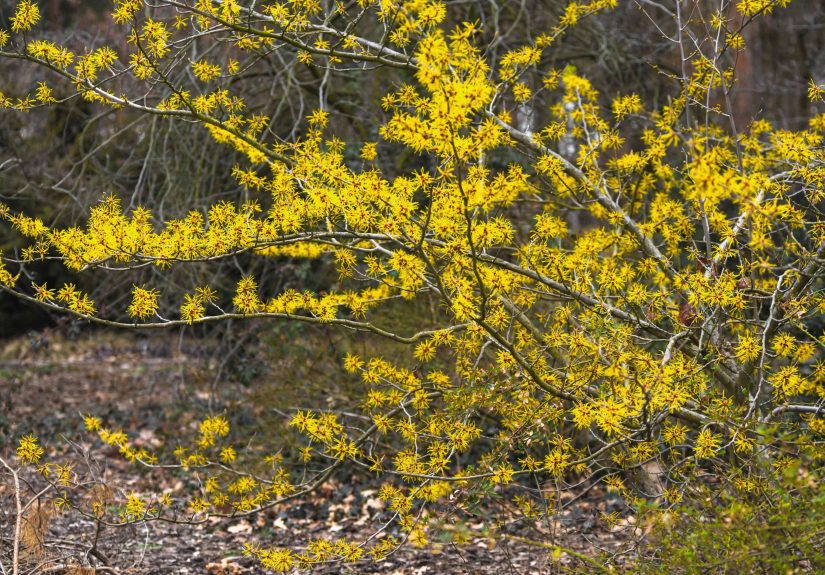
This is where witch hazel shinesliterally. Fragrant, spider-like blooms unfold during the coldest months.
Landscape Design Ideas With Witch Hazel
- As a winter focal point near walkways
- In woodland-style gardens
- Paired with evergreen shrubs
- As a small ornamental tree
Plant it where you’ll actually see it in winternot hidden behind summer perennials.
Common Mistakes to Avoid
- Planting in poorly drained soil
- Over-fertilizing
- Over-pruning
- Expecting fast growth
Witch hazel takes its time. Think “slow burn,” not instant gratification.
Real Gardening Experiences With Witch Hazel (Extended Insights)
Gardeners often underestimate witch hazel because it doesn’t scream for attentionuntil winter hits. One of the most common experiences shared by long-time growers is surprise. Many plant witch hazel as a background shrub, forget about it, and then one cold February morning notice golden ribbons dancing in the frost.
Another consistent experience is patience. Witch hazel grows slowly, especially in the first three years. New gardeners sometimes worry that something is wrong. It isn’t. The plant is investing underground before showing off above ground.
Experienced gardeners often say witch hazel becomes more impressive with age. Ten-year-old specimens develop strong branching structure, heavier flowering, and deeper fragrance. This makes it a true legacy plantsomething you grow not just for yourself, but for the future landscape.
In residential settings, people note that planting witch hazel near windows or paths dramatically improves enjoyment. Since it blooms in winter, it’s best positioned where you’ll see it from indoors. A witch hazel blooming outside a kitchen window in January is an instant mood booster.
Another shared experience involves wildlife. Early pollinators, especially on mild winter days, are often drawn to witch hazel flowers. Birds also appreciate the dense branching for shelter.
Some gardeners make the mistake of overwatering or feeding, assuming more care equals better growth. Over time, many learn that restraint is key. Witch hazel thrives when left alone, with mulch and occasional deep watering.
There’s also a strong emotional connection. Many gardeners describe witch hazel as a hopeful plantsomething blooming against odds, reminding you that winter doesn’t last forever. It becomes less about landscaping and more about seasonal rhythm.
In mixed gardens, witch hazel teaches design patience. You learn to layer plants that peak at different times, so the garden never truly sleeps. Once you experience a winter garden anchored by witch hazel, it’s hard to go back to bare branches and nothingness.
For many, growing witch hazel changes how they think about “beauty” in the garden. It’s not loud, not trendy, and not fastbut deeply rewarding.
Conclusion
Witch hazel proves that the best plants don’t shoutthey whisper. With its winter blooms, low-maintenance nature, and long lifespan, it quietly earns its place in the garden year after year. Grow it well, give it time, and one winter morning it will surprise you in the best possible way.