Table of Contents >> Show >> Hide
- Before You Touch the Wall: Know What You’re Cleaning
- Wall-Cleaning Toolkit
- The Golden Rule: Dust First, Wash Second
- Routine Wall Washing (The “Not a Big Deal” Method)
- Targeted Stain & Scuff Removal: Start Gentle, Then Level Up
- Common Wall Stains and Exactly What to Do
- How to Clean Textured Walls, Wallpaper, and Special Finishes
- Drying, Touch-Ups, and When to Quit and Paint
- Prevent Scuffs and Stains (So You’re Not Cleaning Walls Every Weekend)
- FAQ
- Real-World Experiences: What Actually Happens When You Clean Walls
- Conclusion
Walls are basically the quiet coworkers of your home: they show up every day, do a ton of heavy lifting (literally holding up your vibe), and nobody notices them… until there’s a sneaker streak, a mysterious handprint, or a kitchen grease constellation near the stove. The good news: you can get most scuffs and stains off painted walls without turning your finish into a sad, shiny patchwork. The secret is simplestart gentle, test first, and level up only when you have to.
Before You Touch the Wall: Know What You’re Cleaning
1) Identify your paint finish (because “scrub it” is not a plan)
Paint sheen matters. Flat/matte walls are gorgeous… and emotionally fragile. Semi-gloss and gloss are tougher and usually more washable, but they can still dull if you go full sandpaper-mode.
- Flat/Matte: Least washable. Use minimal water, very gentle pressure.
- Eggshell/Satin: More durable. Usually fine with mild soap and a soft sponge.
- Semi-gloss/Gloss: Most washable. Great for kitchens/bathsbut don’t use harsh solvents.
2) Do a 30-second test spot (future-you will send a thank-you card)
Pick a hidden area (behind a picture frame, inside a corner) and try your mildest method first. Let it dry completely. If you see color lift, shine changes, or a “ghost” water mark, adjust your approach to be gentler (less moisture, less pressure, or a different cleaner).
Wall-Cleaning Toolkit
You don’t need a cleaning aisle’s worth of products. Start with the basics:
- 2 buckets (one for cleaning solution, one for rinse water)
- Microfiber cloths (soft, lint-free)
- Soft sponge (non-abrasive)
- Dish soap (a mild one; a degreasing formula helps in kitchens)
- Baking soda (for a gentle paste)
- White towel or drop cloth (to protect floors)
- Optional: melamine sponge (“Magic Eraser” style), white vinyl eraser, cotton swabs
- Optional for tougher ink/grease: rubbing alcohol (isopropyl) in small amounts
The Golden Rule: Dust First, Wash Second
If you skip dusting, you’ll basically make wall soupdust + water = gray streaks and extra scrubbing. Always remove dry debris first, especially on textured walls.
Fast ways to dust walls
- Microfiber on a mop/broom: Wrap a microfiber cloth around a flat mop or broom head and swipe top to bottom.
- Vacuum with brush attachment: Great for corners, baseboards, and textured finishes.
- Spot dusting: Hit cobweb corners and the “fingerprint highway” around switches and doorways.
Routine Wall Washing (The “Not a Big Deal” Method)
For general grime, fingerprints, and everyday smudges, a mild soap-and-water wash is usually all you need. Think: spa day, not boot camp.
Step-by-step: the two-bucket method
- Prep the room: Move furniture away from the wall. Lay towels or a drop cloth along the baseboard to catch drips.
- Mix your cleaner: In a bucket of warm water, add a small amount of dish soap. (A common “whole wall” mix is about 1/4 cup dish soap per gallon; for spot cleaning, just a few drops in a bowl works.)
- Wring like you mean it: Your sponge/cloth should be damp, not wet. If water is running down the wall, you’re overdoing it.
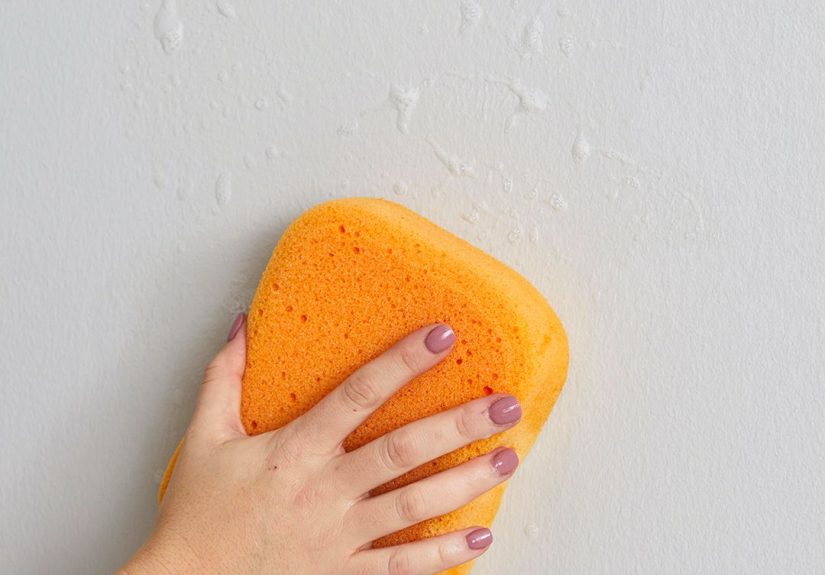
- Wash in sections: Use gentle circular motions. Many pros recommend working bottom to top to reduce streaking.
- Rinse as you go: Dip a clean cloth in the rinse bucket, wring it out, and wipe away soap residue.
- Dry: Buff with a dry microfiber cloth. Faster drying = fewer marks and less chance of water spotting.
How often should you wash walls?
High-touch areas (entryways, hallways, kitchens) may need spot cleaning weekly and a deeper wash seasonally. Most other rooms can get by with dusting every couple months and washing a few times a yearunless you live with toddlers, dogs, or a roommate who “doesn’t see” fingerprints.
Targeted Stain & Scuff Removal: Start Gentle, Then Level Up
The smartest way to remove scuffs and stains is like a ladder: begin with the least aggressive option and climb only if the mark refuses to cooperate. This protects the paint and keeps you from creating shiny “clean spots” that are visible from space.
Level 1: Damp microfiber (for fresh scuffs and smudges)
Lightly dampen a microfiber cloth with warm water, wring well, and rub gently. For rubbery scuffs (shoe marks, stroller tires), try a clean tennis ball: rub the ball over the scuff to lift the rubber transfer without saturating the paint.
Level 2: Dish soap solution (for grime, fingerprints, light grease)
If water isn’t enough, use a mild dish soap mix. Wipe gently, then rinse with clean water and dry. This is usually the sweet spot for “mystery streaks” near light switches and door frames.
Level 3: Baking soda paste (for stubborn marks)
Baking soda is a mild abrasivestrong enough to lift many stains, gentle enough to avoid sanding your wall (if you don’t press like a maniac). Mix baking soda with a small amount of water to make a paste, apply lightly, rub in small circles, then wipe clean and rinse.
Level 4: Melamine sponge (Magic Eraser-style) (use carefully)
Melamine sponges work because they’re micro-abrasivebasically very fine sandpaper in sponge form. They’re excellent for scuffs, but they can dull sheen or leave a different-looking patch, especially on flatter paint. Use light pressure, minimal water, and stop as soon as the mark is gone.
Common Wall Stains and Exactly What to Do
Different stains respond to different strategies. Here’s a practical cheat sheet you can follow without earning a chemistry degree.
| Stain/Mark | What it usually is | Best first move | If it laughs at you… | Watch out |
|---|---|---|---|---|
| Shoe scuffs / rubber streaks | Rubber transfer | Damp microfiber or tennis ball | Melamine sponge (gentle) | May dull sheen if you over-scrub |
| Fingerprints / smudges | Skin oils + dirt | Warm water + dish soap | Rinse + dry; repeat lightly | Over-wetting flat paint can leave marks |
| Kitchen grease splatter | Oil-based grime | Degreasing dish soap solution | Small amount of rubbing alcohol on a cloth | Ventilate; test spot; avoid harsh solvents |
| Crayon | Wax + pigment | Dish soap + warm water | Baking soda paste or melamine sponge | Flat paint can burnish (turn shiny) |
| Marker / pen | Dye/ink | Dab with damp soapy cloth | Rubbing alcohol on cotton swab (tiny test) | Alcohol can lift paintgo slow |
| Water drips / mystery runs | Minerals + dust | Damp cloth, then dry | Mild soap solution | Scrubbing can leave a “clean stripe” |
| Mildew in bathrooms | Surface mold/mildew | Soap + water, dry completely | Targeted bleach solution (when appropriate) or EPA-registered product | Never mix bleach with ammonia; ventilate; fix moisture source |
How to remove scuff marks (the hallway special)
- Start with a damp microfiber cloth; rub gently.
- If it’s rubber transfer, try a clean tennis ball or a white vinyl eraser.
- Step up to a tiny bit of dish soap solution; rinse and dry.
- Last resort: lightly damp melamine sponge with feather-light pressure.
Example: A black sneaker streak near a doorway often comes off with a tennis ball in under a minute. If it’s older (and has “set”), soap-and-water usually finishes the job.
How to clean greasy kitchen walls (without repainting your dignity)
Grease needs surfactants (soap) or a gentle degreaser. Start with warm water + a degreasing dish soap. Wipe, rinse, dry. If a haze remains, dab a cloth with a small amount of rubbing alcohol and lightly spot-clean, then rinse. If your walls are glossy and the grease is heavy, some people use stronger DIY mixes (like vinegar/ammonia blends), but these require excellent ventilation and careful testingplus you should never combine products in risky ways.
How to remove crayon (aka “tiny artist, huge confidence”)
- Wipe with warm, soapy water first.
- If color remains, use a baking soda paste in gentle circles, then wipe clean.
- For stubborn waxy marks, a melamine sponge can work fastuse light pressure and stop early.
- Rinse and dry the area so you don’t leave a dull patch or soap film.
How to handle ink and marker
Ink is tricky because “strong enough to remove ink” can also mean “strong enough to remove paint.” Try mild soap first. If it persists, use rubbing alcohol sparingly: dampen a cotton swab, dab (don’t scrub), then rinse and dry. If paint color lifts onto your swab, stoptouch-up paint may be the better outcome.
How to deal with mildew (and when not to DIY)
If you see light mildew on a non-porous surface, soap-and-water cleaning followed by thorough drying can help. If you choose to use a bleach solution for disinfection, follow reputable dilution guidance, ventilate well, wear protection, and never mix bleach with ammonia or other cleaners. Most importantly, fix the moisture problem (fan, dehumidifier, leaks), or mildew will return like it pays rent.
If mold covers a large area, keeps coming back, or you have health concerns (asthma/allergies), consider professional remediation.
How to Clean Textured Walls, Wallpaper, and Special Finishes
Textured walls (orange peel, knockdown, plaster)
Texture holds dust like it’s collecting it for a hobby. Vacuum with a brush attachment first. When washing, use a barely damp sponge and blot more than you scrub. Overworking textured paint can break off tiny bits and create fuzzy patches.
Wallpaper (don’t treat it like paint)
Many vinyl wallpapers can handle gentle wiping, but paper-based wallpapers can stain, warp, or peel if soaked. When in doubt: dry methods first (soft cloth, dry sponge, gentle eraser) and minimal moisture only if the manufacturer says it’s washable.
Drying, Touch-Ups, and When to Quit and Paint
- Dry immediately: Buff with a dry microfiber towel after rinsing to prevent water marks.
- Watch for “burnishing”: Flat paint can turn shiny if scrubbed. If that happens, you may need a light touch-up or repaint.
- If the stain is deep: Smoke residue, old grease, and water damage may not fully clean out. Sometimes the correct fix is primer + paint.
- Don’t use strong spray solvents: Some heavy-duty cleaners can damage paint finishes or leave shiny patches.
Prevent Scuffs and Stains (So You’re Not Cleaning Walls Every Weekend)
- Use door stops to prevent knob dents and scuffs.
- Put washable paint (eggshell/satin) in high-traffic hallways and kids’ rooms.
- Wipe fresh marks quicklyolder stains bond and become harder to remove.
- In kitchens, clean grease haze periodically before it becomes a sticky dust magnet.
- Teach the household “hands are for holding, not for wall-surfing.” Results may vary.
FAQ
Can I use vinegar on painted walls?
Sometimesespecially on more durable finishesbut vinegar is acidic and may affect certain paints or leave uneven sheen. If you try it, dilute it, test first, and rinse well. Mild dish soap is usually the safer first choice.
Is a Magic Eraser safe on walls?
“Safe” depends on your paint finish and your technique. It’s abrasive, so it can dull sheen or leave a visible patch. Use it lightly, on small areas, with minimal pressure and water. Always test first.
What’s the best way to clean flat/matte walls?
Minimal moisture, minimal pressure. Dust first, then wipe with a barely damp microfiber and a tiny bit of mild soap if needed. Rinse lightly and dry immediately.
Should I use bleach on wall stains?
For ordinary scuffs and grime: no. For certain disinfecting situations (like mildew on non-porous areas), bleach can be used cautiously, properly diluted, with ventilation and protective gearand never mixed with other cleaners. If you’re unsure, choose a safer cleaner or consult a pro.
Real-World Experiences: What Actually Happens When You Clean Walls
Let’s talk about the part no one includes in the “perfect” cleaning instructions: real homes are chaotic. Someone leans on the wall while putting on shoes. A dog shakes off rain like a cartoon sprinkler. A kid treats the hallway as a NASCAR track (hands included). If you’ve ever cleaned one scuff and somehow ended up cleaning the entire wall because the “clean spot” looked different, welcomeyou are among friends.
Experience #1: The entryway scuff apocalypse. The most common scuff zone is right where people kick off shoes. The easiest win here is the gentlest: a damp microfiber cloth. But the game-changer for rubber transfer is the tennis ball trick. It sounds ridiculous until it works: the fuzz grabs the rubber residue without soaking the paint. People love it because it’s fast and low-riskno chemicals, no streaky drip marks, no panic. The only downside is explaining to your family why a lone tennis ball now lives in the cleaning caddy like it’s part of the staff.
Experience #2: The “Magic Eraser made it worse” moment. This happens when someone goes too hard on eggshell or flat paint. Melamine sponges remove marks by abrasion, which means they can also remove a bit of finish. The result can be a slightly dull or shiny patch (depending on the paint) that looks cleaner but also looks different. The practical lesson: use melamine only after milder methods fail, and treat it like a precision tool. Light pressure. Small area. Stop early. If the wall is flat paint, expect that touch-up paint might be the better “clean” for stubborn marks.
Experience #3: Kitchen walls that feel… vaguely sticky. If your kitchen wall near the stove has that invisible grease film, plain water won’t do much. Degreasing dish soap in warm water usually worksbut here’s the real-life tip: rinse well and dry immediately. Leftover soap film can attract dust, and in a week your “clean” wall looks dingy again. For old, stubborn grease, some people reach for stronger DIY mixes, but the safer pattern is: try soap first, repeat if needed, then cautiously spot-treat with a small amount of rubbing alcohol (test first), rinse, dry. Slow and steady wins because it keeps the paint finish consistent.
Experience #4: Kids’ rooms and the crayon economy. Crayon is usually a wax problem, not a “dirt” problem. Dish soap often removes the surface grime, but a faint color shadow can linger. Baking soda paste is a common next step because it adds gentle abrasion without turning your wall into a scrubbed patchworkif you keep pressure light. The real pro move is to clean a slightly wider area than the scribble itself and blend outward, then rinse and dry. That prevents the “clean circle” effect where the cleaned spot has a different sheen than the surrounding paint.
Experience #5: When cleaning turns into repainting (and that’s okay). Some stains are basically permanent residents: long-term smoke residue, repeated grease buildup, water stains from old leaks, and any spot where the drywall paper got damp and stained underneath. If you’ve cleaned gently and the mark still “ghosts” through, the smartest route is often a stain-blocking primer and paintespecially in a rental turnover or pre-sale refresh. Cleaning is about removing surface problems; paint is how you reset the finish when the problem lives deeper.
Bottom line from real homes: the best wall-cleaning strategy isn’t “stronger products.” It’s better techniquedust first, use less water than you think, rinse and dry, and level up carefully. Your walls will look better, and you’ll spend less time arguing with a scuff mark that clearly woke up and chose violence.
Conclusion
To clean walls and remove scuffs and stains without damaging paint, follow a simple hierarchy: dust first, wash with mild soapy water, then spot-treat with baking soda paste or (carefully) a melamine sponge when needed. Always test in a hidden spot, use minimal water, rinse as you go, and dry immediately. With the right approach, you can erase most wall messeswithout erasing your paint job.