Table of Contents >> Show >> Hide
- Why irons get dirty in the first place
- What you need before you start
- Step 1: Clean the soleplate without scratching it
- Step 2: Clear the steam vents and remove limescale
- Step 3: Clean the water reservoir the smart way
- What not to do when cleaning an iron
- How often should you clean your iron?
- How to keep limescale from coming back
- Troubleshooting common iron problems
- Real-world experiences: what people usually learn the hard way
- Final takeaway
If your iron has started spitting white flakes, leaving mystery streaks on shirts, or gliding across fabric with all the grace of a shopping cart with one bad wheel, it is probably begging for a cleanup. The good news is that cleaning an iron is not difficult. The slightly less glamorous news is that a dirty iron can absolutely sabotage freshly washed clothes. Hard-water minerals, melted fibers, old starch, and scorched residue all love to gather on the soleplate and inside the steam vents. Left alone, that grime can turn your reliable laundry sidekick into a wrinkle-making drama queen.
This guide walks through how to clean an iron safely, how to remove limescale without wrecking the finish, and how to keep the problem from coming back. You will also learn when vinegar helps, when it does not, and why your user manual deserves more respect than most people give it. Some irons tolerate certain cleaning methods beautifully, while others treat them like a personal insult. So the smartest approach is simple: start gentle, work methodically, and always let the manufacturer’s instructions break the tie when advice conflicts.
Why irons get dirty in the first place
Most iron messes come from two sources: what is on your clothes and what is in your water. On the outside, the soleplate can collect residue from starch sprays, fabric finishes, fusible interfacing, melted synthetic fibers, or tiny burnt-on spots caused by ironing too hot. On the inside, steam irons slowly accumulate mineral deposits from water, especially if you live in a hard-water area. That mineral buildup is what people usually mean when they talk about limescale.
Limescale does not always announce itself politely. Sometimes it shows up as weak steam, sputtering, or white powder on dark clothes. Sometimes it leaks brownish water or leaves chalky dots on a shirt that was perfectly fine five seconds earlier. And sometimes it simply clogs the steam vents so your iron heats up but does not steam properly. That is when people start wondering whether the appliance is broken, when in reality it just needs a cleaning routine and a little mineral diplomacy.
What you need before you start
You do not need a chemistry lab or a heroic level of patience. In most cases, these supplies are enough:
- A soft microfiber cloth or clean cotton cloth
- Warm water
- Mild dish soap
- Cotton swabs or a soft toothbrush
- A wooden toothpick or plastic pick for tight steam holes
- Baking soda
- Distilled water
- White vinegar, only for approved uses
- An old towel or 100% cotton cloth for flushing residue
Before doing anything else, unplug the iron and let it cool completely unless a specific self-clean cycle requires reheating first. Never clean a plugged-in iron with a dripping cloth, never immerse it in water, and never attack the soleplate with steel wool, a knife, or anything else that belongs in a toolbox rather than a laundry room. Your iron is not a cast-iron skillet. It will not appreciate “seasoning.”
Step 1: Clean the soleplate without scratching it
For light dirt and everyday buildup
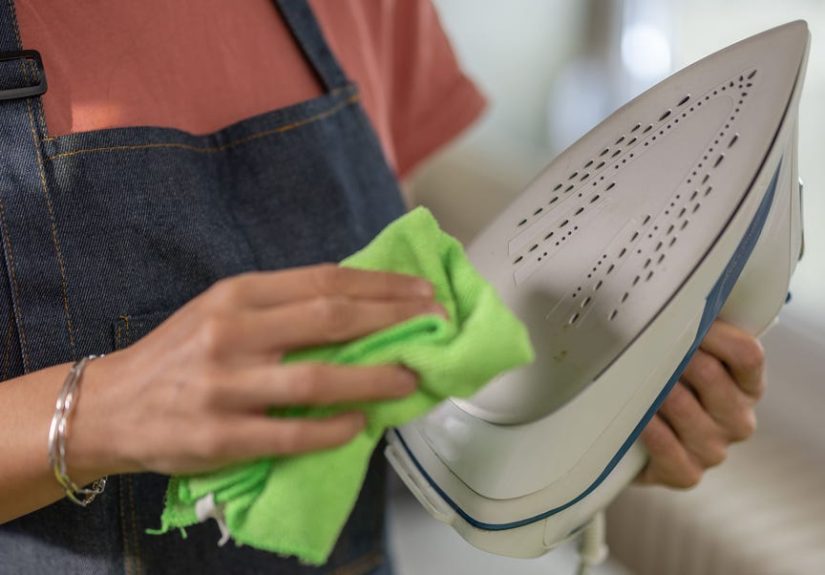
If the soleplate just looks dull or slightly grimy, start with the gentlest method. Dampen a soft cloth with warm water and a drop or two of mild dish soap, then wipe the entire plate. This works especially well on nonstick-coated irons, which can be damaged by aggressive scrubbing. Once you remove the film, wipe again with a clean damp cloth and dry thoroughly.
At this stage, look closely at the steam holes too. If you see residue around them, use a cotton swab or a soft toothbrush to loosen it. Avoid metal tools that can gouge the finish or enlarge the openings. A wooden toothpick can help with stubborn debris near the vent edges, but use a feather-light touch.
For scorch marks, sticky residue, or mystery gunk
If the iron has visible buildup, start with a mild baking soda paste made from a small amount of baking soda and water. Apply it with a soft cloth, gently rub the dirty spots, then wipe it off with a damp cloth. This is a popular method because baking soda gives you a little cleaning power without being as harsh as heavy-duty abrasives. Still, go easy. If your iron has a delicate nonstick soleplate or your manual warns against abrasives, skip the paste and stick with warm soapy water or the exact method recommended by the manufacturer.
For melted synthetic residue, do not scrape like you are restoring a sidewalk. Instead, let the iron cool, loosen the residue gently with a damp cloth, and repeat as needed. Some people rush this part, then wonder why the iron suddenly drags across cotton shirts forever after. A scratched soleplate may still heat up, but it will never feel the same. Smooth is the goal. Heroics are not.
For hard-water marks on the plate itself
If the soleplate has crusty mineral spots, a cloth lightly dampened with a vinegar-and-water mix can help clean the exterior surface on some models. The key phrase there is on some models. Many manuals allow wiping mineral marks from the plate, but others warn against vinegar on certain finishes. The safest default is to use vinegar only on the outside surface if the manual permits it, wipe promptly, and never let the soleplate soak for ages unless the manufacturer says that is safe.
Step 2: Clear the steam vents and remove limescale
Use the self-clean feature first
If your steam iron has a self-clean, calc-clean, or anti-calc feature, that should be your first move. It is usually the safest and most effective method because it is designed specifically for the internal steam chamber. On many models, the process looks like this: fill the reservoir to the max line, heat the iron on a high setting, unplug it, hold it over a sink, and activate the self-clean button or control. Water, steam, and scale deposits flush out through the steam vents.
Rocking the iron gently from side to side during the cycle often helps move trapped mineral bits out of the chamber. When the tank is empty, dry the soleplate with a towel and, if your manual suggests it, briefly reheat the iron and run it over an old towel to clear any leftovers. This step is surprisingly satisfying. It is basically your iron sneezing out its bad decisions.
If your iron has an anti-calc valve or removable collector
Some models come with a removable anti-calc valve or collector. If yours does, remove it only as directed in the manual. In some cases, the part can be rinsed or soaked separately while the rest of the iron should never be filled with anything but water. That distinction matters. Cleaning a removable component is very different from pouring a homemade potion into the water tank and hoping for the best.
Can you use vinegar to descale an iron?
This is where the internet turns into a family argument. Some cleaning guides recommend a vinegar-and-water solution for flushing mineral deposits. But several home-care experts and manufacturers warn that running vinegar through the inside of an iron can damage internal components, seals, or finishes. So the safest general rule is this: do not put vinegar into the reservoir unless your manufacturer explicitly says it is okay.
If your manual approves vinegar for internal descaling, follow the instructions exactly. If it does not, use the iron’s self-clean function with water and clean the outside vents manually. When in doubt, the manual wins. Not a viral hack, not your neighbor’s aunt, not a comment section full of people who also “once did it and it seemed fine.”
How to clean clogged steam holes manually
After the self-clean cycle, let the iron cool and inspect the steam holes. If there is still visible debris, use cotton swabs, a soft toothbrush, or a wooden toothpick to gently remove buildup around the openings. You can also fill the tank with clean distilled water, turn on the steam, and iron an old towel for a few minutes to flush out residue. This helps lift out loosened scale without relying on harsher substances.
Step 3: Clean the water reservoir the smart way
The inside of the reservoir matters because leftover water is one of the biggest reasons scale comes back. After each use, empty the tank as much as your model allows and store the iron upright. This simple habit helps reduce mineral deposits, leaks, and stale water sitting inside the unit for days. If your area has hard water, that “I’ll deal with it later” puddle inside the tank becomes tomorrow’s limescale confetti.
Water type is another place where instructions vary. Some irons are designed for regular tap water. Some recommend a mix of tap and distilled water in hard-water areas. Some steamers specifically call for distilled water. That means there is no one-size-fits-all answer. The smartest move is to check the manufacturer’s advice for your exact model, then follow it consistently. The water question is not boring. It is maintenance wearing a disguise.
What not to do when cleaning an iron
- Do not use metal scouring pads, steel wool, or abrasive scrubbers on the soleplate.
- Do not scrape the plate with knives, scissors, or pins.
- Do not pour vinegar into the reservoir unless your manual specifically allows it.
- Do not mix vinegar with bleach. Ever.
- Do not soak the entire iron in water.
- Do not clean a hot plugged-in iron with a wet cloth.
- Do not ignore the first signs of residue. A little buildup gets much more annoying with age.
Also avoid ironing over zippers, snaps, rivets, or rough embellishments when possible. Those can scratch the soleplate, and once that happens, even a perfectly clean iron may drag or snag on fabric. Prevention is not glamorous, but neither is replacing an iron because a metal button won a fight.
How often should you clean your iron?
That depends on how often you use it, what kind of water you use, and whether you rely heavily on starch or fusible materials. A good rule is to wipe the soleplate whenever you notice residue and run the self-clean feature about once a month if you use the steam function regularly. In hard-water areas, you may need to descale more often. If you only iron occasionally, a seasonal deep clean may be enough.
Watch for warning signs instead of waiting for a disaster. If the iron spits, leaks, leaves white flakes, produces weak steam, or starts dragging across fabric, it is telling you something. Appliances do not talk, thankfully, but they do complain in their own weird little ways.
How to keep limescale from coming back
1. Empty the tank after every use
This one habit solves more problems than people realize. Standing water leads to mineral buildup, odd odors, and internal residue. Empty it, let the iron cool, and store it upright.
2. Use the right water for your model
Follow the manual. If your brand recommends tap water, use tap water. If it recommends distilled water or a 50/50 blend in hard-water regions, do that. Guessing here is how people create unnecessary cleaning projects.
3. Clean the soleplate before residue bakes on
A thin film is easy to wipe off. A cooked-on layer of starch, fibers, and minerals is a full afternoon with attitude. Check the plate before every ironing session, especially if you recently used fusible hem tape, starch spray, or synthetic fabrics.
4. Use an old towel after deep cleaning
After cleaning or descaling, run the iron over an old cotton towel for a minute or two. This catches any leftover flakes or moisture before they land on your favorite shirt like a rude surprise.
5. Store it upright
Storing the iron flat on the soleplate can encourage leaks, hold moisture where you do not want it, and increase the chance of surface damage. Upright storage is simple and protective.
Troubleshooting common iron problems
White flakes on clothes
This usually means mineral deposits are breaking loose inside the steam chamber. Run the self-clean feature, flush with clean water as directed, and test on an old towel before ironing good clothes again.
Brown water or spots
That can come from old water, internal residue, or a dirty soleplate. Empty the tank, clean the plate, and flush the steam system. If the problem keeps returning after proper cleaning, the internal chamber may need service.
Sticky glide or drag
That often means residue on the soleplate. Clean the surface gently and make sure you are not ironing over melted fibers, heavy starch buildup, or rough trims.
Weak steam
Clogged vents or limescale are common causes. Use the self-clean feature and clear the holes gently once the iron cools.
Real-world experiences: what people usually learn the hard way
One of the most common experiences people have with iron cleaning starts with denial. The iron still heats up, so it must be fine, right? Then one morning it coughs a little white dust onto a navy shirt, and suddenly the whole room goes quiet. That is usually the moment people realize limescale is not just an ugly word from an appliance manual. It is real, it is annoying, and it has a special talent for appearing on dark fabrics five minutes before you need to leave the house.
Another common lesson is that dirty irons rarely look dramatic at first. The soleplate might seem only slightly cloudy or a little less shiny than before. But once you run it across cotton, the drag becomes obvious. Shirts do not glide smoothly, collars take longer, and the iron seems to pull instead of press. Many people assume the iron is getting old, when the real issue is just residue. A quick cleaning often makes an older iron feel younger, which is more than most of us can say after laundry day.
There is also the classic starch mistake. Plenty of people love the crisp look of starch, right up until the spray lands everywhere except where it should. Over time, that overspray bakes onto the soleplate and turns into a sticky film. Then lint clings to it, dust joins the party, and suddenly the iron looks like it has been making questionable life choices in secret. The funny part is that the fix is often pretty simple. The frustrating part is realizing it could have been prevented with one minute of wiping after use.
Hard water creates another very familiar pattern. Someone moves into a new house, keeps using the iron the same way as before, and notices within a few weeks that steam is weaker, the vents spit, and the tank seems to leave behind more residue than expected. That experience teaches a valuable truth: water quality changes appliance behavior. A method that worked perfectly in one zip code may fail spectacularly in another. It is one of the least exciting, most useful adult realizations you can have.
Then there is the vinegar debate, which many people discover only after they have already poured it into the tank. Some swear by it, some swear at it, and many end up learning that brand-specific instructions matter more than universal hacks. One iron may tolerate a certain method while another may not. That experience tends to turn people into manual readers very quickly. Nothing inspires respect for a user guide quite like the fear of replacing a perfectly good iron because a homemade cleaning trick went rogue.
People also tend to remember the first time they clean an iron properly and test it on an old towel. Out come the flakes, little specks of scale, bits of old residue, and sometimes suspicious beige drips that make you wonder what exactly has been living inside the steam chamber. It is gross, but useful. More importantly, it proves why testing on a sacrificial cloth is smarter than trusting a freshly “cleaned” iron on your best dress shirt.
Finally, many experienced home launderers come to the same conclusion: iron maintenance is less about dramatic deep cleans and more about tiny habits. Empty the tank. Wipe the plate. Use the self-clean feature before the vents clog. Store it upright. Check the fabric setting before ironing synthetics. These are not thrilling tasks. No one throws a parade because you emptied the reservoir. But they are the difference between an iron that quietly does its job and one that turns laundry into a surprise obstacle course.
Final takeaway
If you want the safest, most effective way to clean an iron and remove limescale, keep it simple: clean the soleplate gently, use the self-clean or anti-calc system your model already has, clear vents carefully, empty the tank after use, and let your manual settle any debates about vinegar or water type. Do that consistently, and your iron will stay cleaner, steam better, and stop treating your clothes like test subjects.