Table of Contents >> Show >> Hide
- What Exactly Are Head Lice?
- Causes: How Do You Get Head Lice?
- Symptoms: What Head Lice Feels Like (and What It Looks Like)
- Diagnosis: How to Confirm Head Lice (Without Guessing)
- When to Get Help Confirming the Diagnosis
- What a Confirmed Diagnosis Means (and What It Doesn’t)
- Reducing Risk: Prevention That Actually Makes Sense
- Experiences: What Head Lice Often Looks Like in Real Life
Head lice are the uninvited houseguests of the hair world. They don’t pay rent, they don’t contribute to chores,
and they’re weirdly good at hiding when you finally go looking for them. The good news: head lice are common,
manageable, and not a sign that someone is “dirty” or doing something wrong. The tricky part is that
scalp itching has about a million causesso the real superpower is learning how to tell the difference between
lice, dandruff, dry skin, and “my scalp is just having a day.”
This guide walks through what causes head lice, what symptoms actually mean (and which ones are red herrings),
and how to diagnose a real infestation with confidencewithout spiraling into late-night panic-cleaning your entire
home like you’re prepping for a NASA inspection.
Quick note: This article is for educational purposes and isn’t a substitute for medical care. If you’re unsure what you’re seeing, a clinician or pharmacist can help confirm what’s going on.
What Exactly Are Head Lice?
Head lice (also called pediculosis capitis) are tiny insects that live on the scalp and feed on small amounts
of human blood. They cling to hair and move by crawling (no jumping, no flying, no tiny lice trampolines). Adult lice
are smallabout the size of a sesame seedand they’re fast, which is rude.
The head lice life cycle (why timing matters)
Understanding the life cycle helps you make sense of what you find in the hair. Lice lay eggs called nits
on hair shafts, typically close to the scalp where warmth helps them develop. Nits hatch into nymphs
(baby lice), which mature into adults. Adult females can lay multiple eggs per day, which is why infestations can
“suddenly” feel intense even if they started small.
- Nits (eggs): firmly attached to hair shafts; often easier to see than live lice.
- Nymphs: smaller than adults; can be hard to spot without careful combing.
- Adults: move quickly and avoid light, making them excellent at hide-and-seek.
One reassuring reality check: lice need people to survive. They don’t live on pets, and they don’t thrive off the head
for long. That’s why diagnosis should focus on what’s happening on the scalpnot on deep-cleaning your entire life.
Causes: How Do You Get Head Lice?
Head lice spread mainly through direct head-to-head contact. That’s it. That’s the headline. If hair touches hair
long enough for a louse to crawl from one person to another, transmission can happenespecially among kids who tend
to play close, huddle over screens, share selfies shoulder-to-shoulder, or pile onto couches like puppies.
Common ways lice spread
- Head-to-head contact: the most common route, especially in school, child care, sports, sleepovers, and camps.
- Close contact within households: siblings, bed-sharing, cuddling during bedtime stories.
- Less commonly, shared items: hats, hairbrushes, helmets, scarves, or hair accessories (possible, but not the main driver).
What does not cause head lice (myths worth retiring)
- Poor hygiene: lice can live in clean hair or unwashed hair. They are equal-opportunity freeloaders.
- Pets: dogs and cats don’t spread human head lice.
- Jumping or flying lice: lice crawl; they don’t hop or fly.
Who’s most likely to get head lice?
Anyone can get head lice, but they’re most common in childrenespecially elementary-age kidsand in people who live
with them. That’s not because children are “gross”; it’s because children are social and frequently close-contact
creatures who don’t treat personal space as a sacred concept.
Hair length and hair type don’t “cause” lice, but longer hair can make detection and removal more time-consuming.
Lice don’t care about your blowout, your braids, or your budget shampoo. They care about access.
Symptoms: What Head Lice Feels Like (and What It Looks Like)
The classic symptom is itching, but itching alone doesn’t prove lice. It can also come from dandruff,
eczema, psoriasis, allergies, product irritation, sweat, or dry winter air. Even more confusing: some people have
lice and don’t itch right awayitching can take time to develop after the first exposure.
Most common symptoms
- Itchy scalp: often caused by an allergic reaction to lice bites, not by “lice crawling.”
- Tickling or “something moving” sensation: a crawling feeling that comes and goes.
- Sleep trouble: lice tend to be more active at night, and itching can feel worse then.
- Red bumps or irritation: especially along the neckline, behind the ears, or where scratching happens most.
- Sores or scabs: from scratching; these can sometimes become infected.
Signs you may see
Visual clues are often more reliable than sensation. If you can find live lice or viable nits close to the scalp,
you’re no longer guessingyou’re diagnosing.
- Live lice: tiny tan/gray-brown bugs that move quickly.
- Nits (eggs): small oval specks firmly attached to hair shafts, often near the scalp.
- “Empty nits” (shells): lighter/clearer casings that remain after hatching; not always a sign of an active infestation.
Where to look first: behind the ears and along the hairline at the back of the necklice and nits often
show up there because it’s warm and sheltered.
Diagnosis: How to Confirm Head Lice (Without Guessing)
Here’s the key: an active head lice infestation is diagnosed by finding live lice. Seeing nits alone can be
misleadingnits may be old, empty, or not viable. This is why so many families get stuck in a cycle of “We think it’s lice”
but no one ever actually sees a live bug.
The “gold standard”: find a live louse
If you find a live louse (adult or nymph) on the scalp or in the hair, you can be confident it’s an active infestation.
Live lice move quickly and avoid light, so dry checks can miss them. That’s why many experts recommend a careful
combing approachespecially on wet hair.
The best at-home method: wet combing for detection
Wet combing is part detective work, part patience, part “why is this combing session taking longer than assembling furniture?”
But it’s one of the most effective ways to confirm whether lice are truly present.
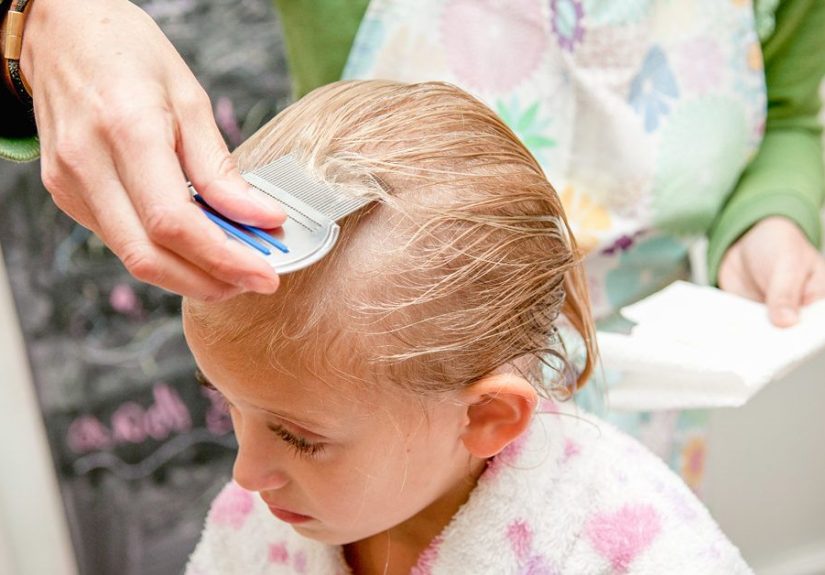
- Get the right tool: Use a fine-toothed lice/nit comb (not a regular comb). Good lighting helpsthink “bathroom mirror lighting,” not “mood lighting.”
- Wet the hair: Wet hair slows lice down. Many people add hair conditioner to help the comb glide and reduce tangles.
- Section the hair: Work in small sections, starting behind the ears and at the nape of the neck.
- Comb from scalp outward: Place the comb close to the scalp and pull through to the ends. Wipe the comb on a tissue/paper towel after each pass.
- Look for movement: Nits don’t move. Lice do. Tiny moving specks are what you’re trying to catch.
- Repeat systematically: Continue section by section until you’ve covered the whole head.
Pro tip: If you’re unsure what you’re seeing, take a photo with your phone camera and zoom in.
(Just… maybe don’t send it to the entire family group chat unless you want opinions you didn’t ask for.)
Nits 101: what counts, what doesn’t
Nits are tiny, oval, and “glued” to the hair shaftunlike dandruff or lint, they don’t brush off easily. Their appearance
can vary in color: yellow/tan/brownish before hatching; more clear or white after hatching. That color clue can help you
judge whether you’re looking at a possibly viable egg or an empty shell.
Distance matters: nits found very close to the scalp are more likely to be viable, while those farther away are
often old casings. Hair grows out, so nits located well away from the scalp frequently reflect a past infestation rather than
a current one.
Where exactly should you check?
Start where lice love to hang out:
- Behind both ears
- At the nape of the neck
- Along the hairline (especially where hair meets skin)
- Under thick hair near the crown
If someone has very short hair, pay extra attention to the scalp itself. If hair is long or thick, slow down and use smaller sections.
The goal isn’t speedit’s accuracy.
Common false alarms (aka: “It’s not lice, it’s…”)
Lots of things can mimic lice or nits. Before you label every white speck a “nit,” consider these usual suspects:
- Dandruff: flakes tend to be irregular shapes and slide off the hair more easily.
- Hair product residue: dry shampoo, gel, hairspray droplets, or styling powder can look suspicious under bright light.
- Lint or fabric fibers: especially after wearing hats, hoodies, or fuzzy blankets.
- Scabs or skin flakes: from scratching, eczema, or psoriasis.
- Hair casts: thin sleeves of skin that wrap around hair and can slide along the shaft (easy to confuse with nits).
A practical test: try to flick the speck off the hair. Dandruff and lint often move. Nits tend to stay stuck unless you slide them down
with your fingernail or comb them out with effort.
When to Get Help Confirming the Diagnosis
Most cases can be identified at home with careful wet combing, but it’s smart to get help if:
- You can’t tell whether you’re seeing lice or look-alikes.
- Symptoms persist but you never find a live louse.
- The scalp has sores that look infected (oozing, crusting, increasing pain, warmth, or swelling).
- You suspect lice on eyebrows or eyelashes (this needs medical attention, especially around the eyes).
- The person is very young, has significant skin conditions, or you’re worried about safe next steps.
A pediatrician, dermatologist, pharmacist, or school nurse may be able to help confirm what’s present and guide you appropriately.
The biggest mistake families make is treating repeatedly without a confirmed diagnosis, which can irritate the scalp and keep the anxiety running on a loop.
What a Confirmed Diagnosis Means (and What It Doesn’t)
If you confirm head lice, it doesn’t mean your home is “infested,” your child is “unclean,” or you need to quarantine your couch like it’s a biohazard.
It means you’ve encountered a common childhood (and occasionally adult) nuisance that spreads through close contact.
School and social life: the practical reality
Many schools and health groups discourage strict “no-nit” rules because nits can remain after lice are gone and don’t always signal an active infestation.
Policies vary, but the overall trend is toward minimizing missed school days while managing the issue responsibly.
The best next step after diagnosis is to follow evidence-based guidance for management and notify close contacts as appropriatewithout shame.
Lice love stigma because stigma keeps people quiet… and quiet lets lice spread.
Reducing Risk: Prevention That Actually Makes Sense
There is no perfect “lice force field,” but practical habits can lower riskespecially during school outbreaks:
- Limit head-to-head contact during play, selfies, sleepovers, and screen time huddles.
- Avoid sharing combs, brushes, hats, helmets, hair ties, and headphones when possible.
- Do routine checks during known outbreaks (weekly is reasonable; daily may drive you bananas).
- Tie back long hair for school or group activities if outbreaks are common.
If you take nothing else from this article, take this: diagnosing lice is not about panicit’s about proof.
Find a live louse (or confirm none are there), and you’ll make smarter decisions with a lot less stress.
Experiences: What Head Lice Often Looks Like in Real Life
If you’ve never dealt with head lice before, the first “maybe it’s lice?” moment can feel like a movie scene where the soundtrack suddenly goes dramatic.
Real life is usually less cinematic and more like: someone scratches their head during homework, you notice a tiny white speck, and your brain immediately
starts narrating a documentary called Parasites: The Unexpected Roommates.
A very common experienceespecially for parentsis the “school note surprise.” A child comes home with a message that lice are going around the classroom.
That night, the bathroom becomes a mini salon: bright light, towel around the shoulders, and a parent trying to look calm while silently Googling
“nits vs dandruff” like it’s a final exam. What tends to happen next is a lot of false alarms. You find specks that brush away easily (lint), flakes that
crumble (dandruff), or hair product residue that looks suspicious under harsh lighting. The confusion is normal because nits are tiny, and the human brain
is not built for calmly identifying microscopic oval shapes at 10 p.m.
People who’ve been through it often describe the emotional part as the hardest: the embarrassment, the worry that others will judge them, and the feeling
of losing control over something that seems “icky.” In reality, lice are common among kids precisely because kids are affectionate and close-contact. Families
also frequently report that the itching is inconsistent. Some children scratch constantly, especially at night; others barely itch at all. That difference
is one reason outbreaks can spread quietlyno itching doesn’t always mean no lice, and itching doesn’t always mean lice.
Another familiar scenario is the “we treated, but are we sure?” loopoften driven by seeing nits after someone has already started management steps.
Many caregivers are surprised to learn that egg casings can stay attached to the hair even when live lice are gone. That’s why experienced school nurses
and clinicians emphasize the same thing: confirmation should focus on live lice. Families who get good at this usually adopt a simple routine:
wet hair, conditioner, fine-toothed comb, and systematic section-by-section checks, especially behind the ears and at the nape of the neck. Once someone
actually sees a moving louse on a tissue after combing, the uncertainty drops fast. It’s not a fun discoverybut it is a clarifying one.
Adults often encounter lice through close household contact, and they tend to notice it differently. They may feel a tickle when hair is down, or they may
develop scalp irritation and blame a new shampoo. Some people first realize something is off when they see small red bumps along the hairline at the neck
or behind the earsareas that get scratched without thinking. People with thick hair frequently report that detection is harder, not because lice prefer
thick hair, but because thick hair gives lice more places to hide and makes visual inspection tougher.
One of the most helpful “experience-based” tips is to slow down and make diagnosis a two-person job. One person parts and holds sections of hair; the other
combs and checks the comb after each pass. Families also learn to avoid the trap of over-cleaning the environment instead of checking heads. Washing pillowcases
and combs can be reasonable, but the real action is on the scalp. When families focus on accurate detection, they often feel less overwhelmedand they’re more
likely to respond calmly, communicate with close contacts, and break the stigma cycle that helps lice spread.
Finally, many people say the “after” phase is surprisingly empowering. Once you know how to identify nits correctly, how to confirm live lice, and how to
avoid mistaking dandruff for eggs, lice lose a lot of their power to scare you. They’re still annoying. They’re still not invited. But you’re no longer guessing.
You’re diagnosingand that’s the difference between panic and a plan.