
Table of Contents >> Show >> Hide
- Table of Contents
- What “Earth Pulsating” Really Means
- Meet the 26-Second Microseism (Not an Earthquake)
- Where the Pulse Comes From
- Why 26 Seconds? The Timing Problem
- Top Theories: Waves, Volcanoes, or a Tag-Team?
- Can You Feel It? Is It Dangerous?
- Why Scientists Care (More Than Clickbait Does)
- How to “See” the Pulse for Yourself
- FAQ
- Conclusion
If you’ve ever seen the headline “Earth has a heartbeat every 26 seconds”, you’re not aloneand yes, it sounds like the plot of a sci-fi movie where the planet has feelings and a Spotify playlist. The truth is less dramatic (sorry) and more fascinating: Earth really does produce a faint, steady, repeating seismic signal with a period of about 26 seconds. Scientists can measure it. They can track where it comes from. They just can’t fully agree on the exact mechanism that keeps it going so consistently.
Let’s unpack what this “pulse” actually is, why the leading explanations involve ocean waves behaving like a drummer with suspiciously good timing, and what researchers are doing to solve a mystery that’s been tapping away for decades.
What “Earth Pulsating” Really Means
Earth is never perfectly still. Even on a day with no earthquakes, no blasting, and no one doing construction outside your window at 6 a.m., the ground is constantly vibrating. Seismologists call much of this background motion ambient seismic noise.
A big contributor is the ocean. Wind creates waves; waves transfer energy into the seafloor; and the planet’s crust responds with tiny, continuous vibrations. These ocean-driven signals are known as microseisms. Most microseisms are messy and spread across a range of frequencies, rising and falling with storms and seasons.
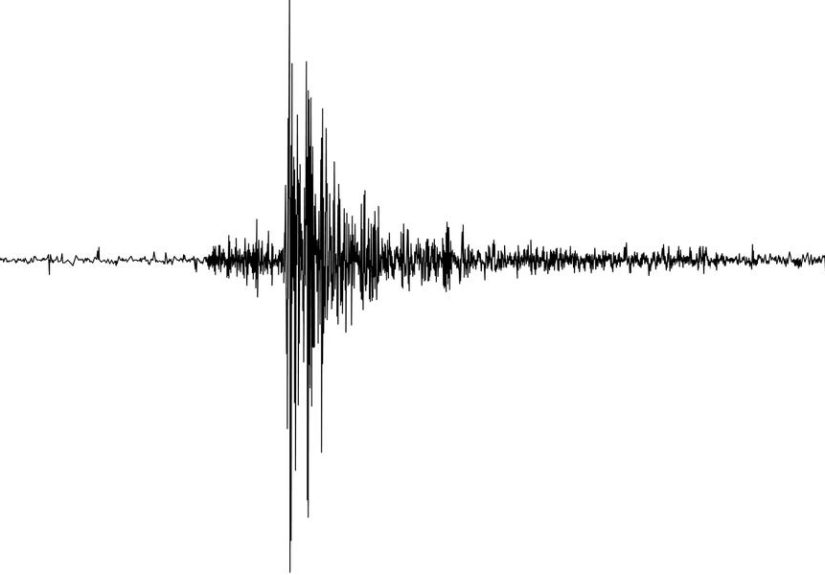
The weird part of the 26-second pulse is that it’s unusually narrow-band and rhythmic: instead of a fuzzy “shhhhh” of motion, it’s more like a steady metronome hidden inside the noise. It’s not loud, and it’s not a sign the planet is about to do anything cinematic. It’s simply a persistent signal that stands out because it’s so regular.
Meet the 26-Second Microseism (Not an Earthquake)
The “Earth pulsates every 26 seconds” phenomenon is typically described as a microseism with a period near 26 seconds (about 0.038 Hz, for the frequency-minded among us).
That matters because it tells you what it’s not:
- Not a traditional earthquake (no sudden rupture, no fault snapping, no shaking you’d feel).
- Not a human-made vibration (too low-frequency and too persistent).
- Not “Earth’s core beating” (the leading explanations point to surface-ocean interactions, not a deep planetary heartbeat).
Think of microseisms as Earth’s “background music.” Most of it is a big ambient playlist generated by the ocean. The 26-second pulse is one oddly specific track that keeps popping uplike you hit shuffle and somehow get the same song every time. Scientists can’t ignore that kind of consistency.
Where the Pulse Comes From
Researchers have traced the strongest, most persistent 26-second source to the Gulf of Guinea, specifically a region often identified around the Bight of Bonny off West Africa. In other words: the “pulse” appears to be an ocean-adjacent signal, not a mysterious thump from the center of the Earth.
Historically, the signal was first documented decades ago, then rediscovered and pinned down more precisely with modern seismic networks and better analysis methods. As instruments improvedfrom paper records to dense digital arraysthe ability to locate faint signals got dramatically better.
One clue that supports an ocean connection is that microseisms, in general, rise with wave energy and storms. Seismic networks can “hear” major storms through the ground. For example, when large weather systems churn up the ocean, the resulting microseism can change measurably across wide regionsessentially turning seismometers into accidental, planet-scale wave monitors.
Why 26 Seconds? The Timing Problem
Here’s the core puzzle: ocean waves exist in many sizes and periods. So why would a specific place generate a signal that repeatedly emphasizes roughly 26 seconds?
In physics, a strong, repeatable period usually hints at one of these:
- Resonance: A natural “preferred” period of a system (like pushing a swing at just the right timing).
- Filtering: The environment blocks or weakens most periods but lets one through efficiently.
- Geometry + bathymetry effects: Seafloor shape and coastal structure focus energy into a narrow band.
The Bight of Bonny region has complex coastal geometry and shelf structure. If long-period swells arrive from distant storms, local conditions could help focus or trap that energy. That can amplify a particular period, making it easier for seismometers worldwide to detect.
The hard part is proving which physical “amplifier” is responsible: is it primarily the continental shelf acting like a drumhead, a kind of coastal basin resonance (like a seiche), or something else entirely?
Top Theories: Waves, Volcanoes, or a Tag-Team?
1) The “Ocean Waves Hitting the Shelf Like a Drum” Theory
The most widely discussed explanation is also the most unintentionally poetic: ocean waves deliver pressure changes that push and pull on the seafloor. In shallow water and on continental shelves, that pressure couples more effectively into the solid Earth, generating seismic surface waves (often Rayleigh waves) that travel long distances.
If the coastal and seafloor geometry in the Bight of Bonny focuses long-period swell energyespecially during certain seasons or storm patternsit could produce a strong microseism peak around 26 seconds. Some research discussions also point to related “Bonny microseism peaks” at other nearby periods, suggesting the region may be unusually good at converting ocean swell into seismic energy across multiple long periods.
2) The “Volcanic or Hydrothermal Tremor” Theory
Another camp suggests a volcanic or magmatic influence. Volcanic systems can produce harmonic tremor steady, rhythmic seismic vibrations tied to fluid movement (magma, gas, water) or resonance in volcanic conduits.
The region is not far from volcanic features and the broader tectonic complexity of West Africa’s offshore systems. If a volcanic or hydrothermal source were involved, it might explain the persistence and narrow-band character. The challenge: demonstrating direct evidence of a specific volcanic mechanism that matches the timing and location as cleanly as the signal itself.
3) The “Hybrid” Theory (Because Nature Loves Complications)
A hybrid explanation is also possible: ocean swell provides the energy, while local geology provides the “instrument” that rings at specific periods. In other words, waves could be the drummer, and the crust could be the drum.
Recent research has even discussed additional features associated with the 26-second source (like frequency “glides” observed alongside the persistent peak), suggesting the full story may involve more than one processor a process that changes character as conditions shift.
Can You Feel It? Is It Dangerous?
For almost everyone: no and no.
The 26-second pulse is typically far below what people can feel. It’s detected by sensitive seismometers designed to measure tiny ground motions. It does not behave like an earthquake, it isn’t a “warning signal,” and it doesn’t mean the planet is about to do something catastrophic.
It’s also not the same as the everyday vibrations you might notice near traffic, trains, or constructionthose are usually higher-frequency and localized. The 26-second microseism is a low-frequency, long-period signal that can propagate widely and be picked up far from its oceanic source.
Why Scientists Care (More Than Clickbait Does)
Even if the pulse isn’t dangerous, it’s scientifically valuable for two big reasons:
It’s a window into ocean energy and storms
Microseisms are strongly tied to ocean wave activity. Because seismic networks operate continuously and globally, they can act like an enormous, indirect “sensor system” for wave climateespecially in regions where ocean buoys are sparse. Researchers have used microseism signals to infer storm activity, swell propagation, and long-term changes in wave energy.
It helps map Earth’s interior
Ambient noise isn’t just “annoying background.” Seismologists can use it for ambient noise tomography, correlating noise between stations to recover information about the structure of the crust and upper mantlekind of like using the constant chatter in a room to learn the shape of the room.
A persistent, localized, narrow-band source like the 26-second pulse can be both a nuisance and a gift: nuisance because it can bias certain analyses, gift because it can also serve as a stable signal to study wave propagation and instrumentation.
How to “See” the Pulse for Yourself
You don’t need a secret government bunker (though it would improve your vibes). You just need access to seismic data and a way to visualize frequency content.
- Look for public seismometer data from seismic networks (many are openly available through scientific data services).
- Use a spectrogram view to see persistent frequency peaks over time.
- Compare “quiet” vs. stormy periods. Microseism levels often rise when storms intensify ocean wave action, even far from the storm itself.
If you’ve ever watched a seismogram during a big hurricane and wondered why the line looks “fuzzier,” congratulations: you’ve witnessed ocean-atmosphere energy showing up in the solid Earth. The 26-second pulse is a more specialized, more stubborn version of that same Earth-as-a-system idea.
FAQ
Is the 26-second pulse the same as Earth’s “hum”?
It’s related, but not identical. “Earth’s hum” and microseisms both refer to persistent background vibrations. The 26-second signal is a particular, narrow-band microseism that stands out for its rhythm and apparent localization.
Does it happen everywhere?
The signal can be detected far away with the right instruments, but the strongest source appears localized offshore in the Gulf of Guinea region (around the Bight of Bonny). It’s not like every coastline is producing the same metronome.
Does it predict earthquakes or volcanic eruptions?
There’s no evidence it’s a prediction tool for earthquakes. It’s a background source that seems tied to environmental forcing and/or localized resonancenot a countdown clock.
Why hasn’t it been “solved” yet?
Because nature doesn’t hand out neat lab conditions. The source is offshore, the signal is subtle, and multiple mechanisms (waves, coastal geometry, seafloor structure, possible volcanic influences) could overlap. Plus, seismologists often focus on more urgent hazardsearthquakes and volcanic crises tend to cut the line.
Conclusion
So, why does Earth pulsate every 26 seconds? The most grounded answer is: Earth is responding to a highly efficient, persistent source of energylikely involving ocean swell interacting with seafloor and coastal geometry in a very specific place. The Bight of Bonny region appears unusually good at converting long-period wave energy into measurable seismic motion, and that motion repeats with a rhythm that’s hard to ignore.
The most honest answer is also: scientists still debate the details. Waves are a leading candidate. Volcanic or geological resonance is another. A hybrid is plausible. And because the signal is real, persistent, and measurable, it’s not going away which is great news for researchers who love mysteries that refuse to die quietly.
Experiences: Living With (and Learning From) Earth’s 26-Second “Heartbeat”
Most people “experience” the 26-second pulse the same way they experience deep space: through a headline, a moment of wonder, and then a quick return to checking their email. But if you lean into the curiosity, the topic becomes surprisingly hands-onespecially once you realize seismology isn’t just about earthquakes. It’s about listening to the whole planet.
A common first experience is the mental image: Earth, quietly thumping like it’s alive. That’s the hook. The second experience is the reality check: you can’t feel it, and you won’t hear it with your ears. The pulse lives in a realm where numbers and instruments translate a faint wobble into something readable. For students and science hobbyists, that translation is the fun part. Watching a spectrogram for the first timeseeing a persistent line that shouldn’t be there if everything were randomfeels like discovering a secret signature the planet forgot to erase.
In classrooms and outreach demos, people often start by viewing ordinary seismic noise: traffic spikes, footsteps near a sensor, a distant quake arriving like a sudden plot twist. Then you add the environmental layermicroseisms swelling when oceans get rough. The “aha” moment usually lands when someone realizes a storm over the ocean can make seismometers on land register more motion. It’s an experience that turns weather from “what’s happening in the sky” into “what’s happening in the ground.”
If you’ve ever seen enthusiasts set up small home seismometers (including affordable educational instruments), you’ll recognize a pattern: people start by hunting earthquakes, then fall in love with everything else. They notice daily rhythms. They see weekend quieting when human activity drops. They learn that storms can leave fingerprints in the data. And once you know to look for a persistent 26-second peak, it becomes a kind of “Where’s Waldo?” for the geophysically obsessedexcept Waldo is an ocean-driven vibration, and the striped shirt is a narrow spectral band.
Another experience is social: the myth-busting. Friends send you the heartbeat headline. Someone asks if Earth is “sick.” Someone else claims it’s proof of an upcoming disaster. You get to do the gentle science-translation: it’s real, it’s subtle, it’s not dangerous, and it’s probably a beautiful example of how ocean energy couples into the solid Earth. That conversation moving from fear to fascinationis genuinely one of the best outcomes of science communication.
Finally, there’s the long-view experience: realizing mysteries can be normal. The 26-second pulse has persisted through decades of improved instruments and global data coverage. It’s not unsolved because scientists aren’t smart enough. It’s unsolved because the planet is complicated, the source is offshore, and multiple systems are interacting. If you’re used to science stories ending with “and then they discovered the answer,” this one teaches a different lesson: sometimes the answer is “we’ve narrowed it down, we’ve got strong candidates, and the remaining uncertainty is where the interesting work lives.”
In that sense, the 26-second pulse is a perfect gateway phenomenon. It’s mysterious enough to spark interest, grounded enough to study seriously, and connected enough to everything elsestorms, oceans, seafloor structure, seismic networksthat it makes Earth feel less like a rock and more like a system with rhythms worth learning.