Table of Contents >> Show >> Hide
- Meet the Designer Behind the Glass
- What “Simple Crystal” Really Means
- The Simple Crystal Collection: A Glass for Every Moment
- Why Design Lovers Obsess Over This Glassware
- How to Style Simple Crystal Glassware at Home
- Is It Worth the Investment?
- Caring for Your Simple Crystal Glassware
- Real-Life Experiences with Deborah Ehrlich Simple Crystal Glassware
- Conclusion: Quiet Luxury for Everyday Rituals
Some glassware quietly sits in the cabinet until the next holiday. Deborah Ehrlich’s
simple crystal glassware does the opposite: it politely insists on being part of
your everyday life. One sip in, and suddenly tap water feels like it should have
its own tasting notes, and Tuesday night pasta starts looking suspiciously like
a dinner party.
This collection of hand-blown Swedish crystal has developed a cult following among
design lovers, chefs, and minimalists who believe that “simple” is not the same as
“plain.” Below, we’ll explore who Deborah Ehrlich is, what makes her Simple Crystal
glassware so special, how to style and care for it, and what it’s actually like to
live with these whisper-thin pieces on your table.
Meet the Designer Behind the Glass
Deborah Ehrlich is a New York–based designer who has been creating exquisitely
simple crystal glassware since 1999. From her studio in the Hudson Valley, she
sketches each piece by hand, dialing in the exact proportions, height, and curve
before passing her drawings to master glassblowers in Sweden.
Her work is built around a very particular obsession: perfect balance between
traditional craftsmanship and contemporary form. The glasses look almost
weightless from across the room, but up close you notice the subtle geometry of
the walls, the precise thickness of the base, and the barely-there lip that
feels like drinking from a sheet of light.
Ehrlich’s Simple Crystal collection began gaining attention when it launched
with the Japanese department store Takashimaya in 1999, and it has since been
picked up by specialty retailers and design shops around the world. Today, her
pieces appear everywhere from curated concept stores in San Francisco and New
York to high-end online platforms dedicated to collectible design.
What “Simple Crystal” Really Means
Minimalist design, maximum experience
At first glance, Simple Crystal glassware barely calls attention to itself.
There are no colored stems, etched patterns, or dramatic curves. That’s
intentional. Ehrlich’s philosophy is that the glass should quietly frame what
you’re drinking, not compete with it. Each piece is defined by ultra-clean
lines, a cylindrical silhouette that gently tapers, and a base that is just
thick enough to feel grounded without looking heavy.
The real magic appears in use. Retailers often describe her crystal as
“everyday works of art” that are “light yet strong,” with a paper-thin lip that
makes every sip feel more precise and more luxurious.
That wafer-thin rim is not just a visual flex; it means the glass disappears
the moment it touches your mouth, so your palate focuses purely on the drink.
Hand-blown Swedish crystal
All Simple Crystal pieces are made from lead-free Swedish crystal, hand-blown,
hand-cut, and hand-polished by skilled artisans.
Swedish crystal is known for its clarity and strength, and in this case it’s
pushed to an almost unbelievable thinness. Descriptions from design shops and
galleries routinely call the glass “paper thin, clear as water, and absolutely
flawless,” yet durable enough for regular use when properly cared for.
Each piece is signed on the bottom with a diamond-tipped pen, a small mark that
quietly signals the amount of hand work involvedand also reassures you that no,
this is not just another anonymous tumbler from the discount aisle.
The Simple Crystal Collection: A Glass for Every Moment
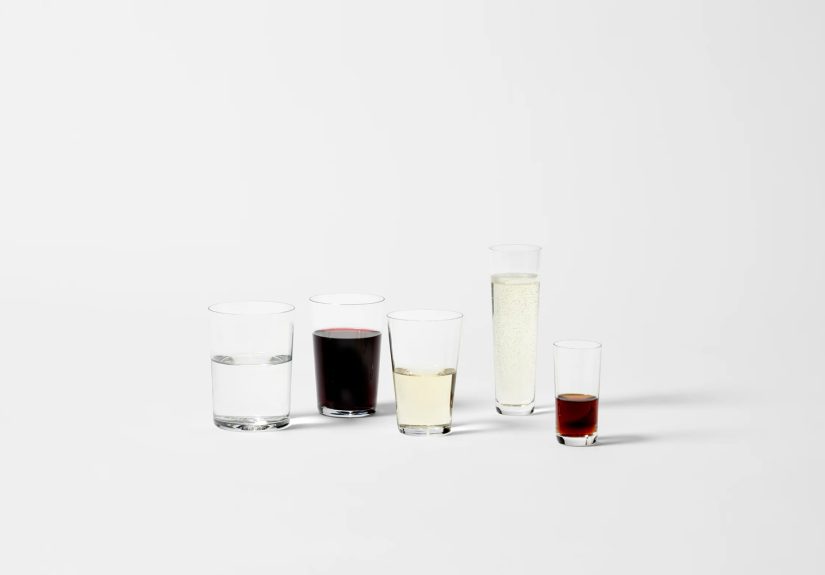
While the look is unified, the collection is surprisingly wide-ranging. Different
retailers highlight various subsetsoften focused on how people actually drink at
home: water, wine, champagne, cocktails, beer, and spirits.
Water and everyday tumblers
The Simple Crystal water glass is perhaps the heart of the collection. Typically
around 4 inches tall with a diameter of about 2.5–3 inches, it’s designed for
daily use but looks fully at home on a white tablecloth.
Retailers describe it as a balance of “the personal and the traditional, the
humble and the perfect”—which is a poetic way of saying it makes every
glass of water feel suspiciously like spa water, even when it’s just from the tap.
White and red wine glasses
Ehrlich’s stemless wine glasses follow the same profile as the water glasses,
just tuned to different proportions so wine has room to breathe. White wine
versions are usually a bit narrower and slightly shorter, while red wine glasses
are broader to accommodate bigger, more aromatic pours.
Instead of a tall, fragile stem, the bowl flows seamlessly into the base. That
design has two benefits: it’s more stable on the table (no wobbling stems to
knock over after your second glass), and it has a modern, unfussy appeal that
pairs well with everything from rustic pottery plates to glossy restaurant-style
whiteware.
Champagne flutes and pilsner glasses
The Simple Crystal champagne glasses are some of the most iconic pieces in the
line. Tall, slender, and almost impossibly light, they were among the first
designs Ehrlich introduced and have since become a modern classic.
The long column of crystal emphasizes the color and bubbles of sparkling wine,
while that ultra-thin lip makes each sip feel sharp and focused.
For beer drinkers, there’s a matching crystal pilsner glass with the same
minimalist silhouette and featherweight feel. It’s hand-blown, cut, and polished
in Swedish crystal, giving a crisp lager or pilsner the sort of framing usually
reserved for champagne.
Cocktail and rocks glasses
Cocktail and rocks glasses round out the barware side of the collection. They
share the same clarity and proportion-driven design: straight sides, subtly
tapered walls, and a low, confident base that looks sculptural even when empty.
Whether you’re pouring a classic Old Fashioned or an alcohol-free spritz, the
glass does what the designer intendedit makes the drink feel considered without
shouting about itself.
Why Design Lovers Obsess Over This Glassware
Everyday objects with gallery-level craftsmanship
Plenty of crystal brands offer decoration: cut patterns, etched motifs, or heavy
stems that announce their presence from across the room. Deborah Ehrlich’s Simple
Crystal line does the opposite. Its power lies in restraint. Collectors and
design shops often highlight how these pieces balance a “humble” simplicity with
almost obsessive attention to detail.
That tensionbetween quiet forms and intense craftis what makes the glassware
feel special even in low-stakes moments. Drinking water becomes a small ritual.
Setting the table for leftovers suddenly looks like styling a photo shoot. If you
love the feeling of handling a perfectly weighted pen or opening a well-designed
phone, this glassware hits the same nerve for the dining room.
The feel in your hand and on your lips
The sensory side of Simple Crystal is where fans really get emotional. Retailers
repeatedly emphasize the “perfect weight in the palm,” the precise way the base
sits in your hand, and the paper-thin lip that enhances the taste of whatever you
pour.
That sounds dramatic until you realize how much a clumsy, thick-rimmed glass can
dampen a drink. Here, the crystal acts almost like a neutral interfaceclear,
featherlight, and finely tunedso the texture of sparkling water, wine, or
cocktails feels more direct. It’s the difference between listening to music on
tinny phone speakers and listening on good headphones: the song is the same, but
the experience is not.
How to Style Simple Crystal Glassware at Home
One of the surprise strengths of this collection is how adaptable it is. The
glasses look just as right next to linen napkins and silver flatware as they do
beside a cast-iron skillet straight from the oven.
For everyday meals
Keep things casual by pairing the water or wine glasses with your favorite mix of
platesstoneware, handmade ceramics, even vintage flea-market finds. Because the
glassware is so pared back, it won’t clash with color or pattern. A few sprigs of
herbs in a jar, a simple runner, and suddenly your “whatever we have in the
fridge” dinner feels restaurant-adjacent.
For dinner parties and celebrations
For more formal setups, lean into repetition. Use all one type of glasssay,
water plus champagne flutesso the table reads as calm and intentional. The
crystal’s clarity plays beautifully with candlelight, especially next to Ehrlich’s
own tea light hurricanes and decanters, which echo the same minimal lines.
If you want a subtle “wow” factor, try clustering extra empty glasses or a spare
decanter at the center of the table. Because the forms are sculptural, the
grouping becomes its own centerpiece—no extra flowers required, unless you
really want them (in which case, go wild).
Is It Worth the Investment?
Simple Crystal glassware is not budget glassware. Individual pieces often start
around $70–$85 at specialty retailers, and sets from luxury platforms are priced
accordingly.
That places it firmly in the “considered purchase” category rather than “grab a
pack of six at the supermarket.”
The value comes from a few places:
- Lead-free Swedish crystal with exceptional clarity and strength.
- Hand-blown, hand-cut, and hand-polished production, not mass-molded glass.
- Design that doesn’t chase trends, so it won’t feel dated in a few years.
- Signature marking and small-batch production closer to collectible design
than commodity drinkware.
If you divide the cost over years of daily use, it starts to look less like a
splurge and more like upgrading a tool you touch constantly. Many buyers treat it
as a slow-build collection: a pair of water glasses one year, a set of champagne
flutes the next, then maybe pilsner or cocktail glasses when their bar setup
evolves.
Caring for Your Simple Crystal Glassware
Ultra-thin crystal does demand a little extra attention, but the routine is simple:
- Hand wash only. Retailers consistently recommend hand washing
with mild soap and warm water. Avoid dishwashers; the combination of heat,
detergent, and bumping into other dishes is not kind to paper-thin rims. - Use a soft sponge or cloth. No abrasive scrubbers, and skip
twisting the glass by the rim when you dry it. - Dry and store upright. Use a lint-free towel and let the
glasses air out upside-down briefly on a clean cloth before storing them
upright in a cabinet. - Give them space. Don’t stack glasses or cram them tightly
together; a bit of air between pieces keeps them from clinking and chipping.
Follow those guidelines, and your Simple Crystal pieces can absolutely live in
regular rotation, not just in the “special occasion” cupboard.
Real-Life Experiences with Deborah Ehrlich Simple Crystal Glassware
So what is it actually like to weave these glasses into everyday life? Think of
this section as a composite portrait based on how design stores, collectors, and
hosts talk about using them in the real world.
Picture this: you unbox a pair of Simple Crystal water glasses. The first
surprise is how weightless they feel. Your brain briefly panicssurely
anything this thin must be fragile beyond reasonbut the base feels reassuringly
solid, and the crystal doesn’t flex. As you rinse and dry them, the rim almost
disappears between your fingers.
That night, you pour something completely ordinary: chilled tap water, maybe
sparkling if you’re feeling fancy. The glass is so clear that the drink looks
like it’s hovering, and the thin lip makes the water hit your tongue in a clean,
narrow stream. It’s still just water, but it suddenly feels like a tiny ritual
instead of a reflex.
A few weeks later, you host a small dinner. Instead of bringing out a whole fleet
of mismatched glasses, you set the table with just Simple Crystal water and wine
glasses. The effect is quiet but unmistakable: candlelight catches the edges of
the crystal, and the glasses almost glow against the plates. Guests notice—not
in an “oh wow, crystal” way, but in a softer “these feel amazing in the hand”
kind of comment as they take a sip.
The real test comes on a random weeknight, when there’s a pile of dishes in the
sink and you’re tired. Do you still reach for the fancy glasses? For many owners,
the answer ends up being yes. Because the design is so unfussy—no stem to
baby, no decorative cuts to scrub aroundthey’re easy to rinse, wash, and dry.
The glasses slip into a rhythm: morning juice, afternoon iced tea, evening wine,
all in the same minimal silhouette.
Over time, people often report that the glassware quietly reshapes their sense of
“everyday” versus “special.” Instead of saving beautiful objects for big events,
they use them constantly, and the big events feel less like an exception and more
like an extension of daily life. A champagne flute that once only came out on New
Year’s Eve suddenly shows up for a Tuesday-night toast to finishing a project, or
to celebrate absolutely nothing at all.
Simple Crystal also shines as a gift. A pair of water glasses or champagne
flutes, especially with custom engraving offered by some retailers, feels personal
but not overly specific.
It works for weddings, milestone birthdays, housewarmings, or as an “I see how
hard you’re workingplease drink something nicer than plastic cups” gesture.
Of course, it’s still glass. Accidents happen. But one of the more surprising
experiences owners share is that the pieces are tougher than they look. Swedish
crystal gives them resilience, so they can handle careful daily use rather than
living in museum-style quarantine.
In the end, living with Deborah Ehrlich Simple Crystal glassware isn’t about
transforming your home into a showroom. It’s about shifting the baseline of your
everyday rituals—hydrating, gathering, celebrating—so they feel just
a little more intentional, a little more beautiful, and a lot more enjoyable.
Conclusion: Quiet Luxury for Everyday Rituals
Deborah Ehrlich’s Simple Crystal glassware lives at the intersection of minimalism
and deep craftsmanship. Sketched in a small Hudson Valley studio, executed by
Swedish glassblowers who carry out each step by hand, and designed for the
strength and clarity of fine crystal, these pieces prove that subtlety can be
more powerful than spectacle.
Whether you’re building a first “grown-up” glassware collection or upgrading a
well-loved cabinet, Simple Crystal offers something rare: objects worthy of a
gallery pedestal that are meant to be used every single day. If you like your
luxury quiet, tactile, and genuinely useful, this might be the glassware that
makes even your most ordinary drinks feel like a moment.