
Table of Contents >> Show >> Hide
- What Is Chocolate Bread Pudding Casserole?
- Ingredients
- Best Bread for Chocolate Bread Pudding
- Classic Chocolate Bread Pudding Casserole Recipe (9×13)
- Make-Ahead Tips (Because Future-You Deserves Nice Things)
- Storage and Reheating
- Flavor Variations (Pick Your Chocolate Adventure)
- Serving Ideas
- Troubleshooting (So Your Casserole Doesn’t Gaslight You)
- Nutrition Notes (Realistic, Not Judgy)
- FAQ
- Kitchen Notes and Real-Life Moments ( of “Yep, This Happens”)
If chocolate cake and French toast had a cozy little weekend getaway together, this would be the souvenir:
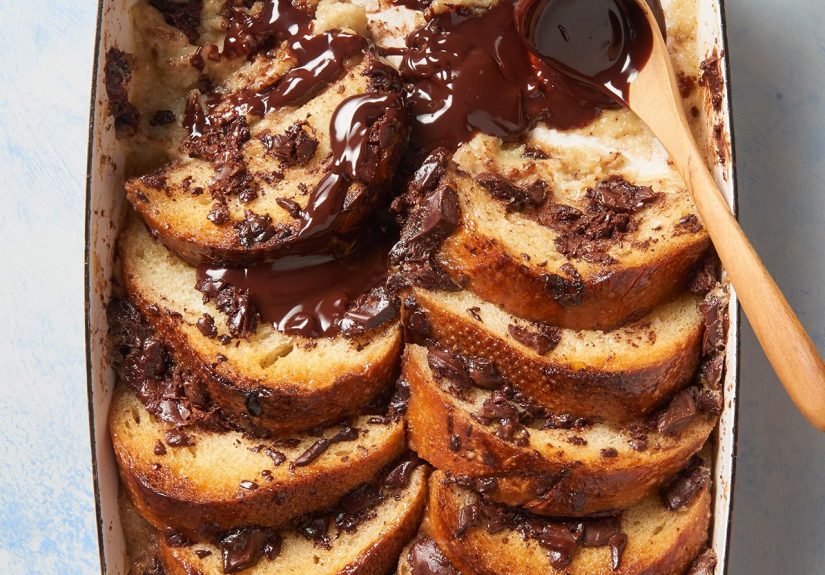
chocolate bread pudding casserole. It’s warm, custardy, ridiculously chocolatey, and built for
sharing (or for “sharing,” which is when you quietly cut a second slice and call it “quality control”).
This recipe is also a small act of kitchen heroism: it turns leftover bread into a dessert-or-brunch casserole that
feels fancy without requiring fancy behavior. You’ll get a soft, pudding-like center, pockets of melted chocolate,
and a gently crisp top that begs for a scoop of ice cream or a snowfall of powdered sugar.
What Is Chocolate Bread Pudding Casserole?
Traditional bread pudding is made by soaking cubes of bread in a sweet egg-and-milk custard, then baking until set.
When you bake it in a bigger dish for a group (and lean into that “slice-and-serve” vibe), it starts behaving like a
casserole. Same comforting idea, more crowd-friendly presentation.
The “chocolate” part usually shows up in two ways: cocoa powder in the custard for deep, brownie-like flavor, and
chocolate chips or chopped chocolate folded in for melty pockets. Together, they make a dessert that tastes
indulgent but still feels homeylike it’s wearing sweatpants with a blazer.
Ingredients
This recipe uses everyday ingredients, but each one has a job. Here’s what you’ll need and why it matters.
The bread
- Sturdy bread, preferably day-old (brioche, challah, French bread, or even sandwich bread).
- Why: Drier bread absorbs custard without turning into a sad, soggy sponge.
Fresh bread can break down too fast and bake up mushy.
The custard
- Eggs for structure and that classic custardy texture.
- Milk + heavy cream for richness (you can adjust the combomore on that below).
- Sugar for sweetness and balance.
- Cocoa powder for chocolate depth (use unsweetened).
- Vanilla + a pinch of salt to make the chocolate taste more like chocolate.
- Optional cinnamon or espresso powder for extra warmth and intensity.
The chocolate
- Semisweet chocolate chips or chopped chocolate (or a mix).
- Why: Chips hold their shape; chopped chocolate melts into ribbons and puddles.
Either way, delicious things happen.
Best Bread for Chocolate Bread Pudding
You can make bread pudding with almost any bread, but some choices lead to better texture (and fewer “why is this
wet?” mysteries). For the best results:
- Brioche: buttery, soft, and luxuriousgreat for a dessert-style casserole.
- Challah: slightly sweet and eggy, absorbs custard beautifully.
- French/Italian loaf: sturdier, with chewgreat if you like structure.
- White sandwich bread: classic, soft, and surprisingly good for a nostalgic, gooey center.
Quick “make it stale” trick: If your bread is fresh, cube it, spread it on a baking sheet, and bake
at 300°F for 10–15 minutes, stirring once, until it feels dry on the outside (not toasted into croutons).
Let it cool before adding custard.
Classic Chocolate Bread Pudding Casserole Recipe (9×13)
This version is rich, deeply chocolatey, and designed to slice cleanly while still feeling soft and custardy.
It’s perfect for holidays, brunch tables, potlucks, or any evening when you want dessert to double as a warm hug.
Equipment
- 9×13-inch baking dish (or similar 3-quart casserole dish)
- Mixing bowl + whisk
- Spatula or large spoon
- Measuring cups/spoons
- Instant-read thermometer (optional but helpful)
Ingredients
- 10–12 cups bread cubes (about 1-inch pieces; day-old is best)
- 6 large eggs
- 2 cups whole milk
- 1 1/2 cups heavy cream
- 3/4 cup granulated sugar
- 1/3 cup unsweetened cocoa powder
- 2 teaspoons vanilla extract
- 1/2 teaspoon fine salt
- 1 teaspoon ground cinnamon (optional)
- 1–2 teaspoons espresso powder (optional, for “mocha energy”)
- 1 1/2 cups semisweet chocolate chips or chopped chocolate (plus extra for topping)
- 2 tablespoons melted butter (for the dish and/or drizzling on top)
Step-by-step instructions
- Prep the oven and dish.
Preheat the oven to 350°F. Grease a 9×13-inch baking dish with butter (or baking spray).
If you love extra texture, leave a few butter streaksthis is dessert, not a courtroom. - Load the bread and chocolate.
Add bread cubes to the dish. Sprinkle in most of the chocolate chips/chunks, reserving a small handful for the top.
Gently toss right in the dish so chocolate is scattered throughout. - Whisk the custard.
In a large bowl, whisk eggs until smooth. Add milk, cream, sugar, cocoa powder, vanilla, salt, and optional cinnamon/espresso powder.
Whisk until the cocoa is fully incorporated and you don’t see dry streaks.
(A few tiny cocoa specks are finethis is a casserole, not a chemistry final.) - Soak the bread.
Pour the custard over the bread. Press down gently with a spatula so the bread is mostly submerged.
Let it sit for 20–30 minutes to soak.
If you’ve got time, a longer soak (up to an hour) helps the custard absorb evenly. - Top and bake.
Sprinkle the reserved chocolate on top. Bake for 40–55 minutes, until the center looks set and the top is puffed and glossy.
If the top browns too fast, tent loosely with foil for the final 10–15 minutes. - Check doneness (without guessing).
The casserole is done when the center jiggles slightly like set gelatin, not like a liquid slosh.
For best accuracy and food safety, aim for an internal temperature of 160°F in the center. - Rest, then serve.
Let it cool for 10–15 minutes before slicing. This helps the custard finish setting and makes cleaner squares.
Serve warm with ice cream, whipped cream, berries, or a drizzle of chocolate sauce.
Make-Ahead Tips (Because Future-You Deserves Nice Things)
Bread pudding casserole is practically built for planning ahead:
- Overnight method: Assemble everything in the dish, cover tightly, and refrigerate overnight.
In the morning, let it sit at room temperature for 20–30 minutes while the oven preheats, then bake. - Partial prep: Cube the bread and dry it out the day before. You can also whisk the dry ingredients (sugar, cocoa, salt, cinnamon) in advance.
Storage and Reheating
- Refrigerate: Cover and store for 3–4 days.
- Freeze: Wrap slices well and freeze for up to 2 months (texture stays surprisingly decent).
- Reheat: Warm slices in the microwave in short bursts, or reheat covered in a 300°F oven until warmed through.
Add a splash of milk or cream if you want it extra soft.
Flavor Variations (Pick Your Chocolate Adventure)
1) Triple Chocolate
Use a mix of semisweet chips, dark chocolate chunks, and white chocolate chips. The result: high drama, low effort.
2) Mocha
Add espresso powder to the custard and swap 1/4 cup of milk for cooled brewed coffee. Serve with whipped cream and pretend you’re at a café.
3) Chocolate-Cherry
Fold in 3/4 cup dried cherries (or frozen cherries, thawed and drained). Chocolate + cherry is basically a tuxedo.
4) Orange-Zest Chocolate
Add the zest of one orange and a tiny splash of orange extract (optional). It tastes like a fancy chocolate bar got a promotion.
5) Peanut Butter Swirl
Warm 1/3 cup peanut butter until pourable, then drizzle over the top before baking. Use a knife to create gentle swirls.
Serving Ideas
- Ice cream: Vanilla is classic. Coffee ice cream is a power move.
- Whipped cream: Add a pinch of salt for a “grown-up” vibe.
- Fresh berries: Strawberries or raspberries cut through the richness.
- Powdered sugar: The easiest way to make it look like you planned a photoshoot.
- Chocolate sauce or caramel: Drizzle like you mean it.
Troubleshooting (So Your Casserole Doesn’t Gaslight You)
“It’s soggy in the middle.”
Usually this means the bread didn’t absorb enough custard evenly or the bake time was cut short.
Next time, use drier bread, press the cubes down during soaking, and avoid opening the oven too often (heat escapes fast).
If it’s already baked, return it to the oven and bake in 5–10 minute increments until the center sets.
“It’s dry.”
Overbaking is the usual culprit. Pull it when the center is set but still slightly jiggly.
Also, lean on richer dairy (a bit more cream) if you prefer a silkier result.
“My custard looks grainy.”
Eggs can curdle if the mixture gets too hot too fast. Whisk thoroughly so the custard is uniform, and bake at a steady 350°F.
Letting the dish rest before baking (so the custard soaks in) can also help with even cooking.
“The top is getting too dark.”
Chocolate plus sugar loves to brown quickly. Tent loosely with foil for the last portion of baking.
Nutrition Notes (Realistic, Not Judgy)
Chocolate bread pudding casserole is an indulgent dessert. Expect a mix of carbs (bread + sugar), fat (cream + chocolate),
and protein (eggs). If you want a lighter version, you can swap part of the cream for milk, reduce sugar slightly,
or use bittersweet chocolate to keep flavor bold without extra sweetness.
FAQ
Can I use non-dairy milk?
Yes. Oat milk is especially friendly here because it’s creamy. For best texture, keep some richness in the mix
(like full-fat coconut milk or a non-dairy creamer).
Do I have to use heavy cream?
Not strictly. You can replace it with more whole milk, half-and-half, or evaporated milk.
The richer the dairy, the more luxurious the custard.
How do I know it’s done without a thermometer?
Look for a puffed top and a center that jiggles slightly but doesn’t ripple like liquid.
A knife inserted near the center should come out mostly clean, with a bit of melted chocolate (which is always confusing but always welcome).
Can I double this recipe?
If you’re feeding a crowd, bake it in two pans rather than one deeper pan.
Depth changes baking time and can lead to an overbrowned top with an underbaked center.
Kitchen Notes and Real-Life Moments ( of “Yep, This Happens”)
Making chocolate bread pudding casserole tends to feel like a magic trick, mostly because it starts with something unimpressive:
a pile of bread cubes. At first, it looks like you’re about to feed ducks in a park. Then the custard hits the dish, the chocolate gets sprinkled in,
and suddenly it’s clear you’re headed toward something much better than bird brunch.
One of the most satisfying parts is the soak. It’s the rare cooking step where “doing nothing” is actually the right move.
While the bread absorbs the custard, you can watch the cubes darken and sink, like they’re realizing they’ve been chosen for greatness.
This waiting time is also when little choices make a big difference: pressing the bread down so it soaks evenly, nudging a few cubes to break up air pockets,
and making sure the chocolate is scattered instead of clumped into one “jackpot corner” (unless you intentionally want a jackpot corner, which is valid).
Then comes the baking smellarguably the main reason people make this recipe in the first place. The scent is a mix of cocoa, warm vanilla,
toasted bread, and melted chocolate that makes the kitchen feel like it’s wearing a fuzzy sweater. If you’re serving this at brunch, the aroma alone
convinces everyone you woke up early and worked hard, even if you assembled it the night before and simply… turned on an oven. That’s not cheating.
That’s strategy.
The most common “real life” moment is the doneness dilemma. Chocolate makes everything look slightly underbaked because melted chips can mimic wet custard.
The trick is to ignore the chocolate drama and focus on the center’s movement. A gentle jiggle is normal. A liquid slosh is not.
If you have a thermometer, it becomes wonderfully boring: check for 160°F in the center and you’re done.
If you don’t, aim for set edges, a puffed top, and a center that looks like it’s holding itself together.
Serving is its own experience. Fresh out of the oven, it’s soft and spoonable, more like pudding. After 10–15 minutes, it slices into warm squares.
After chilling, it becomes even neateralmost like a dessert bar. That means you can choose your own adventure based on the occasion:
gooey and dramatic for dessert night, tidy and stackable for a potluck, or reheated-for-breakfast when you want to feel like a genius.
And yes, it’s forgiving. You can swap breads, adjust chocolate intensity, toss in fruit or nuts, and it still shows up like a dependable friend.
The biggest lesson most home kitchens learn is simple: dry bread + enough soak time + patient baking equals success.
Everything else is just delicious customizationand possibly deciding whether to eat it with a fork, a spoon, or “standing at the counter while nobody’s looking.”