Table of Contents >> Show >> Hide
- Why Buttered Spaghetti Squash Works (And Why Some Versions Don’t)
- What to Buy
- Buttered Spaghetti Squash Recipe (Oven-Roasted)
- Pro Tips for Perfect Spaghetti Squash “Noodles”
- Easy Variations (Pick Your Mood)
- What to Serve With Buttered Spaghetti Squash
- Make-Ahead, Storage, and Reheating
- FAQ
- of Real-Life Buttered Spaghetti Squash Moments
- Conclusion
Spaghetti squash is the only vegetable that shows up to dinner dressed like pasta and expects you to just go along with it.
And honestly? With the right butter situation, you’ll happily play along.
This buttered spaghetti squash recipe is simple, cozy, and surprisingly craveable: roast the squash until it pulls into long “noodles,”
then toss it with melted (or browned) butter, garlic, lemon, and a snowdrift of Parmesan. It’s the weeknight side dish that tastes like you tried harder than you did.
Why Buttered Spaghetti Squash Works (And Why Some Versions Don’t)
Spaghetti squash is mild and slightly sweet, which means it needs a little help from bold flavors. Butter is the obvious choicebut technique matters.
If you’ve ever had watery squash that tasted like it was seasoned by a polite ghost, it’s usually because the squash got steamed into softness instead of roasted into flavor.
Roasting creates better texture and deeper sweetness. Then butter brings richness, garlic adds savoriness, and lemon keeps everything bright so it doesn’t feel heavy.
Parmesan finishes the job with saltiness and that “wait…why is this so good?” effect.
What to Buy
Choosing a spaghetti squash
- Look for: Firm, heavy-for-its-size squash with a hard rind and no soft spots.
- Size tip: A 2.5–3.5 lb squash is easiest to roast evenly and yields plenty of strands.
- Color: Pale yellow to golden. (Green patches happen; it’s not a dealbreaker.)
Core ingredients
- Spaghetti squash (1 medium, about 3 lb)
- Butter (3 tablespoons, unsalted preferred)
- Garlic (2 cloves, minced)
- Lemon (1 teaspoon zest + 1 tablespoon juice)
- Parmesan (1/3 cup finely grated, plus more to serve)
- Salt and black pepper
- Optional: chopped parsley or thyme, red pepper flakes
Buttered Spaghetti Squash Recipe (Oven-Roasted)
Yield: 4 side-dish servings (or 2 “I’m-hungry” servings)
Total time: About 55–65 minutes
Oven: 400°F
Ingredients
- 1 medium spaghetti squash (about 3 lb)
- 1 tablespoon olive oil (or avocado oil)
- 3 tablespoons unsalted butter
- 2 cloves garlic, minced
- 1 teaspoon lemon zest
- 1 tablespoon lemon juice (plus more to taste)
- 1/3 cup finely grated Parmesan, plus more for serving
- 3/4 teaspoon kosher salt, divided (adjust to taste)
- 1/4 teaspoon black pepper, plus more to taste
- Optional: 1–2 tablespoons chopped parsley or thyme
- Optional: pinch of red pepper flakes
Directions
- Heat the oven. Preheat to 400°F. Line a rimmed sheet pan with parchment (or foil).
- Cut safely. Trim a thin slice off the stem end so it won’t roll. Cut the squash lengthwise.
Scoop out seeds and stringy bits with a spoon.
Knife-fighting a winter squash is optional: If it’s too hard to cut, microwave the whole squash for a few minutes to soften the rind slightly, then try again. - Season and roast. Rub the cut sides with the oil and sprinkle with 1/2 teaspoon salt and pepper.
Place the halves cut-side down on the pan.
Roast until fork-tender and the strands pull easily but still have a little bite, about 40–45 minutes
(smaller squash may be closer to 35; larger can push 50). - Make the garlic butter. While the squash cools for 5–10 minutes, melt butter in a skillet or small saucepan over medium-low heat.
Add garlic and cook just until fragrant, 30–60 seconds. Turn off heat.
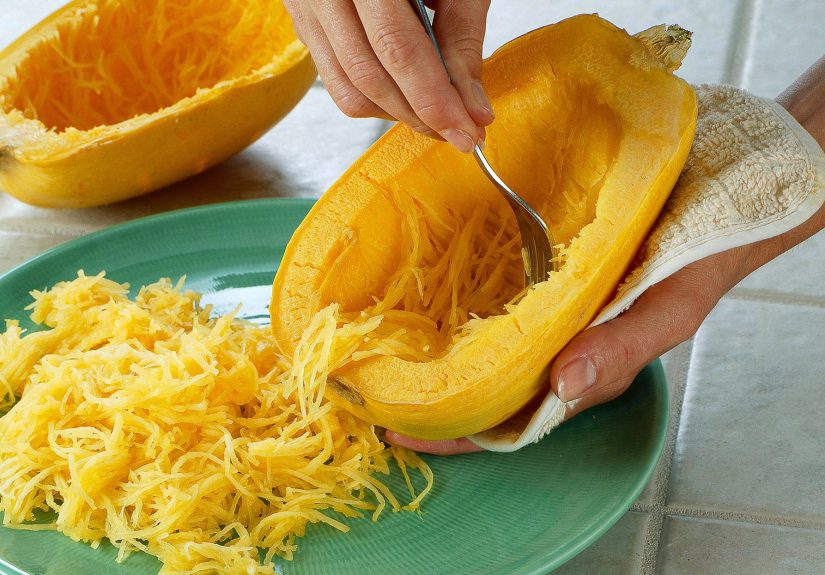
Stir in lemon zest, lemon juice, and (if using) red pepper flakes. - Make the “spaghetti.” Flip the squash cut-side up. Use a fork to scrape the flesh into strands.
Transfer strands to a large bowl (or keep them in the squash shells for a cute “boat” moment). - Toss and finish. Pour garlic butter over the strands. Add Parmesan, remaining 1/4 teaspoon salt, and herbs (if using).
Toss gently. Taste and adjust with more pepper, lemon, or Parmesan. - Serve. Top with extra Parmesan and a crack of black pepper. Eat while warm and buttery.
Pro Tips for Perfect Spaghetti Squash “Noodles”
1) Don’t overcook it into baby food
You want strands that feel al dente-ish, not mushy. Start checking at 35–40 minutes.
If a fork slides in with only slight resistance, you’re in the sweet spot.
2) Roast cut-side down for better flavor
This encourages browning and helps drive off moisture. Translation: more flavor, less puddle.
3) Salt in layers
A little salt before roasting seasons the squash itself. A final pinch after tossing helps the butter and Parmesan taste louder (in a good way).
4) Use finely grated Parmesan
The fluffy, fine kind melts into the strands more easily than big shreds, which tend to sit there like awkward confetti.
5) If it seems watery, give it a minute
Let the strands sit in a bowl for 2–3 minutes, then toss again. Steam escapes, and things get less…soup-adjacent.
6) Upgrade the butter when you want to impress yourself
Brown the butter: keep it on the heat until it turns nutty and golden with little brown bits, then add garlic off-heat.
It tastes like you hired a personal chef named “Autumn.”
7) Save the seeds (optional but fun)
Rinse, dry, toss with oil and salt, then roast until crisp. It’s basically the squash’s built-in snack.
Easy Variations (Pick Your Mood)
Brown Butter + Sage + Parmesan
Brown the butter, add a few sage leaves until crisp, then toss with squash and Parmesan. Cozy, nutty, and very “I lit a candle on purpose.”
Garlic Butter + Italian Seasoning
Add 1/2 teaspoon Italian seasoning to the garlic butter. Finish with extra Parmesan. Serve with marinara on the side if you want a pasta-night vibe.
Lemon Herb “Piccata-ish”
Add extra lemon juice, parsley, and a spoonful of capers. It’s bright, briny, and great with chicken or fish.
Miso Butter (Umami Bomb)
Stir 1–2 teaspoons white miso into the warm butter (off heat). It turns the squash into something you will think about at 2 a.m.
Cheesy Bake (Weekend Comfort Mode)
Toss with butter, garlic, and a little cream cheese or Greek yogurt, then top with mozzarella and broil until bubbly.
It’s the “I deserve carbs, but make them vegetables” approach.
What to Serve With Buttered Spaghetti Squash
- Weeknight proteins: rotisserie chicken, baked salmon, seared shrimp, turkey meatballs
- Veg partners: roasted broccoli, sautéed spinach, charred green beans
- Saucy additions: marinara, pesto, Alfredo (use lightly), or a spoonful of ricotta
- Crunch factor: toasted breadcrumbs, pine nuts, or roasted squash seeds
If you’re using it as a pasta swap, go for sauces that clingthicker marinara, pesto, or a buttery garlic sauce.
Very watery sauces can make the whole bowl feel like it needs a straw.
Make-Ahead, Storage, and Reheating
Make-ahead
Roast the squash up to 2 days ahead and refrigerate the strands. Reheat and toss with fresh garlic butter right before serving.
(Butter is always better when it’s not been living in the fridge.)
Refrigerator
Store cooked strands in an airtight container. They keep well for several days. If you’ve already tossed with butter and cheese, it still reheats nicely.
Freezer
Freeze cooked strands in a freezer-safe container. Thaw overnight in the fridge for best texture.
Expect it to be a bit softer after freezingstill good for casseroles, bakes, and saucy meals.
Best reheating method
- Skillet: Medium heat, a dab of butter, toss until warmed through.
- Microwave: Short bursts, stir between rounds to avoid hot spots.
- Oven: Covered dish at 350°F until warm (great for big batches).
FAQ
Can I roast spaghetti squash whole?
Yes. It’s slower, but it avoids the “why is this squash harder than my math homework?” cutting moment.
Roast until tender, then slice and shred. It works especially well if you want hands-off prep.
Why are my strands short instead of long?
Overcooking can make strands fragile. Also, scraping aggressively can break them up. Use a fork and a gentle hand.
Think “fluff,” not “attack.”
How do I keep it from being watery?
Roast cut-side down, don’t add water to the pan, and don’t overcook. If it’s still watery, let the strands sit for a couple minutes to release steam,
then toss again.
Is spaghetti squash actually a pasta substitute?
It’s a vibe substitute. It won’t fool anyone into thinking it’s semolina. But it can absolutely satisfy the “twirl something buttery with Parmesan” craving.
That’s the mission here.
of Real-Life Buttered Spaghetti Squash Moments
If you’ve never cooked spaghetti squash, the first moment is always the same: you pick it up, you admire its cheerful little oval shape,
and then you realize it’s basically a decorative bowling ball with a built-in attitude. The good news is that once it’s roasted, it transforms into
tender strands that behave like noodles and soak up butter like they were born for it. The bad news is that you may start looking at your pasta box
and thinking, “We need to talk.”
The biggest “aha” experience for most home cooks is learning the difference between roasted squash and steamed squash.
Steamed spaghetti squash can be fine, but roasted spaghetti squash is where the flavor lives. It’s the version that tastes faintly sweet,
slightly caramelized, and not like it needs a life coach. When you scrape out the strands and they come away in tidy ribbons, it’s weirdly satisfying
like you just solved a small kitchen puzzle and the prize is dinner.
Then comes the butter stage, and honestly, it’s hard to mess up because butter is basically a cheat code.
But there are two different personalities here: melted butter is cozy and straightforward, while brown butter is dramaticin the best way.
Brown butter smells nutty and toasty, like someone is baking cookies in the next room, and it makes spaghetti squash feel fancy enough to serve to guests
without announcing, “This is a vegetable, please clap.”
Another classic experience: you go to toss everything together, and you realize spaghetti squash is more delicate than pasta.
It’s not fragile, but it doesn’t want to be aggressively stirred like a pot of mac and cheese. It wants gentle folding and a little patience.
If you treat it nicely, you get long strands that twirl beautifully around a fork. If you don’t, you get a delicious pile anywayjust with less twirl.
Either way, nobody at the table is going to file a complaint with the Twirl Police.
Buttered spaghetti squash also has a talent for turning into whatever your week needs. Some nights it’s a quick side dish next to chicken.
Other nights it’s the base for marinara, meatballs, or a pesto situation that makes you feel like you have your life together.
It’s also sneaky in the best way: leftovers can become a cheesy bake, a lunch bowl with greens and shrimp, or a fridge-cleanout masterpiece
where you add whatever you’ve got and call it “seasonal.”
And finally, there’s the proud cook moment: when someone takes a bite and says, “Wait…this is squash?”
That’s when you casually nod like this happens to you all the time, even if you were ten minutes ago Googling “how to cut spaghetti squash without fear.”
Congratulationsyou just made a vegetable feel like comfort food. Butter did some heavy lifting, sure, but you still showed up.
Conclusion
A great buttered spaghetti squash recipe isn’t complicatedit’s just roasted well, seasoned smartly, and finished with enough butter to make it
taste like something you’d order at a cozy bistro. Keep the squash slightly al dente, build flavor with garlic and lemon, and let Parmesan do its salty magic.
Once you’ve nailed the basic method, the variations are endless (and delicious).