Table of Contents >> Show >> Hide
- Why Buttered Spaghetti Squash Works (And Why It’s Better Than Sad Diet Pasta)
- Pick the Right Spaghetti Squash
- How to Cut Spaghetti Squash Safely (Without Turning Dinner Into a Wrestling Match)
- Buttered Spaghetti Squash Recipe (Oven-Roasted, Best Flavor)
- Flavor Variations (Same Recipe, Different Personalities)
- How to Avoid Watery, Soggy Spaghetti Squash
- What to Serve With Buttered Spaghetti Squash
- Fast Cooking Methods (When You Want Dinner Now)
- Storage and Reheating
- FAQ: Buttered Spaghetti Squash Recipe
- Kitchen Experiences: What You’ll Notice After Making This a Few Times (Extra Notes)
- Conclusion
Spaghetti squash is the vegetable that shows up to dinner dressed as pasta and somehow gets away with it. When it’s cooked,
the inside turns into tender strands you can scrape into a bowllike nature’s prank that actually tastes good. Add butter,
and suddenly it’s not just “healthy-ish,” it’s genuinely craveable. This buttered spaghetti squash recipe
is simple, cozy, and flexible: make it plain and buttery, or level it up with garlic, herbs, lemon, and Parmesan.
Below you’ll get a foolproof roasting method (the best flavor), fast shortcuts (hello, microwave), and pro tips to avoid
watery squashbecause nobody wants “vegetable noodle soup” unless it’s actually soup.
Why Buttered Spaghetti Squash Works (And Why It’s Better Than Sad Diet Pasta)
Spaghetti squash has a mild, slightly sweet flavor. Butter brings richness, helps seasonings stick, and turns those strands
from “interesting texture” into “seconds, please.” The key is cooking the squash until it’s tender but not mushythink
al dente vibes, not baby food vibes.
Pick the Right Spaghetti Squash
- Look for: a firm squash with a hard rind, pale yellow to golden color, and no soft spots.
- Size matters: medium squash is easiest to handle and tends to roast evenly.
- Heavier is better: it usually means more flesh and less “hollow disappointment.”
How to Cut Spaghetti Squash Safely (Without Turning Dinner Into a Wrestling Match)
Spaghetti squash is famously tough. If your knife is struggling, don’t force itsoften the squash first:
- Microwave assist: poke the rind all over with a fork, then microwave in short bursts until the skin gives slightly.
- Oven assist: bake the whole squash briefly to make slicing easier.
Once it’s manageable, cut it in half, scoop out the seeds and stringy bits, and you’re ready for the good part.
Buttered Spaghetti Squash Recipe (Oven-Roasted, Best Flavor)
Ingredients (Serves 2–4)
- 1 medium spaghetti squash
- 1–2 tablespoons olive oil (or avocado oil)
- Salt and black pepper
- 3 tablespoons unsalted butter
- 1–2 cloves garlic, minced (optional but highly encouraged)
- 1–2 tablespoons grated Parmesan (optional)
- 1 teaspoon lemon zest or a small squeeze of lemon (optional, brightens everything)
- 2 tablespoons chopped parsley or basil (optional)
- Red pepper flakes (optional)
Step-by-Step Instructions
- Heat the oven: Preheat to 400°F. Line a baking sheet with parchment for easier cleanup.
- Prep the squash: Cut the squash in half and scoop out seeds. (Save seeds if you want to roast them like pepitas.)
- Season: Rub the cut sides with oil and sprinkle with salt and pepper.
- Roast cut-side down: Place squash halves cut-side down on the baking sheet. Roast
35–55 minutes, depending on size, until the rind is easy to pierce and the strands pull away with a fork.
(Start checking around 35–40 minutes for medium squash.) - Let it steam-finish: Remove from oven and rest 5 minutes. This helps the inside relax into better strands.
- Make the butter: Melt butter in a skillet over low heat. Add garlic (if using) and cook 30–60 seconds
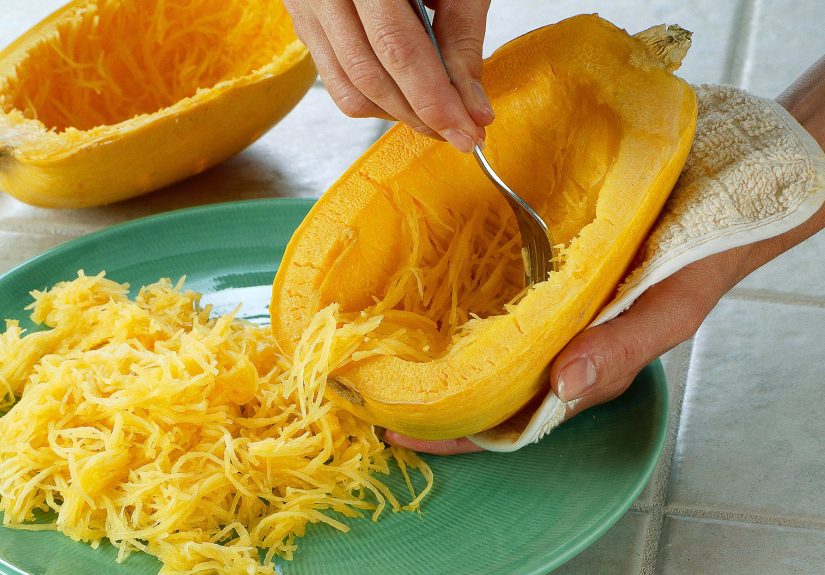
just until fragrant. Don’t brown it unless you’re intentionally making brown butter. - Scrape and toss: Use a fork to scrape strands into a bowl. Pour butter over top and toss gently.
Add Parmesan, herbs, lemon, and pepper flakes if you like. - Taste and adjust: Add a pinch more salt if needed. Butter loves salt. Salt makes butter famous.
Flavor Variations (Same Recipe, Different Personalities)
1) Garlic-Herb Butter (Classic)
Add minced garlic to melted butter, then finish with parsley or basil. This is the “everybody likes it” version.
2) Brown Butter + Sage (Cozy and Fancy)
Let butter cook until it smells nutty and turns golden-brown. Add chopped sage for the last 30 seconds.
It tastes like fall decided to be edible.
3) Lemon-Butter Parmesan (Bright and Cheesy)
Stir lemon zest into butter and finish with Parmesan. Great when you want richness without heaviness.
4) Dairy-Free “Buttery” Option
Use a plant-based butter alternative and add extra herbs, garlic, and a squeeze of lemon to build flavor.
How to Avoid Watery, Soggy Spaghetti Squash
- Roast cut-side down: It helps cook evenly and encourages strands that aren’t mushy.
- Don’t overbake: Overcooked squash turns soft and watery. Check early, especially with smaller squash.
- Drain if needed: Some squash releases liquid. If you see a puddle in the cavity, carefully pour it off.
- Finish in a warm pan: If strands seem wet, toss them in a skillet for 1–2 minutes to evaporate moisture.
What to Serve With Buttered Spaghetti Squash
This dish can be a side, a base, or a full-on “main character” with toppings.
- As a side: roasted chicken, turkey meatballs, grilled fish, or sautéed shrimp.
- As a main: add sautéed spinach, mushrooms, chickpeas, or shredded rotisserie chicken.
- Meal-prep bowl: spaghetti squash + protein + greens + a sprinkle of cheese.
- Kid-friendly: keep it buttery and add a little Parmesansimple wins.
Fast Cooking Methods (When You Want Dinner Now)
Microwave Method (Fastest)
- Poke the squash all over with a fork.
- Microwave briefly to soften, then cut in half and remove seeds.
- Place halves cut-side down in a microwave-safe dish with a little water; cover.
- Microwave until strands scrape out easily (time varies by size and microwave power).
- Toss with melted butter and seasonings.
Texture won’t be quite as roasty and rich as the oven method, but it’s a great weeknight shortcut.
Pressure Cooker / Instant Pot (Hands-Off)
If you have a pressure cooker, it can cook spaghetti squash quicklyespecially smaller ones. You’ll still finish with butter,
salt, and any extras you love.
Storage and Reheating
- Refrigerator: store cooked spaghetti squash in an airtight container and use within a few days.
- Freezer: freeze strands for longer storage (best texture if thawed and warmed in a skillet).
- Reheat: warm in a skillet over medium heat (best for drying off extra moisture), or microwave in short bursts.
Tip: If you know you’ll have leftovers, store squash strands plain and add fresh butter when reheating. Butter tastes best when it’s newly melted and living its best life.
FAQ: Buttered Spaghetti Squash Recipe
Is spaghetti squash supposed to be crunchy?
Slight bite is goodoverly crunchy means it needs more time. Mushy means it had too much time. Aim for tender strands that still hold shape.
Do I have to use Parmesan?
Nope. Butter + salt + pepper is already delicious. Parmesan is a bonus level, not a requirement.
Can I make it ahead?
Yes. Roast the squash, scrape the strands, refrigerate, and reheat in a skillet with butter before serving.
Kitchen Experiences: What You’ll Notice After Making This a Few Times (Extra Notes)
The first time you make buttered spaghetti squash, you’ll probably have one of two reactions: (1) “Wait… this is a vegetable?”
or (2) “Why did no one warn me the squash was basically a bowling ball with a shell?” Both are normal. Here are the most
common real-kitchen momentsand how to turn them into wins.
1) The “my squash is watery” surprise. Some spaghetti squash simply releases more moisture than others.
If you scrape the strands and they look a little wet, don’t panic and definitely don’t blame yourself. Home cooks often fix
this by tossing the strands in a warm skillet for a minute or two before adding butter. That quick heat-off moisture step
turns “kinda damp” into “actually pasta-like.” Also, roasting cut-side down and not overbaking makes a huge difference.
2) The “my strands are short” moment. If you cut the squash crosswise (around the equator), you can end up
with longer strands than a lengthwise cut. But honestly? Short strands still taste great. This is dinner, not a hair-extension
appointment. If you’re serving picky eaters who want “real noodle vibes,” experiment with cutting direction and roasting time
until you find your sweet spot.
3) The butter-to-squash ratio debate. One person wants “lightly buttered,” another wants “butter is a lifestyle.”
The easiest solution: start with less butter, toss, then add more at the table. Warm butter melts fast and spreads flavor
evenly, so a little goes further than you thinkespecially if you season well. Salt is the quiet MVP here. Without enough
salt, buttered squash can taste bland. With the right salt level, it tastes like comfort food.
4) The garlic timing lesson. Garlic can go from “wow” to “why does this taste bitter?” in seconds if it burns.
Many cooks learn to melt butter first, keep the heat low, and add garlic only long enough to smell amazingthen pull it off heat.
You’re making garlic butter, not garlic charcoal.
5) The “this could be a whole meal” discovery. Buttered spaghetti squash starts as a side dish, then you add
a handful of spinach, some sautéed mushrooms, a sprinkle of Parmesan, and suddenly it’s dinner. It’s also great as a base
for leftovers: shredded chicken, roasted veggies, chickpeas, or even a simple fried egg on top. (Yes, an egg. Trust the process.)
6) The reheating reality. Spaghetti squash reheats best in a skillet. Microwaves are convenient, but they can
make the strands softer and wetter. A pan brings the texture back and lets extra moisture evaporate. If you’re meal prepping,
store strands plain and add fresh butter when reheating. That “new butter” flavor makes leftovers taste intentional instead of accidental.
7) The “I didn’t expect this to be popular” plot twist. Many people think spaghetti squash will be a hard sell,
then it disappears fastespecially when it’s buttery, salty, and topped with something tasty like herbs and Parmesan. The trick
is not trying to convince everyone it’s “exactly like pasta.” It’s not. It’s spaghetti squash. Let it be its own delicious thing,
and it usually wins people over.
Conclusion
A great buttered spaghetti squash recipe is all about the basics: roast until tender (not mushy), season with
confidence, and toss with butter that’s been treated with respect (low heat, no burning). From there, you can keep it simple
or make it fancy with garlic, herbs, lemon, and cheese. Either way, you end up with a cozy, satisfying dish that feels like
comfort foodwithout requiring a mountain of ingredients or a culinary degree.