Table of Contents >> Show >> Hide
- Why breathing exercises matter for COPD
- The best breathing exercises for COPD
- How often should you practice COPD breathing exercises?
- Common mistakes that make breathing exercises less helpful
- Breathing exercises and pulmonary rehab: better together
- When to stop and get medical advice
- Real-life experiences with breathing exercises for COPD
- Conclusion
If you have COPD, you already know that breathing can go from “pretty normal” to “why does tying my shoe feel like climbing Everest?” with rude speed. Chronic obstructive pulmonary disease can make air get trapped in the lungs, which means breathing out fully becomes harder, not easier. That trapped air can leave you short of breath, tired, anxious, and frustrated. And unfortunately, once anxiety joins the party, breathing often gets even messier.
The good news is that breathing exercises for COPD can help you slow things down, move air more efficiently, clear mucus when needed, and feel more in control. No, they are not magic. They do not replace inhalers, oxygen, pulmonary rehabilitation, or your clinician’s treatment plan. But they can become one of the smartest low-tech tools in your COPD toolkit. Think of them as practical strategy, not lung wizardry.
Note: These techniques should feel controlled and calming, not punishing. If a breathing exercise makes you feel worse, dizzy, panicky, or more breathless, stop and talk with your healthcare professional or respiratory therapist.
Why breathing exercises matter for COPD
COPD changes the mechanics of breathing. Many people begin to rely more on the chest, neck, and shoulder muscles just to move air. That works in the short term, but it is tiring. Over time, the result can be a cycle of shallow breathing, air trapping, fatigue, and panic. Breathing retraining helps break that cycle.
The best COPD breathing techniques are designed to do a few simple but important jobs: slow your breathing rate, keep the airways open longer while you exhale, reduce the work of breathing, and help you use your breath more effectively during everyday activities. Some techniques also help clear mucus, which matters because extra mucus can block airflow and raise the risk of infection.
That is why breathing exercises are often taught in pulmonary rehabilitation programs. They are not random wellness hacks pulled from the internet’s giant bag of questionable ideas. They are practical methods used in real respiratory care.
The best breathing exercises for COPD
1. Pursed-lip breathing
If COPD breathing exercises had a most valuable player award, pursed-lip breathing would be polishing the trophy. This technique helps slow breathing down and keeps the airways open longer during exhalation. That can make it easier to empty the lungs more completely and reduce that awful “I cannot catch my breath” feeling.
It is especially useful when you are short of breath during activity, bending, lifting, climbing stairs, or feeling anxious. In other words, it works during real life, not just while sitting in a perfectly calm room with inspirational music playing in the background.
How to do pursed-lip breathing:
- Relax your neck and shoulders.
- Breathe in slowly through your nose for about 2 counts.
- Purse your lips as if you are about to whistle or gently blow out a candle.
- Breathe out slowly through pursed lips for about 4 counts, or at least longer than you inhaled.
- Repeat until your breathing feels more controlled.
When to use it: walking, showering, climbing stairs, carrying groceries, getting dressed, or anytime breathlessness starts to creep in like an uninvited guest.
Common mistake: forcing the air out too hard. This is a controlled exhale, not a birthday cake ambush.
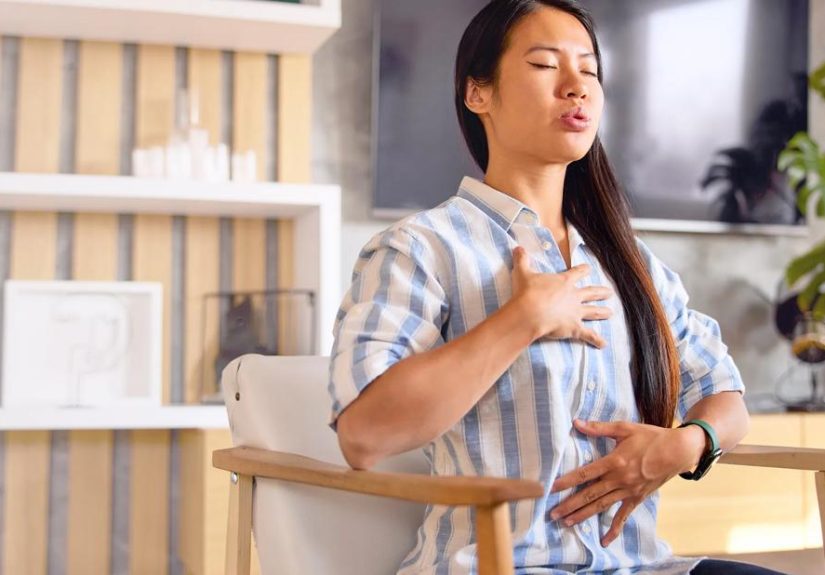
2. Diaphragmatic breathing, also called belly breathing
Diaphragmatic breathing encourages you to use the diaphragm more effectively instead of relying mostly on the upper chest and accessory muscles. For some people with COPD, this can reduce tension and make breathing feel more efficient. It can also be calming, which is no small thing when breathlessness and anxiety start feeding each other.
That said, a little nuance matters here. Belly breathing can help many people, but it is not equally comfortable for everyone, especially if COPD is advanced or if the technique feels unnatural at first. If it increases your work of breathing instead of easing it, that is your cue to get coaching rather than muscling through it.
How to do diaphragmatic breathing:
- Sit comfortably or lie down with your knees bent.
- Place one hand on your chest and the other on your belly.
- Breathe in slowly through your nose so your belly rises more than your chest.
- Pause briefly.
- Breathe out slowly through pursed lips while your belly falls.
- Repeat for 5 to 10 breaths.
When to use it: during calm practice sessions, before sleep, during recovery after activity, or when stress is making your breathing shallow.
Pro tip: many people learn this best while lying down first. Gravity becomes slightly less bossy, and the movement is easier to feel.
3. Coordinated breathing during activity
This technique is wonderfully unglamorous and incredibly useful. Coordinated breathing means you inhale before effort and exhale during effort. It helps prevent breath-holding, reduces strain, and makes daily movement feel less chaotic.
For people with COPD, that matters because breath-holding can make shortness of breath worse fast. The trick is to pair breath with motion until it becomes automatic.
How to do coordinated breathing:
- Inhale before the hard part of an activity.
- Exhale slowly through pursed lips during the hard part.
Examples:
- Before standing up from a chair, inhale. As you stand, exhale through pursed lips.
- Before lifting a laundry basket, inhale. As you lift, exhale.
- Before stepping up a stair, inhale. As you step up, exhale.
This is one of the most underrated breathing exercises for COPD because it fits into normal life. No yoga mat required. No scented candle required either, though the candle may feel emotionally supportive.
4. Huff coughing for mucus clearance
Not every COPD breathing technique is about calm, slow breathing. Sometimes the issue is mucus. When mucus builds up, you may need a way to move it without wearing yourself out with harsh, repeated coughing. That is where huff coughing comes in.
Huff coughing is gentler than a forceful coughing fit and is often used as part of airway clearance. The goal is to move mucus upward so it is easier to cough out.
How to do a huff cough:
- Sit upright with both feet on the floor.
- Take a slow, deep breath until your lungs are about three-quarters full.
- Hold the breath for 2 to 3 seconds.
- Exhale strongly but slowly with your mouth open, as if you are fogging up a mirror.
- Repeat 1 to 2 times.
- Follow with one strong cough to bring the mucus up.
When to use it: when you feel chest congestion, hear mucus rattling, or have been told by your clinician that airway clearance should be part of your routine.
Helpful reminder: staying hydrated can make mucus thinner and easier to clear.
How often should you practice COPD breathing exercises?
The short answer is: often enough that they become familiar before you really need them. Practicing only when you are already very short of breath is like learning to swim while falling off the boat. Technically possible. Emotionally suboptimal.
A simple daily rhythm can work well:
- Morning: 5 minutes of diaphragmatic breathing to loosen up and reset.
- Throughout the day: use pursed-lip breathing during walking, chores, stairs, or moments of anxiety.
- As needed: use huff coughing when congestion is noticeable.
- Evening: a few minutes of relaxed belly breathing or slow pursed-lip breathing to wind down.
Many clinicians recommend practicing at least a few times a day so your body starts recognizing the pattern automatically. The more familiar the technique feels, the easier it is to use when symptoms flare.
Common mistakes that make breathing exercises less helpful
Even excellent breathing exercises for COPD can become less effective when the form is off. A few of the biggest troublemakers include:
Breathing too fast
If the exercise turns into quick, shallow breathing, it defeats the point. Slow beats dramatic.
Tensing the shoulders and neck
When your shoulders start climbing toward your ears, your accessory muscles are taking over again. Relax them on purpose.
Trying too hard
Breathing exercises should feel controlled, not like a competitive sport. Over-efforting can increase dizziness and discomfort.
Only using the techniques during a crisis
Practice during calm periods so the movements feel familiar when you actually need them.
Ignoring symptoms that are getting worse
If your breathing exercises suddenly seem less effective, that may be a sign your COPD is changing, your mucus burden is increasing, or you are dealing with a flare-up or infection.
Breathing exercises and pulmonary rehab: better together
Breathing retraining works best when it is part of a bigger plan. Pulmonary rehabilitation is often one of the smartest next steps for people with COPD because it combines breathing techniques, exercise training, education, pacing strategies, and support. That matters because shortness of breath is not just about lungs. It is also about conditioning, confidence, energy use, and knowing what to do before panic takes over.
In pulmonary rehab, you may learn how to breathe more efficiently while active, how to conserve energy during daily tasks, and how to build endurance safely. Some people also have access to home-based or virtual rehab programs, which can be helpful when travel is difficult.
If you have tried breathing exercises on your own but still feel unsure, pulmonary rehab can turn “I think I’m doing this right?” into “Okay, I actually know what I’m doing now.” That is a pretty valuable upgrade.
When to stop and get medical advice
Breathing exercises should help you feel more in control, not less. Contact your healthcare professional if:
- the exercises feel harder than usual or suddenly stop helping,
- you feel dizzy, faint, or unusually anxious while doing them,
- you have more mucus than usual or a change in mucus color,
- your cough, wheezing, or chest tightness is worsening,
- you are unsure whether your technique is correct.
Seek urgent care right away for severe shortness of breath that does not improve, chest pain, bluish lips, new confusion, or other signs of a serious COPD flare or emergency.
Real-life experiences with breathing exercises for COPD
One reason this topic matters so much is that breathing exercises for COPD are not just theory. They become part of real people’s routines, frustrations, small wins, and daily workarounds. And if you talk to enough people living with COPD, you start hearing the same themes again and again.
First, many people say the techniques feel awkward at the beginning. Pursed-lip breathing can seem almost too simple, which makes some people underestimate it. Then they try it while walking to the mailbox, climbing stairs, or recovering after a shower, and suddenly the technique clicks. The benefit is not always dramatic in a movie-trailer sense. It is often more subtle and more meaningful than that. People describe feeling less panicked, less rushed, and more able to recover after activity instead of spiraling into a breathlessness episode.
Another common experience is that timing matters. People often report the best results when they start the technique early rather than waiting until they are extremely short of breath. That is especially true with pursed-lip breathing. Used at the first sign of breathlessness, it can feel like applying the brakes before the situation gets out of control. Used too late, it may still help, but the recovery can take longer.
People also talk about confidence. That may sound soft compared with oxygen levels, inhalers, and rehab schedules, but confidence is not a small thing in COPD. Breathlessness can trigger fear very quickly. Several patients taught pursed-lip breathing in clinical follow-up research continued to use it months later and reported definite benefit, including greater confidence managing shortness of breath. That confidence can change behavior in a good way. Someone who feels they have a tool is often more willing to walk, move, and stay active instead of avoiding everything that might make them puff.
There is also a practical side to these experiences. Many people with COPD say coordinated breathing helps during chores more than they expected. Standing up, carrying groceries, folding laundry, or stepping into the shower may not sound athletic, but for someone with COPD, those tasks can feel like miniature endurance events. Exhaling during the effort can make daily movement feel smoother and less overwhelming.
For people who deal with mucus, huff coughing is often described as less exhausting than repeated hard coughing. That matters because forceful coughing can leave a person drained. A more efficient mucus-clearing technique can save energy, reduce irritation, and make the chest feel less loaded down.
Not every experience is glowing, and that is important to say honestly. Some people find diaphragmatic breathing difficult, especially at first. Others say they forget to practice until symptoms are already flaring. Some simply need hands-on coaching from a respiratory therapist before the technique feels natural. That does not mean the method failed. It often means the learning curve is real.
Caregivers notice patterns too. They often say the person with COPD does better when routines are predictable: same chair, same quiet moment, same short practice block each day. In real life, consistency beats perfection. Five useful minutes done daily tends to be more effective than one heroic session followed by a week of forgetting.
In the end, the lived experience of COPD breathing exercises is usually not about perfection. It is about reclaiming a little control. A slower recovery after exertion becomes a faster one. Panic becomes a plan. A bad breathing moment becomes manageable instead of terrifying. That is not a cure, but for many people, it is a meaningful improvement in everyday life.
Conclusion
Breathing exercises for COPD are simple, but they are not trivial. Pursed-lip breathing can help slow your breathing and ease shortness of breath. Diaphragmatic breathing can help some people breathe more efficiently and relax. Coordinated breathing makes daily activity less draining. Huff coughing helps clear mucus without turning every coughing spell into a full-body event.
The key is to practice these techniques regularly, use them early, and treat them as part of a larger COPD management plan that may include medication, physical activity, pulmonary rehabilitation, and medical follow-up. Done consistently, these exercises can help you breathe with less effort, move with more confidence, and feel more in charge of your day. And honestly, anything that makes putting on socks feel less like an Olympic qualifier deserves some respect.