
Table of Contents >> Show >> Hide
- Before You Plant: The Fast-Flower Game Plan
- 1) Zinnias (Zinnia elegans): The “Instant Summer” Classic
- 2) Sunflowers (Helianthus annuus): Big Impact, Surprisingly Quick
- 3) Marigolds (Tagetes): Fast Color With Bonus Garden Benefits
- 4) Sweet Alyssum (Lobularia maritima): A Fast, Fragrant Flower Carpet
- 5) Calendula (Calendula officinalis): Sunny Blooms With Edible Petals
- 6) Nasturtiums (Tropaeolum majus): Fast Vines (or Mounds) With a Peppery Kick
- 7) Cosmos (Cosmos bipinnatus / Cosmos sulphureus): Airy, Cheerful, and Heat-Loving
- 8) Annual Phlox (Phlox drummondii): Fast Color With a Sweet Scent
- How to Get Faster Blooms (Without Negotiating With the Weather)
- Quick Design Ideas for a “Color All Summer” Look
- Troubleshooting: Why Fast Flowers Sometimes Feel Slow
- Real-Garden Experiences: What Fast Bloomers Teach You (500+ Words)
- Conclusion
Summer color doesn’t have to be a “see you in three months” situation. If you pick the right fast-growing flowers,
you can go from bare soil to bloom-town in a surprisingly short timeoften 6 to 10 weeks, depending on the plant,
your weather, and whether your garden gets the kind of sunshine that makes tomatoes brag.
This guide focuses on quick-blooming annuals (and a few “acts-like-an-annual” favorites) that are easy for beginners,
friendly for containers, and perfect for filling blank spots in beds and borders. You’ll also get practical tips to
speed things upbecause we’re aiming for “colorful garden” not “staring contest with mulch.”
Before You Plant: The Fast-Flower Game Plan
1) Time it with your last frost
Most of these flowers love warmth and won’t appreciate a surprise cold snap. In much of the U.S., “plant now” means
after the last spring frost (or when nights are reliably mild). If you’re unsure, check your local frost date and
watch the 10-day forecast.
2) Give them sun like you mean it
Fast growth needs energy. Aim for 6+ hours of direct sun for best bloom speed and color.
Some choices (like sweet alyssum) can tolerate a little afternoon shade in hot climates.
3) Prep the soil for quick takeoff
- Loosen the top 6–8 inches of soil.
- Mix in compost to improve drainage and moisture balance.
- Water the bed the day before sowing or transplanting so seeds land in evenly moist soil.
4) Use the “two-track” approach: seeds + a few starter plants
Want the fastest possible color? Combine direct-sown seeds (cheap, easy, satisfying) with
a few nursery transplants (instant gratification). It’s like streaming a show while your pizza bakes.
1) Zinnias (Zinnia elegans): The “Instant Summer” Classic
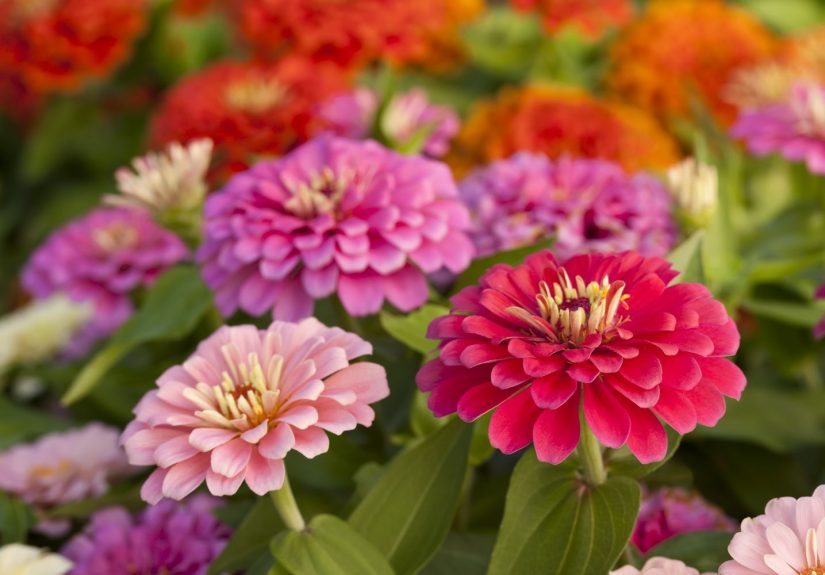
If you want bold, nonstop color and flowers that look like they dressed up for a party, plant zinnias.
They thrive in heat, bloom for weeks, and make excellent cut flowers.
Why they’re fast
Zinnias often bloom about 8–12 weeks from seed when conditions are warm and sunny.
How to plant now
- Direct sow after the last frost when soil is warm.
- Plant seeds about 1/4 inch deep.
- Thin seedlings so plants have roomgood airflow helps reduce leaf issues in humid areas.
Make them bloom longer
Keep picking bouquets or deadhead spent blooms. Zinnias respond by making more flowers, as if
they took that personally (in a good way).
2) Sunflowers (Helianthus annuus): Big Impact, Surprisingly Quick
Sunflowers aren’t just tall golden giants. Many dwarf and branching varieties bloom fast,
work in containers, and give you that “summer postcard” look.
Why they’re fast
Many sunflowers bloom in roughly 55–75 days from planting, depending on the variety.
How to plant now
- Direct sow after frost danger passes.
- Choose a spot with full sun and decent drainage.
- Plant in waves: sow a few seeds every 2–3 weeks for a longer bloom season.
Pro tip for tidy gardens
Use dwarf types along paths and borders so you get the drama without creating a sunflower “privacy fence”
you didn’t ask for.
3) Marigolds (Tagetes): Fast Color With Bonus Garden Benefits
Marigolds bring bright yellows, oranges, and reds, and they’re famously easy. They also show up in companion planting
conversations because many gardeners like them near veggie beds.
Why they’re fast
Many marigolds bloom in about 7–8 weeks from seed, especially French and dwarf types.
How to plant now
- Start from seed indoors for a head start, or plant nursery starts for immediate momentum.
- Set out transplants after frost, spacing them so air moves between plants.
- They like sun, but they’re not fussyas long as you don’t treat them like a houseplant and overwater them.
Keep the blooms coming
Deadhead regularly. Marigolds are the kind of overachiever that will keep producing if you keep removing
the “finished” flowers.
4) Sweet Alyssum (Lobularia maritima): A Fast, Fragrant Flower Carpet
Sweet alyssum is low-growing, lightly fragrant, and excellent for edging beds, filling gaps, and softening container edges.
Pollinators also tend to love ittiny flowers, big social life.
Why it’s fast
It can flower in about 6–8 weeks from seed.
How to plant now
- Direct sow in cool-to-mild conditions, or use transplants for faster filling.
- Seeds need light to germinatepress them into the surface and cover very lightly.
- In hot regions, give it afternoon shade to keep it blooming longer.
Heat-hiccup workaround
If alyssum pauses flowering in peak heat, give it a light trim, keep watering consistent, and it often rebounds when
temperatures ease.
5) Calendula (Calendula officinalis): Sunny Blooms With Edible Petals
Calendula (often called pot marigold) has cheerful daisy-like flowers in warm yellows and oranges. It’s a favorite for
cottage gardens, cutting, and edible-garnish fans.
Why it’s fast
Seeds germinate readily, and calendula can bloom in roughly 6–8 weeks under good conditions.
How to plant now
- Sow seeds about 1/4 inch deep when soil is workable and warming.
- Calendula tolerates cooler weather better than many summer annuals.
- Plant in full sun to part shade; in very hot climates, light shade can help extend the season.
Bonus: stagger planting
Sow a small patch every couple of weeks for steady flowers. It’s the gardening equivalent of meal prepfuture you will
be grateful.
6) Nasturtiums (Tropaeolum majus): Fast Vines (or Mounds) With a Peppery Kick
Nasturtiums look like little bursts of orange, yellow, and red confettiand the flowers and leaves are edible, with a
peppery flavor. They work in hanging baskets, raised beds, and veggie gardens.
Why they’re fast
Nasturtiums can bloom in roughly 8–11 weeks from seed, depending on variety and warmth.
How to plant now
- Direct sow after frost in full sun for best flowering.
- Plant seeds about 1/2 inch deep.
- Don’t over-fertilizenasturtiums often flower best in average to lean soil.
Container trick
Put trailing nasturtiums at the edge of pots so they spill over. You’ll get flowers and an elegant cascade that makes
your container look like it hired a stylist.
7) Cosmos (Cosmos bipinnatus / Cosmos sulphureus): Airy, Cheerful, and Heat-Loving
Cosmos brings that light, “wildflower” looktall stems, feathery foliage, and blooms that keep showing up through summer.
They’re also famously tolerant of neglect (the plant world’s most chill roommate).
Why they’re fast
Cosmos commonly blooms around 8–10 weeks from seed.
How to plant now
- Direct sow after frost, or start indoors a few weeks before planting out.
- Use full sun and well-drained soil.
- Go easy on fertilizertoo much nitrogen can mean lots of leaves and fewer flowers.
Extend the show
Deadhead or cut for bouquets. Cosmos often responds with more blooms, like it’s trying to impress you.
8) Annual Phlox (Phlox drummondii): Fast Color With a Sweet Scent
Annual phlox is a low-growing, colorful bloomer that can fill beds and containers with pinks, reds, purples, and whites.
Many gardeners love it for early-season color and fragrance, and newer types can handle warmth better than older varieties.
Why it’s fast
Annual phlox can bloom in about 50–65 days from germination under good conditions.
How to plant now
- Direct sow in spring once soil is workable (or plant nursery starts after frost).
- Keep soil evenly moist while seeds germinate and seedlings establish.
- Give it sun, airflow, and avoid wetting foliage late in the day in humid climates.
Where it shines
Use annual phlox to edge beds, pack color into containers, or fill in between taller “headline” flowers like zinnias
and sunflowers.
How to Get Faster Blooms (Without Negotiating With the Weather)
- Warm the soil: Black plastic or landscape fabric can warm soil faster in spring. Even a few degrees
can speed germination. - Start seeds indoors (selectively): For marigolds, annual phlox, and alyssum, starting indoors can
shave weeks off the wait. - Thin seedlings: Crowding slows growth and invites disease. Thinning feels rude, but it’s a kindness.
- Water smart: Keep seeds consistently moist until they sprout, then shift to deeper, less frequent watering
to encourage stronger roots. - Deadhead like it’s your hobby: For zinnias, cosmos, marigolds, and many others, removing spent blooms signals
“make more flowers,” not “wrap it up.”
Quick Design Ideas for a “Color All Summer” Look
1) The fast-cutting garden
Plant zinnias + cosmos + sunflowers in a sunny patch. Add marigolds at the front. You’ll have bouquet material for weeks,
and your kitchen table will start acting like it has its own PR team.
2) The pollinator-friendly border
Edge with sweet alyssum, mix in calendula and annual phlox, then pop taller zinnias behind. You get layers of color plus
lots of bee and butterfly activity.
3) The container glow-up
Use a thriller-filler-spiller setup: dwarf sunflower (thriller), zinnia or marigold (filler), and trailing nasturtium (spiller).
Tuck sweet alyssum around the edges for fragrance and soft texture.
Troubleshooting: Why Fast Flowers Sometimes Feel Slow
“My plants are leafy but not flowering.”
Common causes include too much shade, too much fertilizer (especially nitrogen), or overwatering. For cosmos and nasturtiums
in particular, “less pampering” often equals “more blooms.”
“Seedlings are leggy and flopping.”
They need stronger light. If you started indoors, keep seedlings close to a bright window or grow light. Outdoors, ensure
they’re not shaded by taller plants.
“Something is chewing holes in everything.”
Check for slugs at night, and inspect undersides of leaves for pests. Many issues can be managed early with hand-picking,
water sprays, or appropriate garden-safe controlsespecially if you catch the troublemakers before they invite friends.
Real-Garden Experiences: What Fast Bloomers Teach You (500+ Words)
Gardeners who chase quick summer color tend to learn a few “wish I knew that sooner” lessonsusually right after they’ve
done the opposite. One common experience: the temptation to plant everything at once on the first nice weekend. It feels
productive. It’s also how you end up with a garden that peaks all at the same time and then looks a little tired later,
like it partied too hard in June and needs a nap in August.
That’s why many gardeners fall in love with succession sowing. You plant a small batch of zinnias today, another
batch two or three weeks later, and maybe one more round after that. The first planting starts blooming, and just as it’s
hitting full stride, the next wave is stretching up behind it. The garden stays colorful longer, and you get fewer “everything
is happening at once” moments. People who grow dwarf sunflowers often do the same thingstaggering sowing dates so they have
fresh blooms for weeks instead of one big sunflower finale.
Another classic experience is learning which flowers like “rich soil” and which flowers interpret rich soil as an invitation
to grow leaves the size of dinner plates. Cosmos is famous for this. In many gardens, the most disappointing cosmos plants are
the ones that were treated like VIPsextra fertilizer, extra compost, constant attention. They grow tall and lush…and then act
shy about flowering. Once gardeners scale back the nitrogen and stop fussing, cosmos often flips the switch and starts blooming
like it finally remembered why it was invited.
Fast-growing flowers also teach patience in disguise. Take sweet alyssum: it may bloom quickly, but in very hot stretches it can
slow down or pause, especially in full blazing afternoon sun. Gardeners who stick with it (and trim it lightly, keep water steady,
or give it a bit of shade) often see it rebound later. The lesson: “fast” doesn’t always mean “constant,” and a midseason haircut
can be the difference between a tired-looking edging plant and a fresh, fragrant border.
Marigolds and zinnias teach a different lesson: you are the manager of the bloom schedule. If you deadhead, they keep
producing. If you don’t, they start moving toward seed and slow their flower output. Many gardeners describe the moment it “clicks”:
once they start snipping spent blooms every few days, the plants look tidier and the flowering gets heavier. It’s oddly satisfying
like sweeping the floor and instantly feeling like a responsible adult.
Nasturtiums add the fun factor. People often plant them for color, then end up nibbling a leaf, tasting the peppery bite, and suddenly
they’re planning salads like they’re hosting a garden party. They also teach restraint with fertilizer. In a lot of real gardens, the
nasturtiums grown in leaner soil bloom more, while the “pampered” ones produce a jungle of leaves and fewer flowers. It’s the plant
equivalent of someone who eats too much protein and forgets leg dayimpressive growth, but not the result you wanted.
Finally, fast bloomers teach gardeners to notice microclimates. The sunnier side of a bed blooms first; the spot near a reflective wall
runs warmer and speeds germination; the container on the patio dries out faster and needs more frequent watering. Once gardeners start
paying attention to these small differences, they can place plants more strategicallyand get that “colorful summer garden” look sooner,
longer, and with fewer surprise disappointments.
Conclusion
A colorful summer garden isn’t about waiting for magicit’s about choosing plants that move quickly and giving them the basics they need:
sun, decent soil, consistent watering during establishment, and regular deadheading. Pick a few of the fast growers above, plant them in
waves, and you’ll have a garden that keeps showing off all season long (without demanding you turn into a full-time plant therapist).