Table of Contents >> Show >> Hide
- Why the Date Line Matters (More Than You Think)
- Quick Rules Before We Get to the 3 Ways
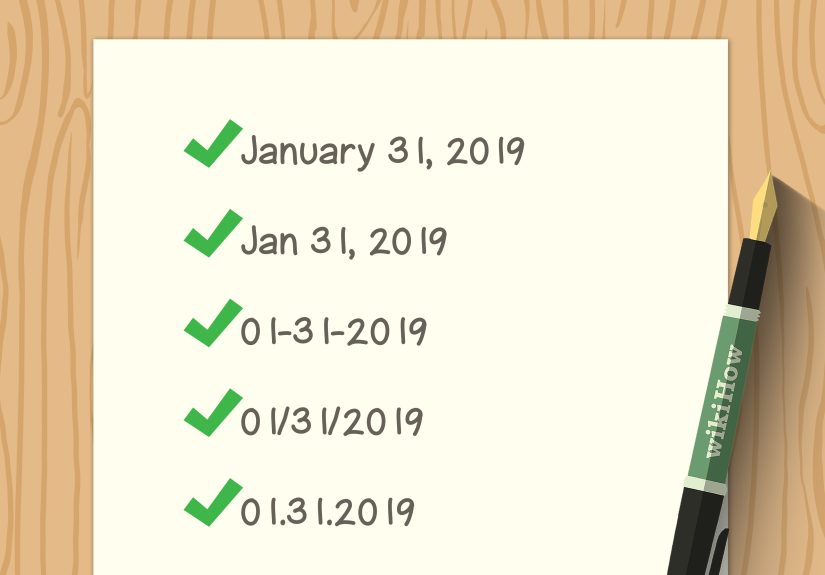
- Easy Way #1: The Standard American Style (Month Day, Year)
- Easy Way #2: The International-Friendly Style (Day Month Year)
- Easy Way #3: The “No-Mistakes” Numeric Style (ISO 8601: YYYY-MM-DD)
- Common Date Mistakes (and How to Avoid Them)
- Mini Templates: Where the Date Goes (So You Don’t Have to Guess)
- FAQs: Quick Answers to Common “Wait, Do I…?” Questions
- Real-World Experiences: What Actually Happens When You Date Letters Different Ways
- Conclusion
The date on a letter is like the tiny “timestamp” on a photoeasy to ignore until someone asks,
“Wait… was this before the deadline or after we all pretended the deadline didn’t exist?”
Whether you’re writing a cover letter, a complaint letter, a thank-you note, or a “Dear Grandma, I’m alive”
update, the date line quietly does a lot of heavy lifting.
The good news: you don’t need a PhD in calendars to do this right. You just need a consistent format,
the right punctuation, and one simple goal: make the date instantly clear to the readerespecially if they
might live, work, file, scan, or argue about paperwork in another place (or another department).
Why the Date Line Matters (More Than You Think)
A properly written date can help your letter do three important jobs:
- Creates a record: Helpful for applications, disputes, contracts, and follow-ups.
- Clarifies timelines: Deadlines, appointment requests, and “as of” statements depend on it.
- Signals professionalism: Small formatting details can make your letter easier to process and trust.
One quick reality check: if you draft a letter on Monday but don’t actually finish and send it until Thursday,
most style guidance treats Thursday as the date that belongs on the letter. The date line is a “this is when this
letter exists” markernot a diary entry.
Quick Rules Before We Get to the 3 Ways
Rule #1: Put the date where readers expect it
In a typical business letter, the date goes near the topusually right below letterhead (or below your address if
you’re not using letterhead). Depending on the layout (block vs. modified block), it may be left-aligned or nudged
toward the center/right. The key is consistency with the rest of the letter’s alignment.
Rule #2: Spell out the month for clarity (most of the time)
If this is a real letter to a real humanespecially a formal onespelling out the month is the easiest way to
avoid confusion. “January 24, 2026” is unmissable. “01/24/26” can look like a password, and “01/02/26” can start a
friendly international misunderstanding.
Rule #3: Use commas correctly (your future self will thank you)
In standard American format (Month Day, Year), the comma after the day is not optional: “January 24, 2026.”
If the date appears mid-sentence, the year is usually set off with commas: “On January 24, 2026, we met.”
But if you use the day-month-year style (“24 January 2026”), commas generally don’t appear.
Rule #4: Avoid “th/st/nd/rd” in the date line
“January 24th, 2026” might sound natural out loud, but it’s usually not preferred in formal writing.
Keep the date line clean: “January 24, 2026.”
Rule #5: Pick one format and don’t remix it halfway through
Mixing formats is how people end up with tragic creations like “2026/January/24” or “24, January 2026,”
which are neither fish nor fowl nor date.
Easy Way #1: The Standard American Style (Month Day, Year)
If your letter is going to a U.S. audience (employers, schools, landlords, customer service, courts, banks, your
cousin in Ohio), this is the safest, most familiar format:
Example: January 24, 2026
How to write it
- Spell out the month (January, February, March, etc.).
- Use the day as a number (24).
- Add a comma after the day.
- Write the year in four digits (2026).
How it looks in a letter
When it’s especially useful
- Job letters: cover letters, follow-ups, resignation letters
- Formal requests: recommendations, references, transcripts, records
- Business communication: complaints, disputes, invoices, agreements
Comma tip (in sentences)
If the date appears in the middle of a sentence, it often gets the “comma hug” around the year:
We submitted the application on January 24, 2026, and received confirmation the same day.
If the date is at the end of a sentence, you usually don’t add an extra comma after the year:
We submitted the application on January 24, 2026.
Easy Way #2: The International-Friendly Style (Day Month Year)
If you’re writing to someone outside the U.S., working in an international context, or you simply want a format
that’s very hard to misread, this style is wonderfully straightforward:
Example: 24 January 2026
Why this helps
This format removes the most common source of confusion: numeric month/day mix-ups. It also avoids comma rules
entirely, which is great if punctuation feels like a pop quiz you didn’t study for.
How to write it
- Day first (24)
- Month spelled out (January)
- Year last (2026)
- No commas in the date itself
How it looks in a letter
Best for
- International letters: schools, businesses, clients, friends abroad
- Academic or research contexts: where global readability matters
- Situations with high stakes: when “probably” is not a comforting word
One small caution: if your reader expects a traditional American business letter format, the month-first style
may feel more familiar. This isn’t “wrong,” but it’s worth considering your audience.
Easy Way #3: The “No-Mistakes” Numeric Style (ISO 8601: YYYY-MM-DD)
If your letter will be scanned, filed digitally, shared across time zones, routed through ticketing systems, or
processed by software (hello, modern life), ISO 8601 is the cleanest numeric date format:
Example: 2026-01-24
Why ISO works
- It’s unambiguous: Year-month-day leaves little room for interpretation.
- It sorts correctly: Files named “2026-01-24…” naturally appear in chronological order.
- It’s common in tech and global operations: especially where precision matters.
How to write it
- Four-digit year (2026)
- Hyphen
- Two-digit month (01)
- Hyphen
- Two-digit day (24)
How to use it in a letter without looking like a robot
In very formal, traditional letters, ISO can look a bit “systems-y.” A nice compromise is to pair it with a label
(especially in memos, reference letters, or forms):
Or, if you want to keep the classic date line but still help filing systems, include ISO in a reference line or
subject line:
Common Date Mistakes (and How to Avoid Them)
Mistake #1: All-numeric dates with slashes
“01/02/2026” is a puzzle: is it January 2 or February 1? In the U.S., it’s usually January 2. In many other places,
it’s February 1. If your letter could travel, don’t send it with a riddle attached.
Fix: Spell out the month (“January 2, 2026”) or use ISO (“2026-01-02”).
Mistake #2: Using ordinal endings in the date line
“January 24th, 2026” isn’t the end of the world, but it’s not the clean, standard look most formal letters aim for.
Fix: “January 24, 2026.”
Mistake #3: Forgetting commas (or sprinkling them randomly)
In month-day-year format, the comma after the day is a must: “January 24, 2026.” If the full date sits inside a
sentence, many styles also set off the year with commas: “On January 24, 2026, we…” Meanwhile, day-month-year
typically uses no commas at all: “24 January 2026.”
Mistake #4: Writing a date that doesn’t match the day of the week
If you include the weekday (“Saturday”), make sure it’s correct. A mismatched day/date combo is the kind of detail
that makes people doubt everything elselike a movie where the “winter scene” has palm trees in the background.
Mini Templates: Where the Date Goes (So You Don’t Have to Guess)
Block format (common in business letters)
Modified block format (date shifted right/center)
Personal letter (weekday optional)
FAQs: Quick Answers to Common “Wait, Do I…?” Questions
Should I include the day of the week?
Optional. In personal letters, it can feel warm and natural (“Saturday, January 24, 2026”). In business letters, it’s
less common unless the context is appointment-heavy or diary-like.
Should I abbreviate months (Jan., Feb., Sept.)?
In formal letters, spelling out the month is usually the cleanest choice. Abbreviations show up more often in news
writing, tables, tight layouts, or forms.
Do I have to include the year?
For most business or official letters, yesinclude it. If you’re writing a quick personal note and the year is obvious,
you can omit it, but consider how the letter might be saved or referenced later. People keep letters longer than you think.
What date should I use if I wrote the letter over several days?
Use the date you finalize the letter (the day it’s completed and ready to send). It keeps the record accurate and avoids
timeline confusion.
Is “2026/01/24” acceptable?
It’s readable, but ISO 8601 is typically written with hyphens (“2026-01-24”). If you’re choosing a numeric “no confusion”
format, use the one that’s widely recognized and consistent.
Real-World Experiences: What Actually Happens When You Date Letters Different Ways
Let’s talk about the part nobody mentions in grammar class: real life. In real life, letters don’t live in a perfect
vacuum where everyone reads slowly, carefully, and with a dictionary open. Letters get skimmed. They get scanned. They
get forwarded to someone else with “FYI” as the entire message. They get shoved into folders labeled “Important??” and
rediscovered three months later during a panic-cleaning session.
That’s where date format turns from a “nice detail” into a practical superpower. Picture a job application packet:
the hiring team might compare your cover letter date to the posting timeline. A clean “January 24, 2026” looks normal,
easy, and unmistakably American. A numeric “01/02/2026” can trigger a moment of doubtespecially if the company has
global offices. Nobody wants the reader pausing to decode your date like it’s a spy message.
Or think about customer service disputes. People often send letters to document problems with a product, a bill, or a
service. If you reference a timeline (“I contacted support on 03/04/2026”), you may know what that means, but the person
reviewing your case might not. If they interpret it differently, your “within 30 days” claim can accidentally become
“outside 30 days,” and suddenly you’re in a very annoying conversation with a policy instead of a person. Writing the month
out“March 4, 2026”keeps your point strong and your blood pressure lower.
In schools, dates can be the difference between “on-time” and “late,” especially for forms, recommendation letters, and
appeals. If you’re asking a teacher or counselor for a signed letter, the date line helps document when the request was
made or completed. Many offices file paperwork in batches; they may sort letters by date before they ever read content.
This is one reason ISO (“2026-01-24”) is popular in tech-heavy environments: it sorts cleanly, and filing systems love it.
Humans like it tooonce they get used to itbecause it never makes them guess what 02/03 means.
Personal letters have their own “experience” angle. Adding the weekday“Saturday, January 24, 2026”can feel like a small
snapshot of your life, like you’re letting the reader step into your moment. It’s cozy. It’s specific. It’s also a subtle
way to anchor memories: “Oh yeah, that was the weekend we all got snowed in,” or “That was right after finals.”
Just make sure the weekday matches the date if you include it; otherwise, you’ve invented a tiny time paradox.
Finally, there’s the office reality: someone, somewhere, will copy your letter into another system. If your date is clear,
you win. If your date is ambiguous, your letter might get logged wrongand you won’t find out until you’re chasing an
answer later. In other words: the right date format is not just “correct.” It’s kind. It’s reader-friendly. And it keeps
your letter from becoming the main character in a spreadsheet drama.
Conclusion
Writing the date on a letter doesn’t have to be complicated. Use a format your reader recognizes, keep it consistent,
and prioritize clarity over cleverness. If you’re writing in the U.S., Month Day, Year is the everyday
standard. If you’re writing internationally, Day Month Year reduces confusion. And if your letter will
be handled by systemsor filed like it’s going to court somedayISO (YYYY-MM-DD) is the tidy, unambiguous
choice.
Pick one of the three easy options, match it to your audience, and your date line will quietly do its jobso your actual
message can get the attention it deserves.