Table of Contents >> Show >> Hide
- Why shapeshifter legends pop up everywhere
- 1) The Encantado (Boto) The Amazon’s Hat-Wearing Shapechanger
- 2) The Adze A Firefly That Isn’t Here for Your Vibes
- 3) The Boo Hag The “Rider” from Gullah Geechee Folklore
- 4) The Tikbalang The Mountain Lurker Who Plays with Perception
- 5) The Manananggal A Night Hunter with a Daytime Disguise
- 6) Nagual The Human-Animal “Double” in Mesoamerican Tradition
- 7) Leopard Societies The “Second Self” That Walks in Animal Form
- 8) Púca (Pooka) Ireland’s Shape-Shifting Trickster
- 9) The Soucouyant The Night Traveler in Caribbean Folklore
- 10) The Bultungin (Were-Hyena) A Transformation Legend from the Lake Chad Region
- What these shapeshifters have in common
- Conclusion
- Experiences Related to Shapeshifter Legends (An Extra )
Shapeshifters are basically humanity’s oldest “plot twist.” One minute you’re chatting with a charming stranger,
the next minutesurpriseit’s a river dolphin in a party hat (or a trickster spirit with an attitude problem).
Across cultures, stories of beings that slip between forms show up wherever people have fears to name, rules to teach,
and mysteries to explain.
In this guide, we’re skipping the blockbuster werewolves and the mainstream movie monsters. Instead, we’re going
global with lesser-known shapeshifter legends that are famous locally, whispered in families,
and kept alive through oral storytelling, folklore, and modern retellings.
Why shapeshifter legends pop up everywhere
Shapeshifting myths do more than entertain. They act like cultural Swiss Army knives:
they warn people about danger, explain strange events, protect community values, and give shape to big ideaslike identity,
temptation, grief, and the fear that you can’t truly know what’s behind a familiar face.
The “transformation” isn’t always about special effects. Sometimes it’s about social rules: don’t wander alone,
don’t trust the too-perfect stranger, don’t disrespect nature, don’t forget where you came from. And sometimes,
shapeshifters are a way to talk about real-world stressillness, sleep paralysis, prejudice, or conflictwithout saying those words out loud.
1) The Encantado (Boto) The Amazon’s Hat-Wearing Shapechanger
In parts of the Amazon, the boto (Amazon river dolphin) isn’t just a dolphinit’s a magical being
believed to take human form and step onto shore. One famous detail: the “human” often keeps a hat on to hide a telltale
sign of its true nature. It’s a perfect folklore move: one small clue that turns a normal encounter into a mystery.
What it’s really doing in the story
The Encantado legend blends wonder with warning. It’s about charisma, secrecy, and the danger of assuming you understand
what you’re seeing. In communities shaped by rivers and rainforests, the boundary between “human world” and “wild world”
can feel thinso the myth makes that boundary a character.
2) The Adze A Firefly That Isn’t Here for Your Vibes
Fireflies look magical, but the Adze flips that idea on its head. In West African lore, it’s often described
as a malevolent being associated with shapeshiftingsometimes linked with the image of a firefly that’s not just drifting innocently,
but hunting.
Why this shapeshifter hits different
The Adze legend is a reminder that “beautiful” and “safe” aren’t synonyms. It also shows how folklore can assign meaning to the small
and everyday: even a flicker of light can become a symbol of uncertaintysomething you can’t quite catch, and can’t quite trust.
3) The Boo Hag The “Rider” from Gullah Geechee Folklore
The Boo Hag appears in Gullah Geechee folklore as a terrifying figure tied to nighttime dread and waking up exhausted,
like something siphoned off your energy while you slept. It’s a shapeshifter-adjacent legend (often described as changing or disguising itself)
that connects deeply with memory, survival, and the strength of oral storytelling.
What it explains (without saying it)
A lot of cultures have stories that map onto sleep paralysis and nightmare experiences. The Boo Hag is a powerful example of folklore turning
a private, frightening sensation into a shared narrativeone you can talk about, warn others about, and culturally “hold.”
4) The Tikbalang The Mountain Lurker Who Plays with Perception
The Tikbalang is a creature from Philippine folklore often described with human-and-horse features, associated with wild landscapes
like mountains and forests. Some tellings emphasize how it misleads peopletwisting directions, warping the familiar, and making travelers doubt
what they know.
Why it survives in modern storytelling
The Tikbalang legend feels timeless because getting lost is timeless. It captures a very human fear: the moment you realize the world you thought
you understood has quietly rearranged itself. Folklore doesn’t always need a monster to “attack” yousometimes it only needs the world to stop making sense.
5) The Manananggal A Night Hunter with a Daytime Disguise
The Manananggal is often described as an aswang-type being in Philippine folklorehuman by day, transformed by night.
Many versions emphasize a dramatic split between ordinary appearance and predatory behavior after dark.
The deeper theme
At its core, this legend is about duality: the fear that the “normal” person you recognize might carry a hidden self.
It’s also a social storyone that channels anxiety about vulnerability at night and the uneasiness of not knowing who is safe.
(Folklore’s version of “trust your gut,” but with more drama.)
6) Nagual The Human-Animal “Double” in Mesoamerican Tradition
Nagualism is often described as a belief in a close relationship between a person and an animal “double,” where harm to one can affect the other.
Depending on the tradition and retelling, “nagual” can also refer to a person (such as a shaman) linked with powerful transformation or spirit connections.
Why this isn’t just “turning into a wolf”
The nagual idea is less about horror and more about identity. It treats the self as relational: you are not isolated from the natural worldyou’re braided into it.
That’s a totally different worldview than “humans vs. animals,” and it’s why nagual stories often feel spiritually charged rather than purely scary.
7) Leopard Societies The “Second Self” That Walks in Animal Form
In some historical accounts from West and Central Africa, “leopard societies” refer to secret-society traditions where a practitioner
is believed to be able to transform into an animalsometimes described as an incarnate “second self.”
Folklore, power, and fear
These stories sit at the crossroads of belief, social control, and outsider misunderstanding. They show how “shapeshifting” can symbolize powerboth feared and respected
and how animal identity can become a metaphor for strength, secrecy, and social authority.
8) Púca (Pooka) Ireland’s Shape-Shifting Trickster
The Púca (often spelled “pooka”) is a shape-changing spirit in Irish tradition, connected to the broader family of British Isles household tricksters.
It can appear in animal forms and is famous for pranksmisdirection, chaos, and the kind of “help” that somehow leaves you worse off.
Why tricksters matter
Tricksters aren’t just comic relief. They test boundaries: social rules, moral assumptions, even your confidence. A Púca story often ends with the same lesson:
don’t be arrogant, don’t rush, and don’t assume the world exists to behave politely for your convenience.
9) The Soucouyant The Night Traveler in Caribbean Folklore
The Soucouyant appears in Caribbean folklore as a figure associated with nighttime transformation and traveloften explained as shedding one form
and moving in another. Many versions link it with fear of what happens after dark and the suspicion that danger can hide behind an ordinary daytime face.
What it tends to represent
Like many “night visitor” legends, Soucouyant stories can function as a community language for anxiety: illness, exhaustion, unexplained marks, or social tension.
Even when people disagree on details, the emotional core stays stablenight is uncertain, and secrecy has consequences.
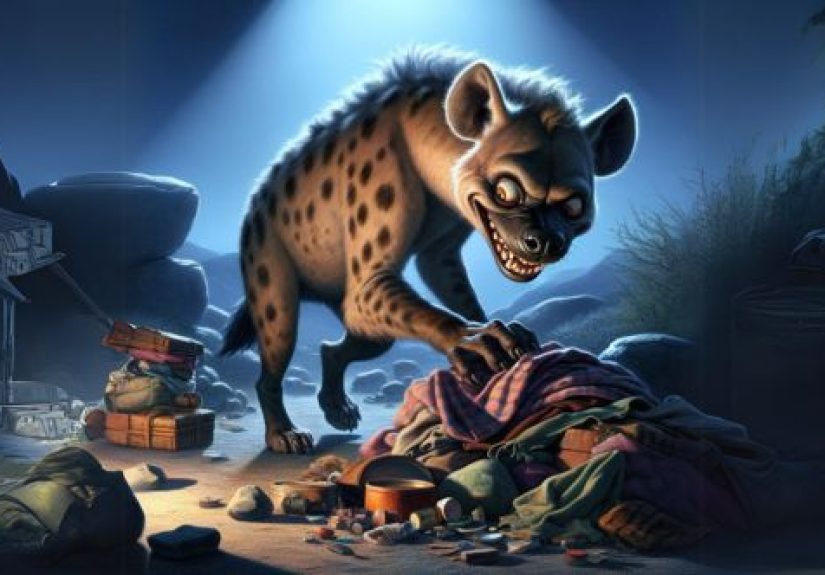
10) The Bultungin (Were-Hyena) A Transformation Legend from the Lake Chad Region
Were-hyena beliefs show up in multiple places across Africa and the Middle East, and one term often discussed in relation to the Lake Chad region is
bultungin, sometimes glossed as “I change myself into a hyena.” These stories blur the line between curse and choicebetween a person who becomes
dangerous against their will, and a person who uses transformation as power.
Why hyenas, specifically?
Hyenas already carry cultural symbolism: scavenging, laughter-like calls, nocturnal movement, and a reputation (fair or not) for boundary-crossing behavior.
Put that into a shapeshifter story and you get a ready-made metaphor for social fearespecially fear of the outsider, the accused, or the misunderstood.
What these shapeshifters have in common
- Identity isn’t stable. Many legends warn that appearances are temporary and trust must be earned.
- Nature has agency. River dolphins, fireflies, forests, and predators become “characters,” not scenery.
- Community rules hide inside the plot. “Don’t wander,” “don’t boast,” “respect the river,” “listen to elders.”
- Fear gets a name. Once you can name something, you can talk about itand that’s half the battle.
Conclusion
Lesser-known shapeshifter legends aren’t “small” storiesthey’re local masterpieces. They survive because they’re useful:
they explain the unexplainable, dramatize real risks, and keep cultural memory alive. And if they also happen to make you look suspiciously at a firefly
or a charming stranger in a hat… well, folklore has done its job.
Experiences Related to Shapeshifter Legends (An Extra )
If you ever talk to people who grew up with shapeshifter stories, the most interesting “experience” usually isn’t a monster sighting. It’s the atmosphere.
The way a place feels different at night. The way a familiar trail suddenly looks wrong. The way a harmless animal becomes ominous because the story
has taught your brain to keep one eyebrow raised.
For example, imagine riding a boat at dusk on a wide Amazon tributary. The water is the color of tea, the trees are wall-to-wall green, and the air feels
thick enough to chew. Someone points to a ripple and says, casually, “That’s a boto.” Then they grin and add, “They can walk on land, you know.”
The sentence lands like a joke… until you notice how quickly everyone stops laughing when a lone figure appears near the shore. Rationally, it’s probably
just a person. Emotionally, the story has already opened a door in your mind: what if it isn’t?
Or picture a summer night where fireflies spark over a field like tiny floating punctuation marks. Beautiful, right? Now layer in the Adze legend.
Suddenly that same flicker becomes ambiguous. Your eyes track one light a little too long. It drifts closer. It pauses. Your brain does what brains do:
it fills the silence with meaning. You don’t need to believe literally to feel the effect. Folklore is a masterclass in turning “ordinary” into “charged.”
Shapeshifter experiences also show up in the way people describe getting lost. A hiker can follow a path they’ve walked before, yet swear the forest “shifted.”
In places where Tikbalang stories circulate, that sensation gets a narrative: the land didn’t just confuse youyou were confounded.
The difference matters. It transforms embarrassment into a meaningful warning: respect the terrain, don’t underestimate the wilderness,
and don’t assume the map in your pocket is the boss of reality.
Then there are the experiences tied to sleep and stress. Many people have had nights where they wake up heavy, pinned, anxiouslike their body is awake
but their mind is stuck in glue. In communities with “night rider” legends like the Boo Hag, that feeling becomes shareable. Someone can say,
“I think something rode me last night,” and others instantly understand the emotion even if they interpret the cause differently. The “experience” becomes
a bridge between personal fear and community empathy.
Finally, some experiences are cultural, not supernatural: hearing elders tell these stories at the exact right momentduring storms, during harvest,
during family gatheringswhen the line between entertainment and instruction gets wonderfully blurry. Shapeshifter legends are sticky because they’re adaptable.
They change form, just like their characters. Every retelling is a small transformation: the story becomes what the community needs it to be, right now,
in this place, for this listener.